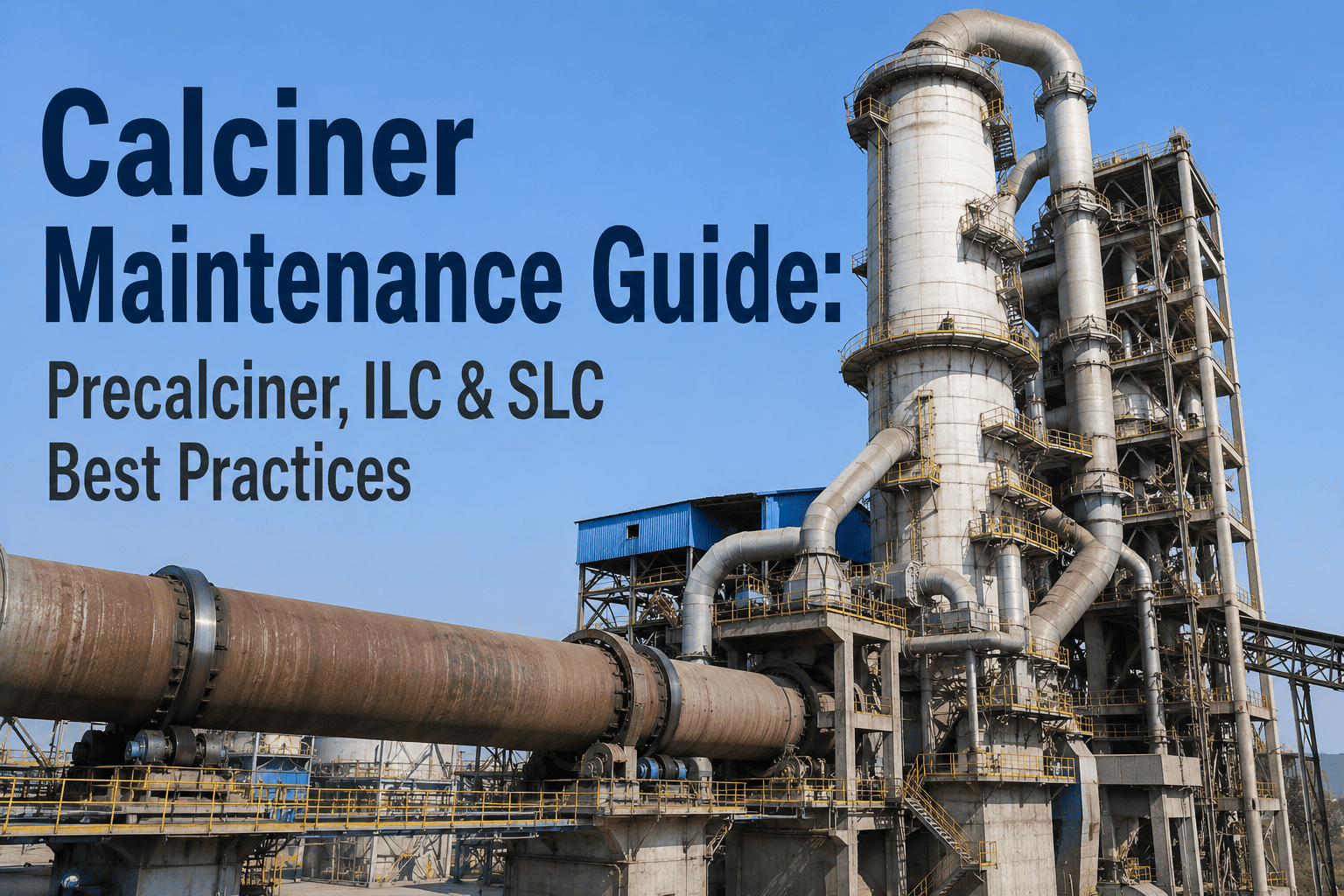
A precalciner is supposed to finish up to 90% of a raw meal's carbonate decomposition before it ever reaches the rotary kiln, but that only holds true if the tertiary air duct feeds clean, undiluted combustion air and the refractory lining is holding its thickness. Let either one drift and the calciner starts pushing unfinished work downstream, straining kiln burning zone stability and fuel consumption together. Start a free trial to see how Oxmaint keeps calciner inspections and refractory data tracked in one place.
Up to 90%
Of carbonate decomposition completed in the precalciner before meal enters the kiln
850-900°C
Sustained operating temperature the precalciner refractory faces under abrasive particle loading
60% Thick
Lining thickness threshold below which shell surface temperatures signal urgent replacement
3-6 Weeks
Window before duct buildup in high-alkali raw mixes restricts gas flow without intervention
Why ILC and SLC Calciners Need Different Maintenance Attention
An ILC routes kiln exhaust gas straight through the calciner, so every combustion product from the kiln also passes through it, limiting oxygen availability and NOx control. An SLC keeps a fully separate tertiary air duct feeding pure combustion air, which gives cleaner staged combustion but adds a whole extra refractory-lined duct that needs its own inspection routine.
ILC vs SLC: What Changes for Maintenance
| Factor |
ILC |
SLC |
| Gas path |
Kiln exhaust and tertiary air premixed in one vessel |
Independent tertiary air duct feeds a separate vessel |
| Maintenance load |
Simpler layout, fewer refractory-lined surfaces to inspect |
Extra tertiary air duct adds its own refractory and damper checks |
| Best suited for |
Simpler fuel mixes, lower capital budgets |
High alternative-fuel substitution, petcoke, NOx-regulated regions |
Every Calciner Component, One Inspection Hierarchy
Oxmaint registers your calciner vessel, tertiary air duct, and refractory lining as separate tracked assets, each with its own inspection schedule and buildup threshold. Sign up for a free trial to see it against your own preheater tower, or book a demo and we'll walk through your calciner maintenance workflow.
Where Calciner Systems Actually Fail
| Component |
Common Failure Mode |
What to Monitor |
| Tertiary air duct |
Damper drift and short-circuiting reducing gas-solid contact |
Damper calibration checks and duct condition inspections |
| Refractory lining |
Abrasive wear thinning the lining under sustained high heat |
Full thickness survey at every major shutdown |
| Meal inlet duct |
Uneven feeding causing surging or blockage risk |
Feed rate consistency checks, especially with alternative fuels |
Weekly Monitoring vs Shutdown Inspection
Weekly Monitoring
Pressure differential across cyclone stages to catch buildup early
Outlet oxygen level check to confirm combustion efficiency
Feed rate and particle size review on alternative fuel lines
Shutdown Inspection
Full refractory thickness survey across the vessel and duct
Tertiary air damper calibration and mechanical function test
Burner lance and nozzle condition check before restart
How Oxmaint Supports Calciner Reliability
Oxmaint tracks pressure differential and buildup rate per cyclone and duct stage, calculates days to critical restriction, and auto-triggers a cleaning or inspection work order before flow gets choked off. Refractory thickness surveys and damper calibration records stay tied to the exact vessel and duct they belong to, ready for the next shutdown plan. Book a demo to see your preheater tower mapped as a structured asset hierarchy.
Frequently Asked Questions
Q
What's the real difference between an ILC and an SLC calciner?
An ILC premixes kiln exhaust gas with tertiary air in one vessel, keeping the design simple but limiting oxygen availability. An SLC feeds a separate vessel entirely through its own tertiary air duct, giving cleaner combustion control at the cost of one more refractory-lined component to maintain.
Q
How much decomposition should actually happen before the kiln?
A well-running precalciner completes up to 90% of carbonate decomposition before raw meal enters the rotary kiln. Falling short of that pushes unfinished chemistry downstream, straining kiln stability and pushing fuel consumption higher than it needs to be.
Q
When does calciner refractory actually need replacing?
Once lining wear drops below 60% of its original thickness, shell surface temperatures climb above 250 to 320°C, which is the point where replacement becomes urgent rather than optional. Scheduling a full thickness survey at every major shutdown is what catches this before it becomes an emergency.
Q
How fast can duct buildup actually shut down gas flow?
In high-alkali raw mixes, buildup can accumulate at 5 to 15mm per week, which is enough to meaningfully restrict gas flow within just three to six weeks if left unchecked. Tracking pressure differential across each stage is what turns that gradual buildup into a scheduled cleaning instead of an unplanned stop.
Keep the Calciner Doing 90% of the Work, Not the Kiln
Oxmaint gives cement plant reliability teams structured calciner asset hierarchies, buildup rate tracking, and refractory thickness records in one platform. Sign up for a free trial to explore it yourself, or book a demo and we'll walk through it against your own preheater tower.