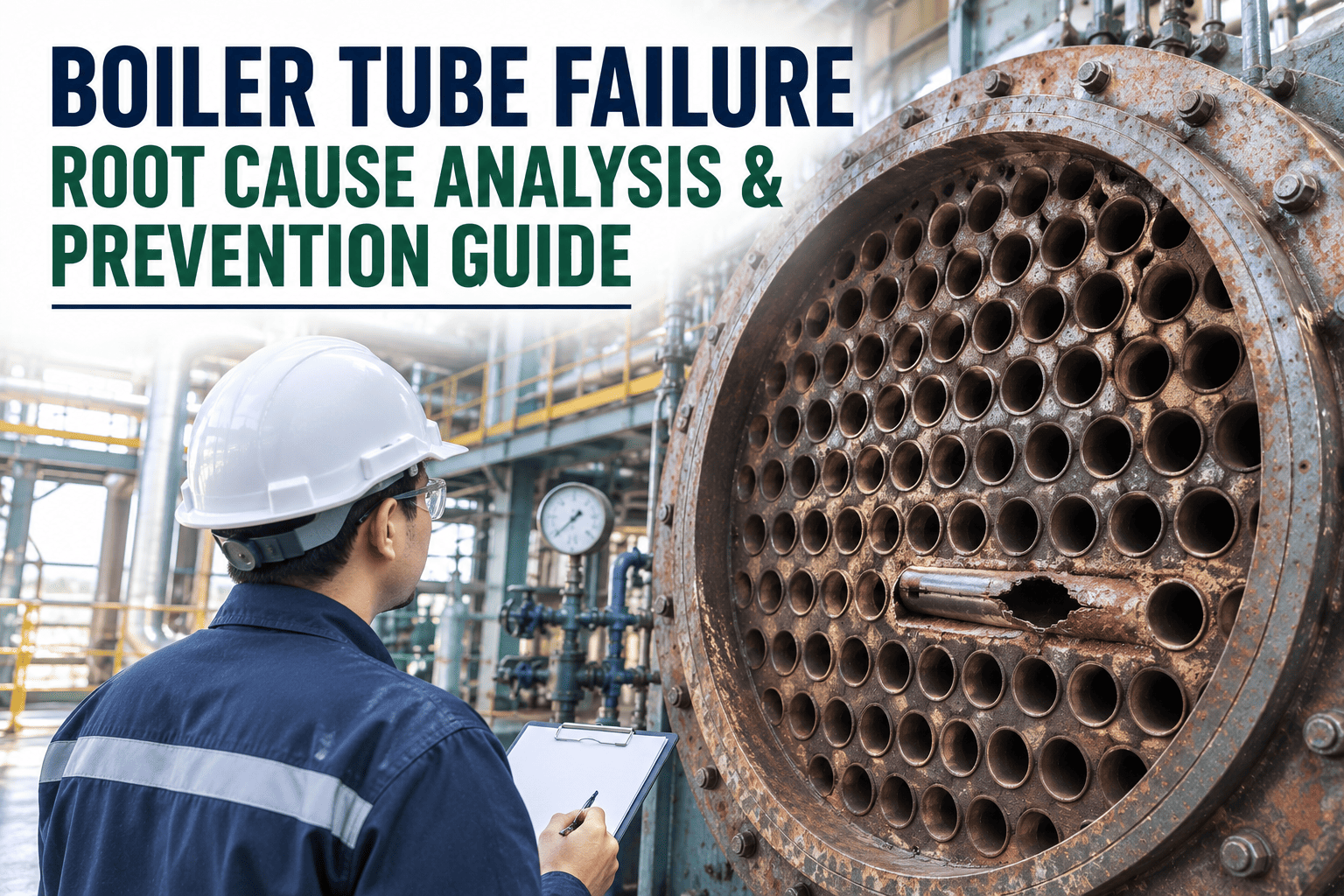
A boiler tube rupture at three in the morning is rarely a surprise to the tube itself, flow-accelerated corrosion can thin a waterwall wall from 6mm down to 2.5mm over two or three years before it finally lets go under operating pressure. What makes these failures expensive is not the tube, it's that most plants find out where the wall got thin only after it ruptures, forcing an emergency shutdown instead of a planned repair. Sign up to track wall thickness readings and root cause by tube location, or book a demo to see it built for your boiler.
Why It Matters
Boiler tube failures are estimated to cost the power industry billions of dollars a year, and the majority of that cost comes from plants that repeat the same failure at the same location across multiple campaigns because the root cause was never actually tracked. A ruptured tube on a mid-size unit can mean days offline and millions in lost generation, most of it avoidable with wall thickness trending and a clear root cause on record.
Where Each Failure Mode Tends To Show Up
Waterwall Tubes
Flow-accelerated corrosion thins the wall in high-velocity zones, often near header connections
Superheater & Reheater
Long-term overheating and creep from scale-restricted heat transfer, plus fatigue at startups
Economizer Tubes
Oxygen pitting from feedwater chemistry and fly ash erosion at bends and inlet sections
Sootblower Zones
Erosion from steam impingement, often paired with thermal fatigue at the same spot
Inspection Habits That Catch A Tube Before It Ruptures
Wall thickness measured at known FAC zones: not just once, but trended outage over outage so a thinning wall gets caught with margin left to plan a repair
Feedwater chemistry checked against limits: oxygen content, pH, and dissolved solids all drive economizer pitting and waterwall corrosion when they drift
Sootblower operation reviewed: steam impingement from a misaligned or overused sootblower is one of the more preventable causes of localized erosion
Layup procedures followed during outages: flooded or poorly drained superheater loops left idle without proper layup invite oxygen corrosion that shows up months later
Every failure logged with root cause and location: a repeat failure at the same spot across campaigns almost always means the underlying cause was fixed cosmetically, not actually resolved
Stop Repeating The Same Tube Failure
OxMaint logs every tube failure with root cause, location, and remaining wall thickness so the same failure never gets rediscovered from scratch next campaign. Sign up for a free trial to start mapping your boiler, or book a demo to see it configured for your unit.
Failure Mechanism, Share Of Failures & Typical Location
| Failure Mechanism |
Share Of Failures |
Typical Location |
| Long-Term Overheating / Creep |
Roughly a quarter of recorded failures |
Superheater and reheater tubes with internal scale buildup |
| Fatigue |
Second most common mechanism overall |
Superheater and reheater sections through startup and shutdown cycling |
| Fly-Ash Corrosion & Erosion |
A significant single-digit percentage of failures |
Economizer bends, sootblower zones, and areas of uneven gas flow |
| Oxygen Pitting & Caustic Attack |
A smaller but recurring share of failures |
Economizer and waterwall tubes exposed to poor feedwater chemistry |
The Takeaway
Boiler tube failures rarely come from a mystery cause, corrosion, erosion, creep, and fatigue account for the large majority of ruptures and each leaves measurable signs beforehand. The plants that stop repeating the same failure are the ones that track wall thickness by location and record root cause every time, not just the ones with better welders.
Frequently Asked Questions
Q
Why does flow-accelerated corrosion go undetected for so long?
FAC thins the tube wall from the inside, in areas of high-velocity water flow, and there is no visible sign on the outer surface until the wall is critically thin. Without scheduled ultrasonic thickness measurement at known high-risk zones during outages, the first indication a plant gets is often the rupture itself, during operation rather than during a planned inspection.
Q
Why do tube failures keep happening at the same location across campaigns?
A tube gets welded back in and the unit returns to service, but if the root cause behind the rupture, whether it's feedwater chemistry, sootblower alignment, or flue gas flow distribution, was never actually identified and corrected, the same conditions simply produce the same failure again. Tracking root cause by exact location, not just logging that a repair happened, is what breaks that cycle.
Q
Is short-term overheating different from long-term creep damage?
Short-term overheating happens quickly, usually from a sudden loss of flow or blockage, and tends to produce a ductile, thin-walled rupture that shows obvious deformation. Long-term creep develops slowly over months or years of running above design temperature, often driven by internal scale restricting heat transfer, and the tube can fail without the dramatic bulging that short-term overheating leaves behind.
Turn Tube Failures Into A Trackable Pattern, Not A Surprise
OxMaint records every boiler tube failure with root cause, location, and wall thickness trend so repeat failures get caught before the next campaign, not after. Sign up for a free trial to start mapping your boiler, or book a demo to see it configured for your plant.