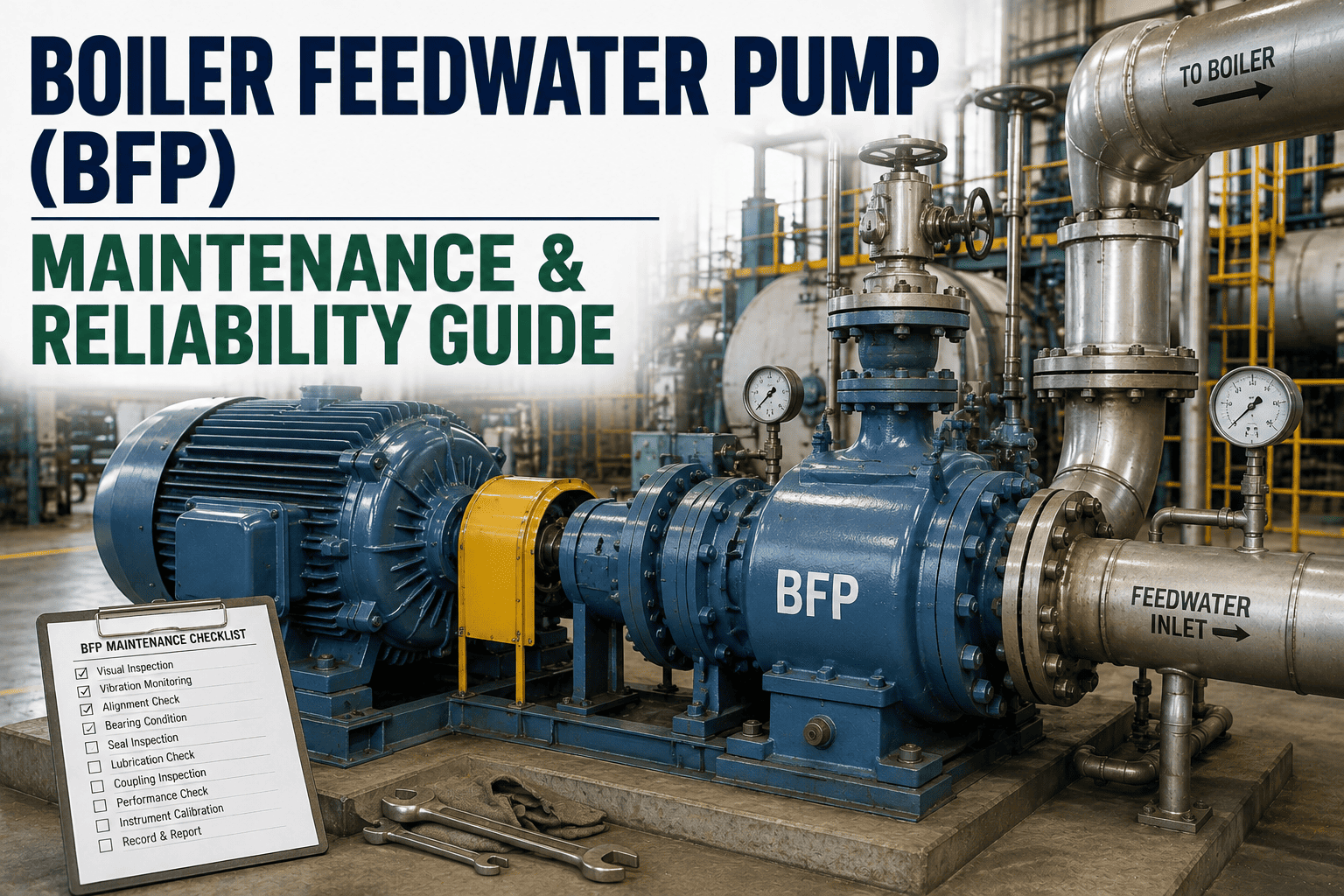
A boiler feedwater pump does not fail quietly, it usually gives warning through rising vibration, a seal that starts weeping, or a recirculation valve that no longer opens cleanly at low load, long before it actually trips the unit. The problem is that these early signs are easy to write off as normal wear on a machine that runs at 300°F and thousands of PSI, until the day the pump seizes or cavitates hard enough to pit an impeller beyond repair. Sign up to track vibration, seal condition, and recirculation valve cycles against every BFP in the fleet, or book a demo to see it built around your units.
Why It Matters
A boiler feedwater pump sits between the deaerator and the drum, and if it goes down the boiler follows within minutes. Most forced BFP failures trace back to one of three things: cavitation from low NPSH, a mechanical seal that finally gave out, or a recirculation valve that stuck instead of protecting the pump during startup and low load.
Routine Checks That Catch Trouble Early
Vibration readings logged per bearing: a slow climb in overall vibration is usually the first measurable sign of impeller imbalance or cavitation damage, well before anything is audible
Mechanical seal leakage inspected: weeping at the seal faces or a rising seal pot temperature both point to a seal nearing the end of its service life
Recirculation valve stroke tested: confirmed to open at low flow and close cleanly once minimum flow is no longer needed, since a valve that hangs open or shut defeats its purpose
Suction pressure watched against NPSH required: a shrinking margin between available and required NPSH is what turns into cavitation under load
Balance device drain flow checked: abnormal flow or temperature through the balance disc line often shows internal wear before axial thrust bearing damage becomes obvious
Three Failure Points That Take Down Feedwater Pumps
Cavitation
Vapor bubbles collapsing at the impeller when NPSH available drops below what the pump needs
Mechanical Seal Wear
Face wear from dry running, misalignment, or particulate in the feedwater erodes seal life
Recirculation Valve Failure
A valve that fails to protect minimum flow lets pump temperature climb toward internal damage
Catch A BFP Problem Before It Trips The Unit
OxMaint tracks vibration, seal condition, and recirculation valve cycles against each feedwater pump and fires a work order the moment a reading trends toward trouble. Sign up for a free trial to log your first reading, or book a demo to see it set up for your BFP fleet.
Symptom, Likely Cause & What To Check
| Symptom |
Likely Cause |
What To Check |
| Crackling or rattling noise at suction |
Cavitation from insufficient NPSH available |
Suction pressure, deaerator level, strainer condition |
| Visible leak or weeping at the seal |
Mechanical seal face wear or misalignment |
Seal pot level, flush flow, shaft alignment |
| Rising casing temperature at low load |
Recirculation valve not opening at minimum flow |
Valve stroke, flow transmitter, actuator response |
| Rising axial thrust bearing temperature |
Balance device wear, worn internal clearances |
Balance drain flow, bearing temperature trend |
The Takeaway
A boiler feedwater pump is one of the least forgiving machines in a power plant, cavitation, seal wear, and a lazy recirculation valve rarely announce themselves loudly until the damage is already done. Watch vibration, seal health, and valve response as a set and most BFP failures show themselves weeks before they become an outage.
Frequently Asked Questions
Q
Why is the recirculation valve so critical to BFP reliability?
During startup or low load, flow through the pump can drop low enough that the water inside starts absorbing the pump's own heat instead of carrying it away, and temperature climbs fast. The recirculation valve exists purely to hold a minimum flow through the pump under these conditions, and when it sticks or fails to open, the pump is left unprotected exactly when it needs protection most.
Q
What does a balance device actually protect against?
A multistage feedwater pump generates significant axial thrust as pressure builds across each stage, and left unchecked that thrust would push the rotor into the casing. The balance device, whether a disc, drum, or double drum, absorbs the majority of that thrust hydraulically so a much smaller thrust bearing can handle what's left, which is why wear in the balance device shows up as rising thrust bearing temperature.
Q
Can vibration monitoring really catch cavitation before it causes damage?
Cavitation produces both audible noise and measurable pressure pulsations as vapor bubbles collapse against the impeller, and these show up in vibration data before pitting becomes visible on the impeller itself. Tracking vibration trend against a baseline, rather than waiting for an alarm threshold alone, is what lets a team intervene while it's still a suction problem and not yet a replaced impeller.
Give Your Feedwater Pumps A Reliability Baseline
OxMaint tracks vibration, seal health, and recirculation valve response against each BFP and raises a prioritized work order the moment any reading trends toward an alarm limit. Sign up for a free trial to start logging your pumps today, or book a demo to see it configured for your plant.