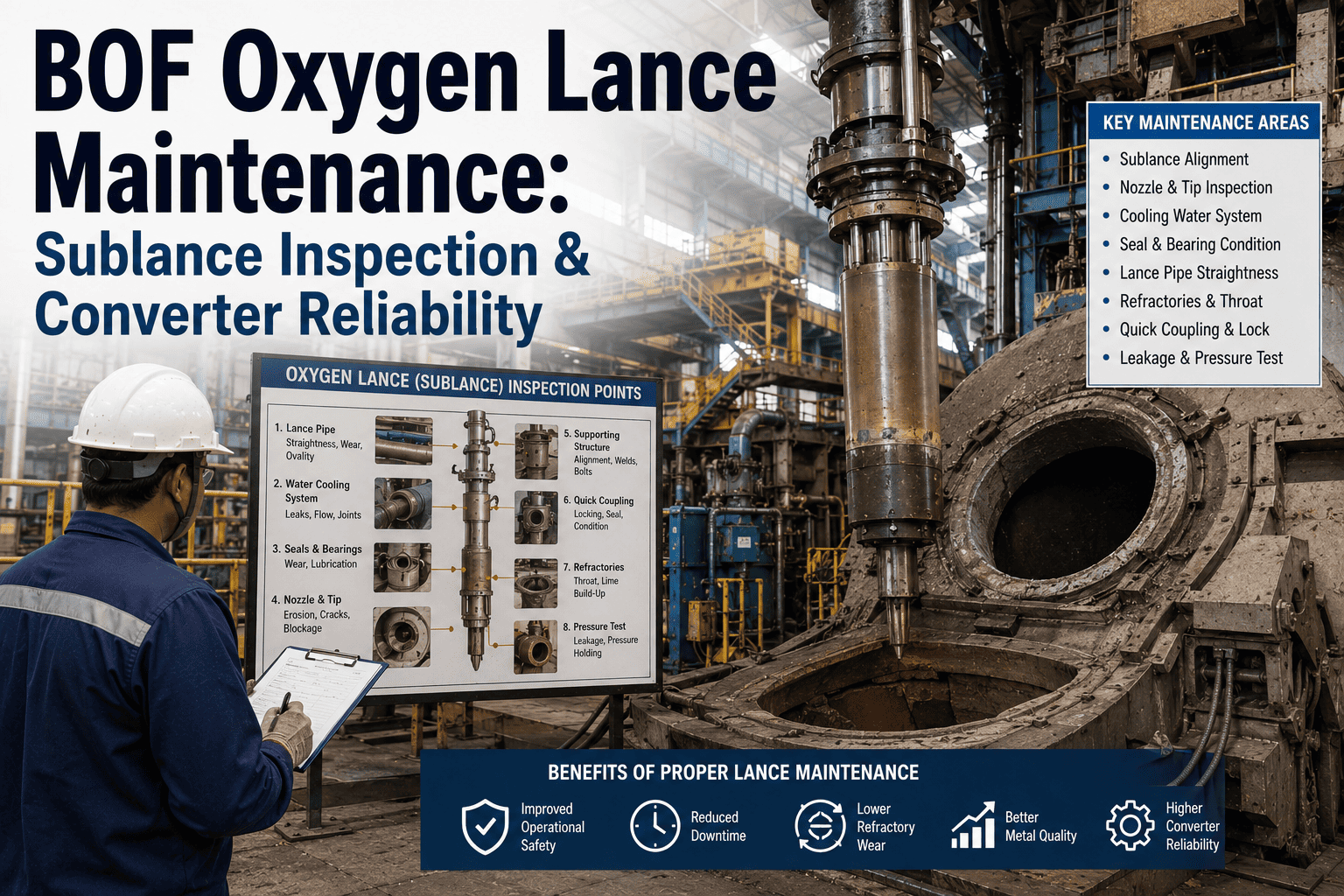
The oxygen lance is the single point where a converter blow either goes to plan or doesn't, a water-cooled tube driving supersonic oxygen into molten steel at close range, with nothing between its cooling water and 1,650°C off-gas but a few millimeters of copper. Tip erosion, skull buildup, a cooling water leak, or a hoist mechanism failure are the four ways that relationship breaks down, and one of them is a genuine explosion risk, not just a quality miss. Sign up for a free trial to see how Oxmaint tracks lance and sublance condition so none of the four sneaks up mid-heat.
~150 Heats
Typical lance life before tip replacement becomes necessary
1,650°C
Off-gas temperature the lance and its cooling water operate against every blow
Explosion Risk
Consequence of a cooling water leak introducing water into the converter mid-blow
2x Per Blow
Typical sublance readings taken for in-process and end-of-blow verification
Every Other Lance Failure Is a Cost Problem, This One Is a Safety Problem
A lance cooling water leak during blowing introduces water directly into a vessel full of molten steel, which is why it triggers automatic emergency retraction rather than a maintenance ticket. Cooling water flow, pressure and temperature differential trending exist specifically to catch that risk before it reaches the point of an emergency stop, and this is the one area where "we'll check it next shift" isn't an acceptable answer.
Lance and Sublance Do Different Jobs
| Equipment |
Primary Role |
Maintenance Focus |
| Oxygen lance |
Delivers supersonic oxygen into the bath to drive the refining reactions |
Tip erosion tracking and cooling water integrity checks |
| Sublance |
Takes mid-blow and end-of-blow temperature, carbon and slag readings |
Probe fixture condition and cooling water reliability for repeated dips |
Lance and Sublance Condition, Tracked Every Heat
Oxmaint logs lance heat count, cooling water trend data, tip inspection records and hoist test schedules together, so a drifting cooling differential doesn't wait for the next planned shutdown to get noticed. Sign up for a free trial to test it against your own BOF lance data, or book a demo and we'll walk through your converter reliability setup.
Four Failure Modes, Four Different Warning Signs
| Failure Mode |
Early Warning Sign |
Response |
| Tip erosion |
Rising oxygen consumption relative to heat count and blowing pattern |
Scheduled tip inspection tied to accumulated blow intensity |
| Skull buildup |
Progressive change in lance height and jet penetration behaviour |
De-skulling on a defined interval rather than after visible buildup |
| Cooling water leak |
Flow, pressure or temperature differential drifting from baseline |
Automatic emergency retraction, immediate isolation and inspection |
| Hoist failure |
Wire rope wear findings during scheduled inspection |
Crane intervention protocol tested and confirmed on a set schedule |
Lance Consumption Data Is Usually Recorded, Rarely Analysed
Most plants log a tip change when it happens, but variations in heat intensity, oxygen flow and blowing pattern that drove the wear behind it often go unexamined until consumption rates spike unexpectedly. Tracking that data systematically against blowing conditions, rather than treating each tip change as an isolated event, is what turns lance procurement from a reactive spend into a predictable one.
Frequently Asked Questions
Q
Why is a lance cooling water leak treated as an emergency rather than routine maintenance?
Water introduced into a converter mid-blow, where molten steel and oxygen are already reacting violently, creates a genuine explosion risk rather than a simple process upset. That's why flow, pressure and temperature differential are trended continuously and why a confirmed leak triggers automatic emergency retraction instead of waiting for the current heat to finish.
Q
Does the sublance need a different maintenance approach than the main lance?
Yes, its job is measurement rather than continuous oxygen delivery, so its condition priorities center on the probe fixture and cooling reliability across repeated short dips into the bath rather than tip erosion from sustained supersonic flow. Both still depend on solid water cooling, but the wear patterns they need watched are different.
Q
What actually causes a lance tip to wear out around 150 heats?
Repeated exposure to the intense heat and chemical reactions at the point where the supersonic oxygen jet meets the bath gradually erodes the tip's copper nozzles. Heat intensity, oxygen flow rate and blowing pattern all influence how fast that erosion progresses, which is why actual tip life varies around that general figure rather than following it exactly.
Q
Is hoist wire rope inspection really necessary if the lance itself looks fine?
Yes. A hoist failure with the lance submerged in the bath is treated as a critical emergency requiring immediate crane intervention, entirely separate from the condition of the lance tip or cooling system. Wire rope inspection and emergency retraction system testing protect against a different failure path that a tip inspection alone won't catch.
Give Every Lance and Sublance a Real Condition Record
Oxmaint gives steel plant teams lance heat count tracking, cooling water trend alerts, tip and hoist inspection scheduling, and consumption analytics in one platform. Sign up for a free trial to explore it yourself, or book a demo and we'll walk through it against your own BOF converter operation.