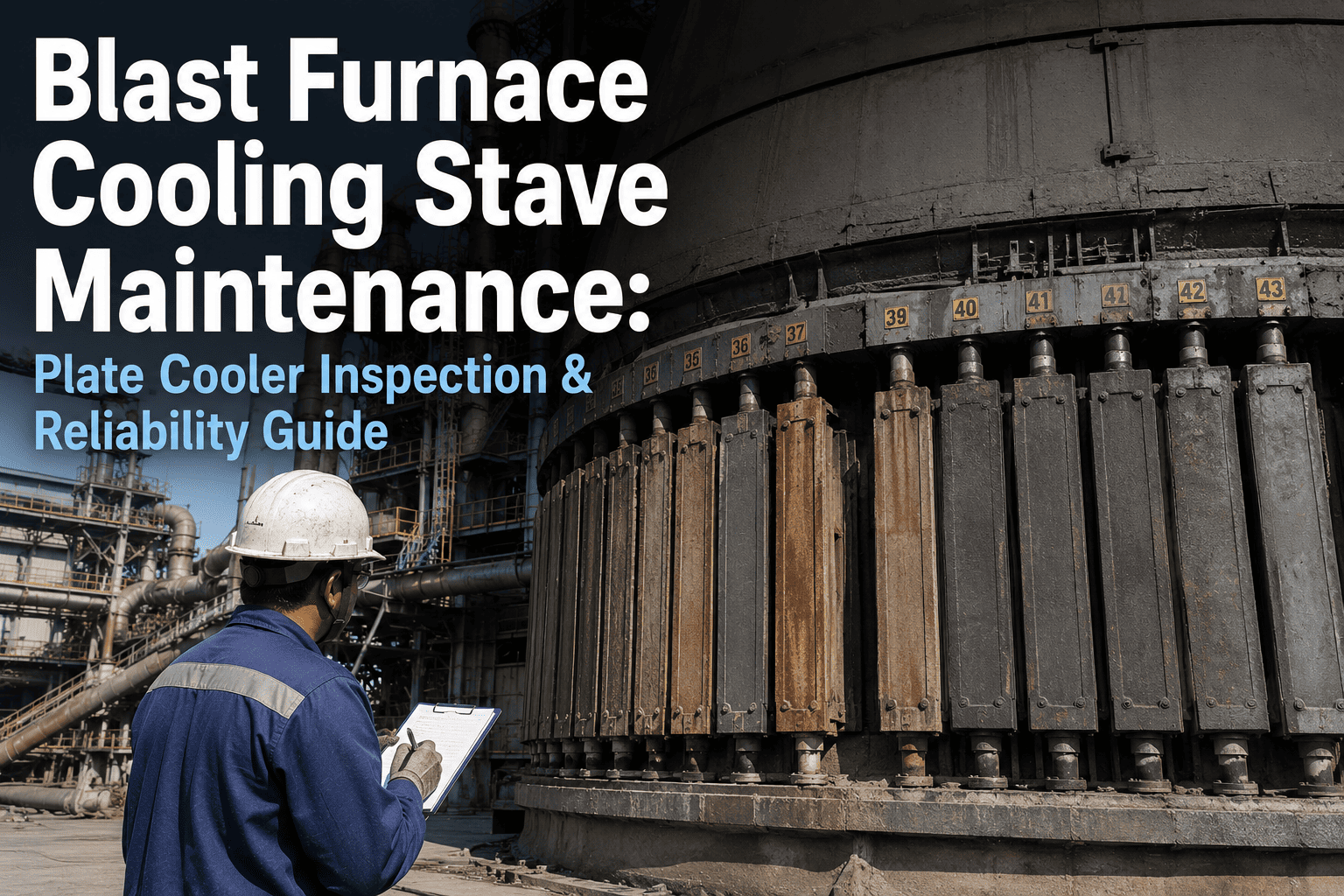
Cooling staves and plate coolers absorb the punishment so the furnace shell doesn't have to, holding back wall temperatures that can climb past 1,200°C while the water inside them keeps circulating just a few centimeters away. When a single stave breaches and goes unnoticed, that heat finds the shell plate instead, and a routine campaign can end in an unplanned 72-hour reline costing upward of $2M in lost output. Sign up for a free trial to see how Oxmaint tracks stave-by-stave leak risk before it turns into a shell breakthrough.
$2M+
Typical cost of a 72-hour emergency reline forced by an undetected stave burnout
±0.2 bar
Pressure differential from baseline that signals an active leak in the cooling circuit
1-4 Hrs
Detection window for a stave breach when thermocouple monitoring is in place
2%
Daily makeup water threshold above which unaccounted loss needs locating fast
Why One Stave Failing Threatens the Whole Shell
Stave cooling integrity is the single biggest factor deciding how long a blast furnace shell survives. A cooler that fails without being caught lets furnace heat reach the shell plate directly, causing localized overheating and plate distortion that can progress to a full breakthrough. That's why leak detection and stave condition tracking need to run continuously through the campaign, not just get checked during a planned outage.
Copper vs Cast Iron Staves: Different Wear, Different Watch Points
| Stave Material |
Primary Risk |
Inspection Priority |
| Copper staves |
Elevated leak risk after extended operating hours despite high conductivity |
Priority thermal survey once operating hours cross the high-risk range |
| Cast iron staves |
Thermal drift signals developing wear well before a visible breach |
Baseline comparison on outlet temperature trend, not a single reading |
Rank Every Stave by Leak Risk, Not Just by Age
Oxmaint combines operating hours, thermal trend and pressure history to flag the staves most likely to fail next, instead of treating the whole cooling system as one uniform asset. Sign up for a free trial to test it against your own furnace data, or book a demo and we'll walk through your stave risk profile.
Four Layers of Leak Detection Working Together
| Detection Layer |
What It Catches |
Response Speed |
| Visual survey |
Weeping, moisture staining and mineral deposits at header connections |
Routine, catches slow seepage early |
| Pressure monitoring |
Supply and return imbalance pointing to an active leak in the circuit |
Daily check, near-immediate flag |
| Flow monitoring |
Water loss down to a few drips per minute across individual circuits |
Continuous, alarms in seconds |
| Thermal survey |
Asymmetric outlet temperature rise ahead of a full stave breach |
1 to 4 hour detection window |
Don't Overlook Makeup Water and Circuit Flushing
Water chemistry and makeup consumption are easy to treat as a background reading, but a rising makeup rate is often the first sign of a leak too small for pressure checks to flag on their own. Pairing daily makeup tracking with a scheduled annual hydrostatic pressure test on stave circuits closes the gap that slow, small leaks otherwise slip through.
Frequently Asked Questions
Q
What actually happens when a cooling stave leaks undetected?
Water escaping into the furnace near molten material creates a genuine process safety risk, and the lost cooling capacity lets furnace heat reach the shell plate directly. Left long enough, that can progress from localized overheating to plate distortion and, in the worst case, a shell breakthrough.
Q
Why does a ±0.2 bar shift matter if the system fluctuates anyway?
Normal operation has its own pressure rhythm, which is why the threshold is measured against a recorded baseline rather than an absolute number. A differential moving outside that band from the baseline is treated as reason enough to start isolation checks rather than wait for a visible symptom.
Q
Do copper and cast iron staves need separate maintenance plans?
Largely yes. Copper staves carry more leak risk once operating hours climb, even with their strong heat conductivity, while cast iron staves tend to show thermal drift as an earlier warning sign. Tracking both against their own baseline rather than a single shared threshold catches wear closer to when it actually starts.
Q
How fast can a stave breach realistically be caught?
With thermocouple monitoring in place across cooling galleries, an asymmetric outlet temperature rise combined with a pressure drop can flag a breach within one to four hours of it starting. That window is usually enough to plan a controlled stave replacement instead of forcing an emergency campaign stop.
Catch the Next Stave Leak Before It Becomes a Reline
Oxmaint gives steel plant teams pressure and flow trend tracking, stave risk ranking, makeup water alerts and hydrostatic test scheduling in one platform. Sign up for a free trial to explore it yourself, or book a demo and we'll walk through it against your own blast furnace cooling system.