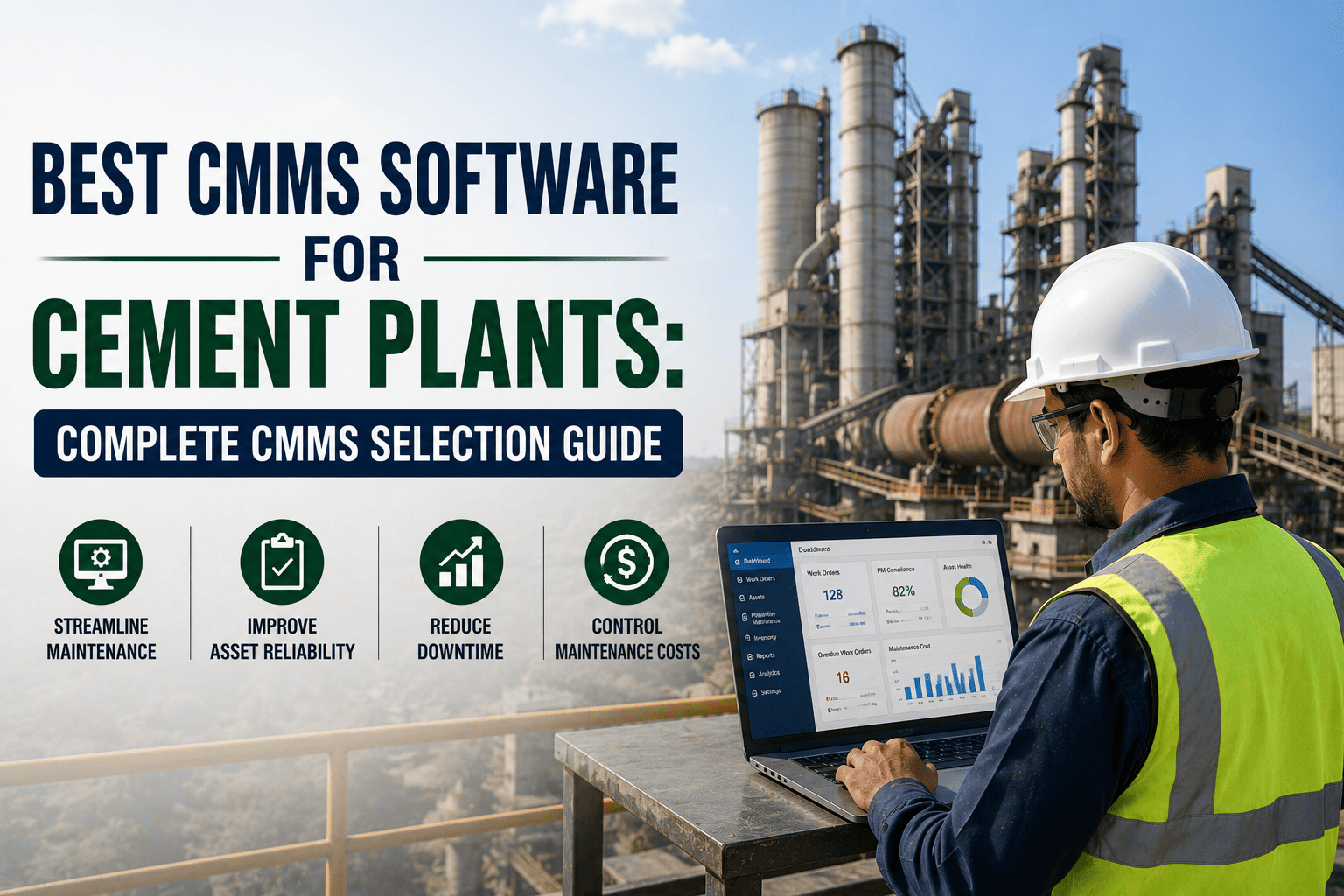
A cement plant runs kilns, mills, conveyors, weighbridges, and compressors around the clock, and a generic maintenance tool built for office equipment or light manufacturing rarely holds up under that load. Picking the wrong CMMS costs more than money, it costs the adoption that makes a system actually work. Sign up to see how Oxmaint was built around the way cement plants actually operate.
6 Modules
Core capabilities a cement plant CMMS should cover at minimum
24/7
Mobile access technicians need across shifts, not just at a desktop
5 Steps
A practical path plants follow when evaluating and selecting a CMMS
1 Record
Single source of truth a good CMMS gives every asset, permit, and PM job
Why Cement Plants Need More Than A Generic Tool
Cement operations run heavy rotating equipment, hazardous work permits, calibration cycles, and utility systems that all interact with each other. A CMMS built for that reality needs to handle asset hierarchies, PM scheduling, and safety workflows together, not as separate add-ons bolted on later.
The Features Worth Checking Before You Commit
| Feature |
Why It Matters For A Cement Plant |
| Work Order Management |
Routes requests, assigns technicians, and tracks status from raising to close-out |
| Preventive & Predictive Maintenance |
Schedules recurring PM jobs and flags condition-based warnings before failures happen |
| Asset Hierarchy & History |
Keeps kilns, mills, and utilities organized with full maintenance history attached |
| Mobile Access |
Lets technicians log work, check history, and close jobs from the plant floor, not a desk |
| ERP Integration |
Syncs spares, purchase orders, and costs with finance and inventory systems already in place |
| Safety & Permit Workflows |
Ties LOTO, hot work, and confined space permits directly to the relevant work order |
See The Full Feature Set In Your Own Plant
Oxmaint brings work orders, PM scheduling, asset history, and permits together in one system built for heavy industrial operations. Sign up for a free trial to explore it with your own assets, or book a demo to walk through it live.
A Practical Path To Picking The Right CMMS
1
Define Requirements
List the asset types, workflows, and integrations the plant actually needs before looking at any vendor
2
Shortlist Vendors
Compare candidates against the requirements list, not against a generic feature checklist
3
Check Integration Fit
Confirm the system connects cleanly to existing ERP, inventory, and reporting tools
4
Run A Pilot
Test the system on one unit or department before committing plant-wide, and get technician feedback
5
Confirm Support & Rollout Plan
Check onboarding, training, and support response before scaling to the full plant
Generic CMMS vs An Industrial-Focused CMMS
Generic CMMS
Built for light facilities work, so heavy rotating assets get bolted on awkwardly
Safety and permit workflows often missing or handled outside the system
Mobile experience frequently an afterthought for plant floor conditions
Industrial-Focused CMMS
Designed around asset hierarchies for kilns, mills, and utility systems from day one
LOTO, hot work, and confined space permits built directly into the work order flow
Mobile app designed for technicians working in the field, not just at a desk
Where Oxmaint Fits Into A Cement Plant
Oxmaint brings work orders, PM and predictive scheduling, asset history, calibration tracking, and permit workflows into one platform, with a mobile app built for technicians moving around a plant floor all shift.
Frequently Asked Questions
Q
What features matter most when choosing a CMMS for a cement plant?
Work order management, preventive and predictive maintenance scheduling, a clear asset hierarchy, mobile access, and built-in safety workflows tend to matter most given the scale and risk profile of cement operations.
Q
How long does a CMMS implementation typically take?
A focused pilot on one unit or department can be running within weeks, while a full plant-wide rollout with data migration and training usually takes a few months depending on asset count and complexity.
Q
Should a cement plant run a pilot before a full CMMS rollout?
Yes, testing the system on one unit or department first surfaces integration issues and gathers technician feedback early, which makes the plant-wide rollout smoother and adoption higher.
Find Out If Oxmaint Is The Right Fit For Your Plant
Oxmaint brings work orders, PM scheduling, asset history, and safety permits into one system built for heavy industrial operations. Sign up for a free trial to explore it with your own assets, or book a demo to walk through it live.