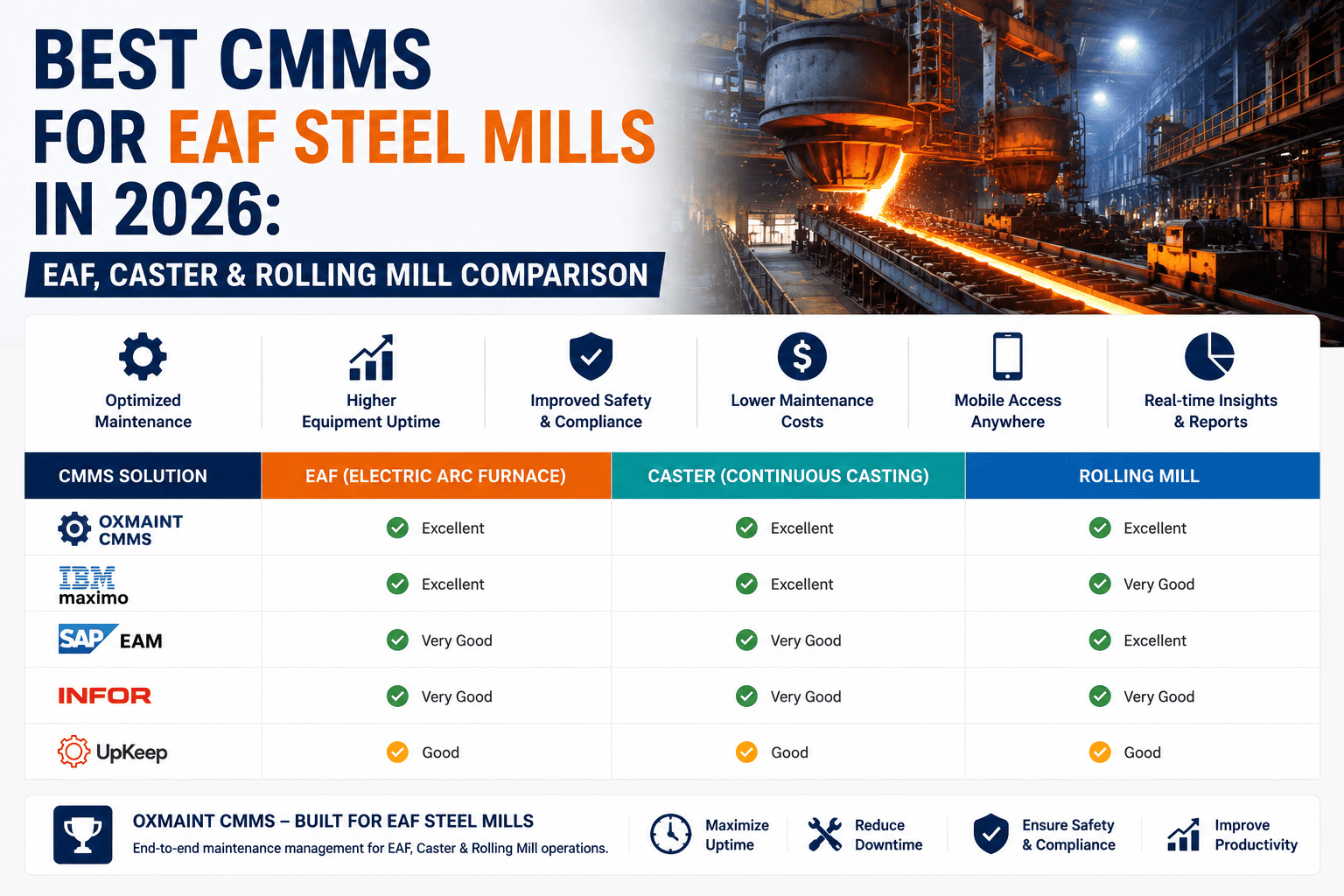
An EAF mini-mill runs a fundamentally different maintenance rhythm than an integrated BF-BOF plant, heats complete in under an hour, electrodes consume per cycle, and scrap yard equipment takes abuse a rolling mill never sees. A CMMS built around a generic asset model treats an electrode the same as a conveyor belt, which means it can't predict when a tap-to-tap cycle is about to be interrupted. This comparison covers what actually matters for EAF, caster, and rolling mill maintenance. Sign up to see it configured around your own EAF route.
Why It Matters
An EAF mini-mill can run 20 to 30 heats a day, which means a maintenance workflow that only triggers on a calendar date misses dozens of wear cycles between inspections. Electrode consumption, refractory wear, and scrap handling all need to be tracked per heat, not per month.
Requirements Across The EAF Route
EAF & Electrodes
Per-heat electrode length, tip condition, and refractory wear tracking
Scrap Yard
Crane, magnet, and shredder maintenance built for high-impact wear cycles
Caster & Rolling Mill
Mold, segment, and roll change scheduling tied to sequence and vibration data
What To Weight Most In Evaluation
Per-Heat Data Capture
25% weight
Electrode & Refractory Tracking
20% weight
Predictive Vibration & Thermal Alerts
20% weight
Mobile Access For Fast-Cycle Crews
15% weight
Built For Fast-Cycle Operations
Oxmaint tracks electrode consumption, refractory wear, and scrap equipment condition per heat, not per calendar month, with mobile work orders your crew can close between taps. Sign up for a free trial to load your EAF asset list, or book a demo and we'll map it with you.
An EAF-Ready CMMS Confirms
Electrode length and refractory wear logged automatically at the end of every heat, not once per shift
Scrap yard cranes and magnets on a fault-driven PM schedule, not a calendar interval that ignores tonnage handled
A live demo of vibration or thermal alerts triggering an actual work order, not a static analytics dashboard
A mobile app fast enough for a crew closing work orders between 45-minute tap-to-tap cycles
Calendar-Based CMMS vs Heat-Based CMMS
| Factor |
Calendar-Based CMMS |
Heat-Based CMMS |
| Electrode replacement |
Scheduled on a fixed date regardless of heats run |
Triggered by actual consumption per heat, tracked live |
| Refractory relining |
Reactive, discovered during an unplanned inspection |
Forecast from wear rate trend against heat count |
| Scrap yard equipment |
Serviced on the same interval regardless of tonnage |
Serviced against actual load and fault history |
| Unplanned tap delay |
Common, driven by undetected wear between checks |
Rare, wear flagged and addressed before failure |
The Takeaway
An EAF mill's maintenance cycle moves in heats, not weeks. A CMMS that only understands calendar dates will always be one wear cycle behind, which is exactly where unplanned tap delays and early relines come from.
Frequently Asked Questions
Q
Why does electrode tracking need to happen per heat instead of per shift?
Electrode consumption varies with scrap mix, power input, and arc conditions, so it changes heat to heat. Shift-level tracking averages that variation away, missing the early signal that a specific heat's conditions are accelerating wear.
Q
Does scrap yard equipment really need its own maintenance category?
Yes. Cranes, magnets, and shredders take repeated shock loading that generic conveyor or motor PM schedules don't account for. Fault-driven scheduling based on actual tonnage handled catches wear that a fixed calendar interval misses.
Q
Can the same CMMS handle both the EAF and the downstream rolling mill?
Yes, provided it supports both heat-based triggers for the EAF and vibration or run-hour triggers for rolling mill rolls within the same asset hierarchy, rather than requiring separate systems for each process.
Track Every Heat, Not Just Every Shift
Oxmaint's EAF templates track electrodes, refractory, and scrap equipment per heat, with mobile work orders built for fast tap-to-tap cycles. Sign up for a free trial to load your EAF asset list, or book a demo and we'll map your full route together.