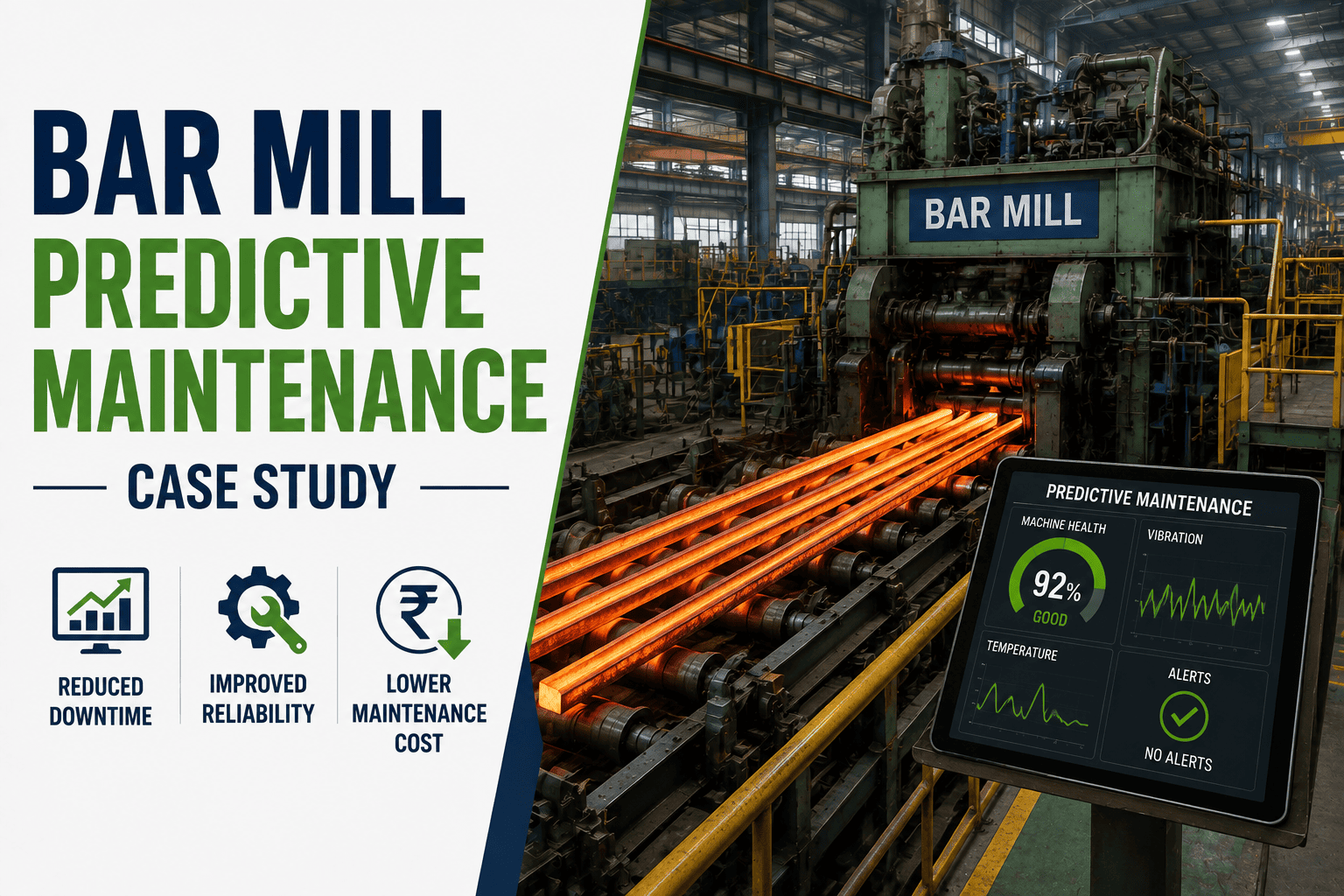
On a bar mill, the cooling bed rarely gets the attention the roughing and finishing stands do, right up until a rake bar or drive bearing fails mid-shift and bars start piling up faster than anyone can clear them. Bearing defects on rolling mill equipment typically show up in vibration data 5 to 7 weeks before they become a functional failure, but a handheld check done once a month catches only a sliver of that window. This case study covers how one bar mill used continuous condition monitoring inside its CMMS to turn cooling bed and cobble-related stoppages into scheduled work instead of shift-ending surprises. Sign up to see the same tracking set up against your own bar mill.
Guide wear and cooling bed bearing condition were both tracked by monthly walkaround checks, which meant free-end instability and cobble risk were usually discovered when a bar hung up in a stand or the cooling bed drive started running hot. Every unplanned stop meant clearing tangled bar, resetting guides by feel, and losing a chunk of the shift, and no one could say which failure was coming next.
Results After Moving To Condition-Based Monitoring
Bearing Swap: Reactive vs Planned
Oxmaint tracks guide wear, roll campaigns, and cooling bed bearing condition in one CMMS, so failures get scheduled instead of discovered mid-shift. Sign up for a free trial to run it against your own bar mill, or book a demo to walk through this case study in detail.
Bar Mill Maintenance Before And After
The cooling bed stopped being the mill's biggest unknown. Bearings got swapped during planned windows instead of emergency strips, guide wear was corrected before it turned into a cobble, and the maintenance team could finally see which stand was drifting before operations found out the hard way. None of it required new stands or faster rolling, just earlier visibility into the equipment that was already there.
Frequently Asked Questions
Bring This Result To Your Bar Mill
Oxmaint tracks roll campaigns, guide wear, and cooling bed bearing condition in one CMMS, so the next failure gets scheduled instead of discovered mid-shift. Sign up for a free trial to see it against your own mill data, or book a demo to walk through the full case study.