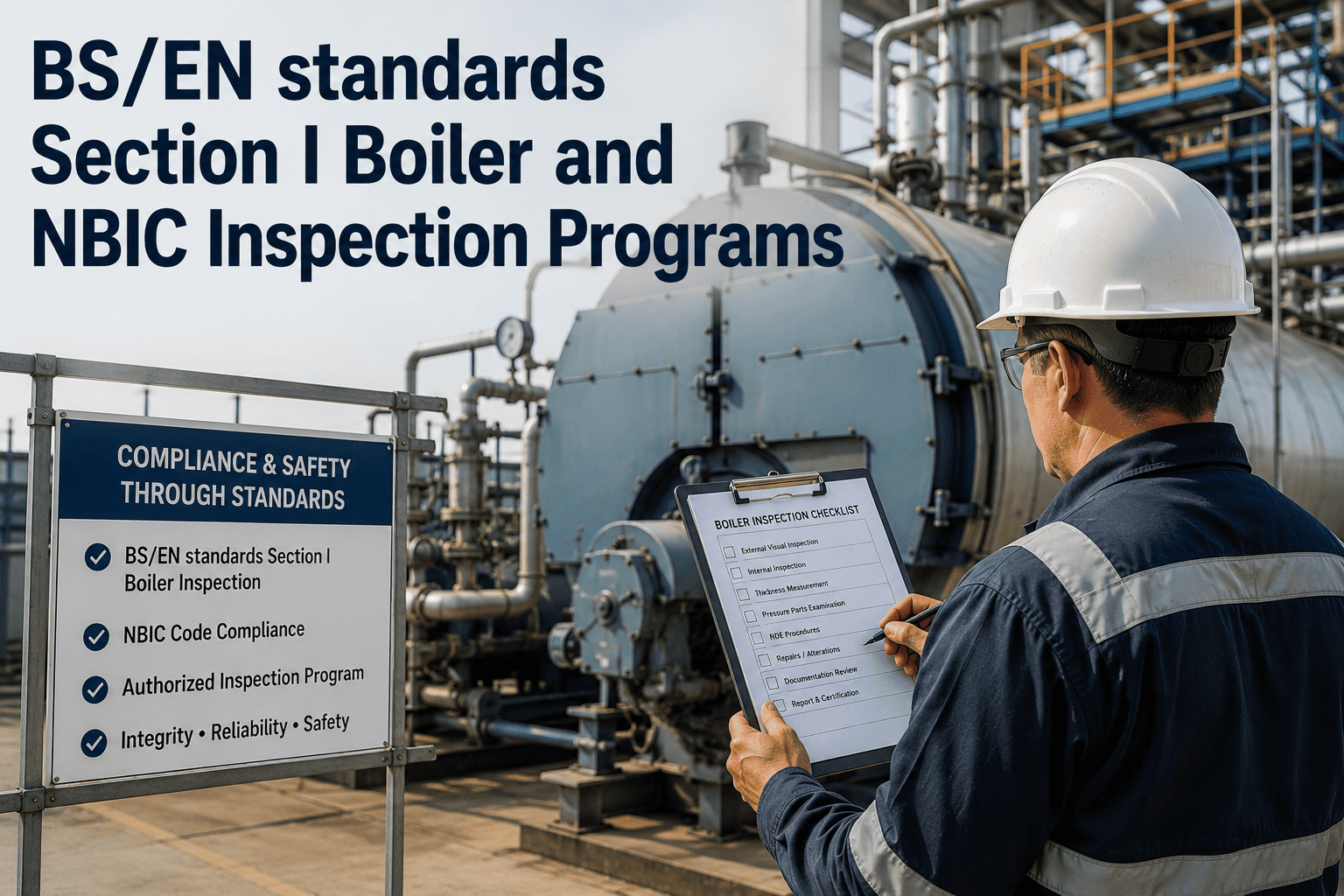
A boiler pressure part that's lost wall thickness doesn't rupture without warning signs first — it just usually has no one recording those signs until it's too late to act on them. Sign up to run your Section I boiler and NBIC inspection program — jurisdictional inspections, RT/UT surveys, and repair records — from one CMMS that keeps every finding audit-ready.
Why It Matters
A boiler that passed its last jurisdictional inspection isn't automatically safe today. Section I and the NBIC exist because pressure parts age, welds crack, and tube walls thin between inspections — and the only way to know a boiler is still fit for service is a record that proves it was actually checked, not just assumed fine.
The Three Pillars Of A Boiler Inspection Program
Jurisdictional Inspection
Internal and external inspections carried out by an authorised inspector on the schedule the jurisdiction and insurer require, with findings logged against the boiler's own history.
RT / UT Surveys
Radiographic checks on welds and ultrasonic thickness readings on tubes and headers, tracked point by point so a thinning trend shows up before it becomes a failure.
NBIC Repairs & Alterations
Any repair or alteration to a pressure part documented to NBIC requirements, since an undocumented repair can quietly void the boiler's fitness-for-service basis.
Each pillar runs on its own timeline. Jurisdictional inspections follow a fixed calendar set by regulation or insurer requirement. RT and UT surveys tighten as a component approaches its calculated minimum thickness. NBIC repair records don't expire at all — they follow the pressure part for the rest of its service life, which means losing one isn't a paperwork gap, it's a gap in the boiler's actual service history.
Where Boiler Inspection Programs Break Down
Lapsed Jurisdictional Dates
Missing the internal or external inspection window can take a boiler out of legal service until it's corrected
Untracked RT/UT Points
A thickness point checked from a different spot each time makes the wear trend impossible to trust
Lost Repair History
An NBIC repair record filed once and never linked to the component is effectively a repair that never happened
Inspector Access Gaps
An inspection scheduled without the right areas opened up means findings that should've been caught get deferred
No Minimum Thickness On File
A UT reading is meaningless without the calculated minimum it's meant to be compared against
Scattered Certificates
Inspection reports, R-forms, and thickness logs split across filing cabinets nobody can produce on demand
Never Let A Jurisdictional Date Slip Again
Oxmaint tracks every boiler against its own inspection window, links RT/UT readings and NBIC repair records to the exact pressure part they belong to, and flags anything approaching its due date. Sign up for a free trial to run it on your own boilers, or book a demo to see it set up for your fleet.
Jurisdictional Inspection vs In-House Monitoring
A jurisdictional inspection is a point-in-time check by an authorised inspector, required on a fixed schedule regardless of how the boiler has been running. In-house monitoring — RT/UT surveys, log sheet trends, water chemistry checks — happens far more often and is what actually catches degradation between those inspection dates. A program that only prepares for the jurisdictional visit and skips the in-house tracking is reacting to problems the inspector finds instead of catching them first.
Typical Inspection Basis By Component
| Component |
Inspection Basis |
What Gets Verified |
| Pressure vessel & drum |
Fixed jurisdictional interval |
Internal surface, welds, corrosion |
| Tubes & headers |
Condition-based, UT thickness driven |
Wall thickness against minimum retirement value |
| Repairs & alterations |
Event-based, NBIC documented |
Weld procedure, RT results, R-form filing |
Frequently Asked Questions
Q
What's the difference between a Section I requirement and an NBIC requirement?
Section I governs how a boiler is originally constructed, while the NBIC governs what happens to it afterward — inspection, repair, and alteration once the boiler is in service, which is why both sets of records need to sit alongside each other for the boiler's full working life.
Q
Who is actually authorised to sign off a jurisdictional boiler inspection?
An authorised inspector holding a valid commission recognised by the jurisdiction or insurer, and the finding only carries weight when it's tied to a verifiable record of who inspected what, and when.
Q
Does a small tube repair really need a formal NBIC record?
Yes — even a minor repair changes the pressure part's condition and history, and an inspector reviewing the boiler later has no way to know a repair was done correctly, or done at all, without the documented trail behind it.
Walk Into Your Next Jurisdictional Inspection Prepared
Oxmaint keeps jurisdictional inspections, RT/UT surveys, and NBIC repair records tied to their component, their interval, and their evidence, all in one auditable log. Sign up for a free trial to run it on your own boilers, or book a demo to see it configured for your plant.