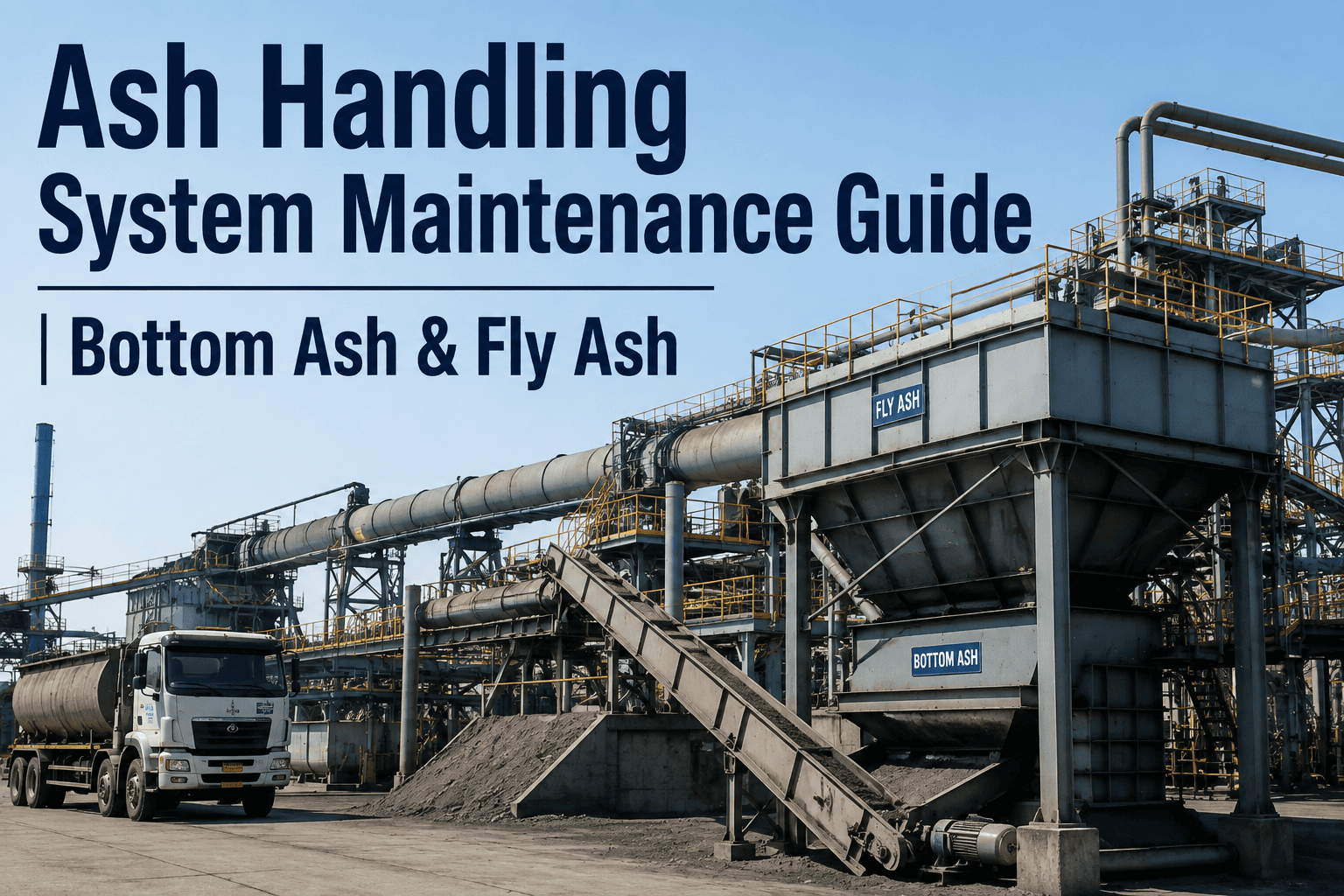
Ash handling runs two completely different systems under one name: a wet chain dragging bottom ash out of the furnace, and a dry pneumatic system pulling fly ash out of the ESP hoppers. A submerged scraper conveyor that loses chain tension and an ESP hopper that bridges with dry ash fail for entirely different reasons, but both stop ash removal just the same. This guide separates the two systems and covers what actually needs regular attention in each. Sign up to track bottom ash and fly ash equipment separately inside your own CMMS.
Why It Exists
Bottom ash is heavy, abrasive, and handled wet, so its equipment wears through chains, flights, and grinder rolls. Fly ash is fine and dry, so its equipment fails through blockages, bridging, and seal leaks rather than mechanical wear. Treating both systems the same maintenance way misses the actual failure points in each.
Two Ash Streams, Two Maintenance Needs
Submerged Scraper Conveyor
Chain tension, flight wear, and water level checked to keep bottom ash moving out steadily
Clinker Grinder
Roll clearance and tooth condition inspected so oversized clinker doesn't jam the discharge
ESP Hoppers
Vibrators, heaters, and level sensors checked to stop dry ash from bridging in the hopper
Pneumatic Conveying
Line pressure, valves, and filters inspected to keep fly ash flowing without blockages
Diagnosing A Blockage: Where To Check First
Check Line Pressure First
A sudden pressure spike on the pneumatic line usually points straight to the blockage location
Inspect Hopper Vibrators
A vibrator that's stopped running is the most common reason dry ash bridges instead of flowing
Verify Rotary Valve Seals
Worn valve seals let air leak in, which weakens conveying pressure downstream of the hopper
4
Confirm Filter Condition
A clogged filter restricts airflow at the receiving end, backing pressure up through the whole line
Keep Bottom Ash And Fly Ash Records Separate
Oxmaint lets you run separate PM schedules and inspection checklists for wet bottom ash equipment and dry fly ash equipment, so nothing gets treated the same when it shouldn't be. Sign up for a free trial to set this up on your own ash handling system, or book a demo to see it running live.
Bottom Ash System vs Fly Ash System
| Factor |
Bottom Ash (Wet) |
Fly Ash (Dry) |
| Primary risk |
Mechanical wear from abrasive, heavy material |
Blockages and bridging from fine, dry material |
| Common failure |
Scraper chain stretch or flight breakage |
Hopper bridging or rotary valve seal leakage |
| Key wear part |
Scraper chains, flights, and clinker grinder rolls |
Hopper vibrators, rotary valves, and line filters |
| Inspection focus |
Chain tension and water level checked routinely |
Pressure trends and vibrator activity monitored |
The Payoff
Ash handling failures rarely happen without warning. A scraper chain that's stretching, a hopper vibrator that's stopped, or a filter that's clogging all show signs before they cause a shutdown. Splitting maintenance by system, wet and dry, means those signs get caught by the right check instead of a generic one that misses what actually matters.
Frequently Asked Questions
Q
How often should a submerged scraper conveyor chain be checked?
Chain tension and flight condition are typically checked weekly, with a fuller inspection during scheduled outages since chain stretch is gradual but becomes costly if left unaddressed.
Q
Why does an ESP hopper bridge even when it's not full?
Fine fly ash can compact and form a stable arch above the outlet even in a partially filled hopper, which is why vibrators need to run on a consistent cycle rather than only when the hopper is near capacity.
Q
Can bottom ash and fly ash equipment run on separate PM schedules?
Yes, in a CMMS each ash handling asset can carry its own schedule and checklist, so wet-system chain checks and dry-system pressure checks don't get merged into one generic routine.
Stop Ash System Failures Before They Spread
Oxmaint keeps bottom ash and fly ash equipment on their own inspection routines and maintenance history, so the right check catches the right failure before it stops ash removal. Sign up for a free trial to start tracking your own ash handling system, or book a demo to see it working live.