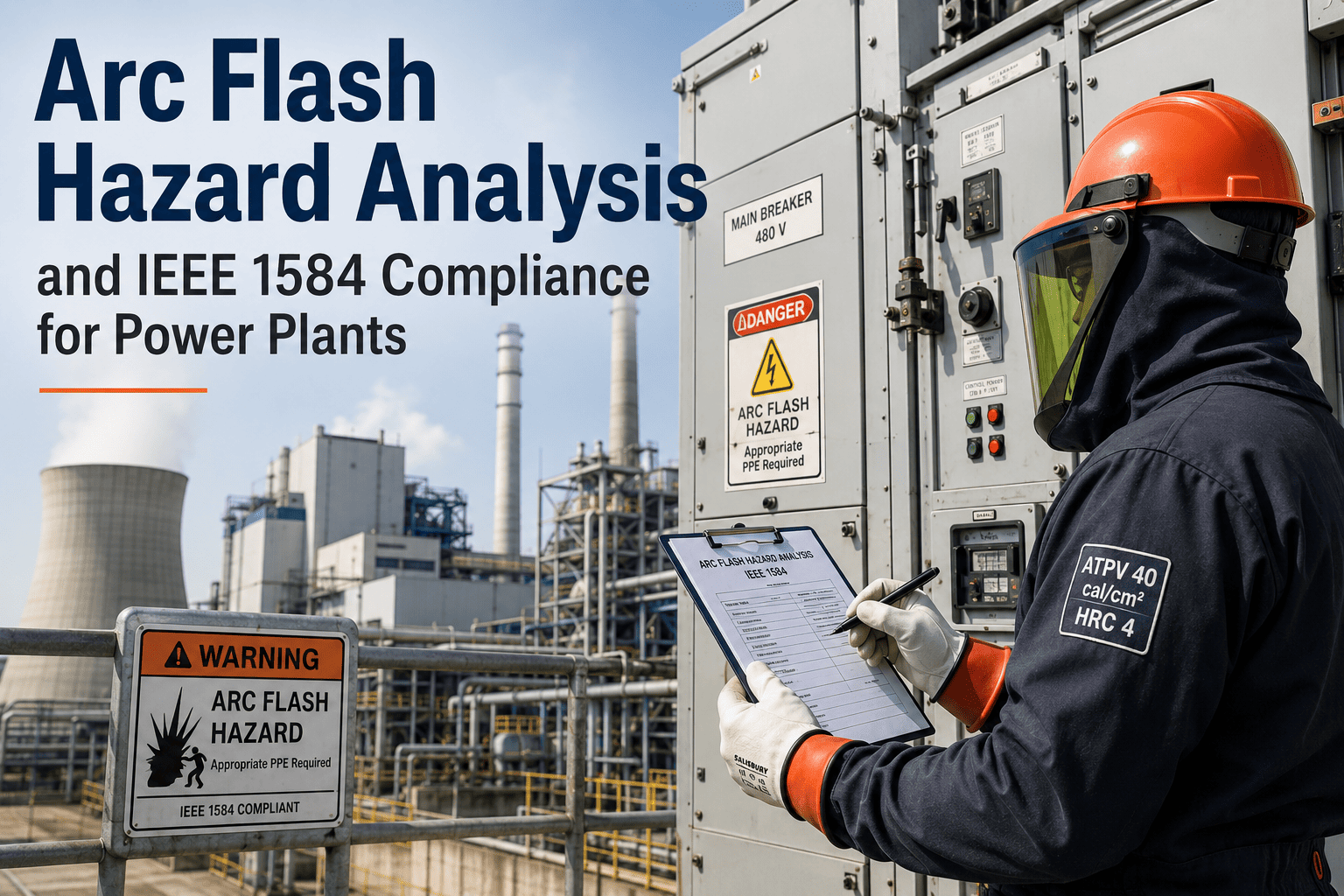
An arc flash label on a panel tells a worker what PPE to wear that day — but only if the number on it still matches the system behind the door. Change a transformer, adjust a relay setting, and the label is now guessing. Sign up to run your arc flash hazard analysis and IEEE 1584 compliance program — studies, labels, and PPE category verification — from one CMMS that keeps every record audit-ready.
Why It Matters
Incident energy isn't a fixed property of a piece of equipment — it shifts with fault current, clearing time, and system configuration. IEEE 1584 exists because a calculated boundary and PPE category are only correct for the system state they were calculated against, and a plant that changes without updating the study is sending workers out with numbers that no longer describe the actual hazard.
The Three Elements Every Arc Flash Program Has To Cover
The Study
Incident energy calculated per IEEE 1584 methodology at every bus and panel, reflecting the system's actual fault current and protective device clearing time.
The Labels
Physical labels at each piece of equipment showing incident energy, boundary distance, and PPE category, matched to the current version of the study.
PPE Category Verification
Confirmation that the PPE actually issued to a crew matches the category the label calls for, not a generic standard kit.
These three pieces only stay accurate together. A study that's current but never made it onto a label doesn't protect anyone standing at the panel. A label that's accurate but paired with the wrong PPE doesn't either. Every change to the electrical system — a new transformer, a protection setting change, a reconfigured bus, added generation — resets the clock on all three, whether or not five years have passed since the last full study.
Where Arc Flash Programs Break Down
Outdated Study Assumptions
A study calculated years ago against a system that's since been reconfigured no longer describes the real hazard
Labels Never Reprinted
A study gets updated but the physical label at the panel still shows the old numbers
Generic PPE Assumptions
Crews reaching for a standard PPE kit instead of checking the category the panel actually requires
Missed System Change Triggers
A modification that should've triggered a re-study slipping through without anyone flagging it
Unclear Study Ownership
Nobody assigned to actually track which panels are due for review after a system change
Scattered Study Versions
Multiple study revisions floating across drives with no clear record of which one is current
Never Let A Label Go Stale Again
Oxmaint ties every arc flash study to the panels it covers, flags equipment due for re-study after a system change, and keeps label revisions linked to the study that generated them. Sign up for a free trial to run it on your own sites, or book a demo to see it set up for your fleet.
Periodic Review vs Change-Triggered Review
IEEE 1584 practice calls for a full study review on a periodic basis, typically every few years, as a backstop. But the more important trigger is any change to the system itself — a new transformer, a protection relay resetting, added generation, or a reconfigured bus all invalidate the existing numbers immediately, regardless of where the plant sits in its periodic cycle. A program built only around the calendar review misses the changes that happen in between, which is exactly when a label is most likely to be wrong.
Typical Review Basis By Element
| Element |
Review Basis |
What Gets Verified |
| Incident energy study |
Periodic, plus system-change triggered |
Fault current, clearing time, calculated energy |
| Equipment labels |
Tied to latest study revision |
Boundary distance, incident energy, PPE category |
| PPE issue |
Per-job, checked against label |
Category match, garment condition, fit |
Frequently Asked Questions
Q
How often does IEEE 1584 actually require a full arc flash study?
Standard practice calls for a periodic review, commonly every few years, but that calendar review is a backstop, not the primary trigger — any change to fault current, protection settings, or system configuration requires an update immediately, independent of where the plant sits in its review cycle.
Q
What kind of system change actually invalidates an existing arc flash label?
Anything that changes available fault current or how fast a protective device clears it — a new transformer, an updated relay setting, added generation capacity, or a bus reconfiguration — since each of those directly changes the incident energy the original label was calculated against.
Q
Is a correct study enough on its own, without an updated label?
No — a worker at the panel reads the label, not the study file, so an accurate calculation that never makes it onto the physical label offers no protection at all to the person standing in front of the equipment.
Walk Into Your Next Audit With Current Labels Everywhere
Oxmaint keeps arc flash studies, label revisions, and PPE verification tied to their equipment, their trigger, and their evidence, all in one auditable log. Sign up for a free trial to run it on your own sites, or book a demo to see it configured for your team.