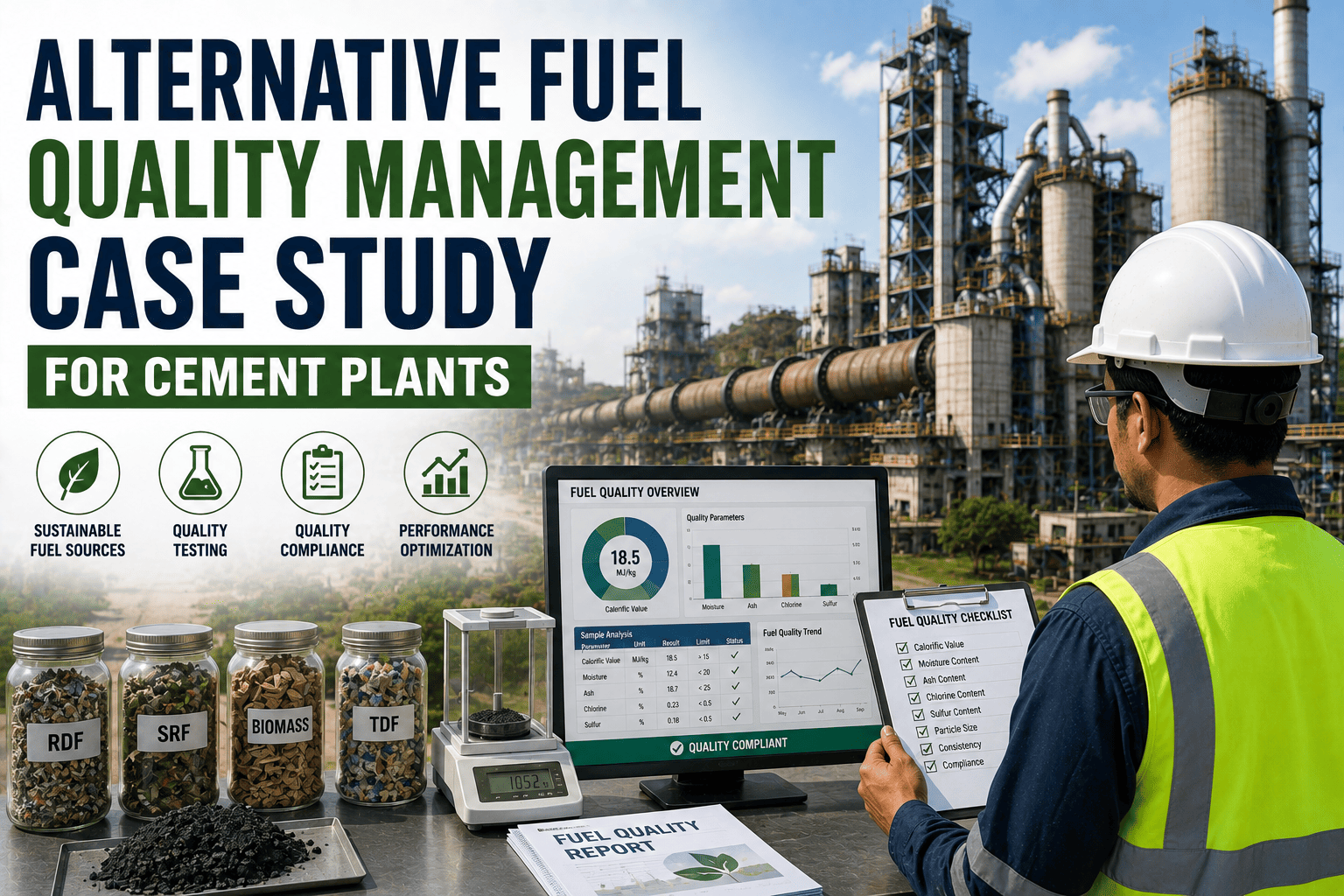
Alternative fuels like RDF, tire chips, and biomass can cut fossil fuel costs at a cement kiln significantly, but only if their quality is consistent. A load with unexpected moisture, low calorific value, or high chlorine content doesn't just waste money, it destabilizes kiln temperature, stresses refractory lining, and can show up as a clinker quality issue days later. This case study looks at how a cement plant used its CMMS to standardize alternative fuel sampling and quality checks, and what happened to substitution rate, kiln stability, and fuel cost once quality stopped being a guess. Sign up to see the same fuel quality workflow built for your own plant.
The Challenge
Alternative fuel sampling was inconsistent between shifts, some operators checked moisture and calorific value on every load, others only spot-checked when something looked off. Results lived in a logbook that nobody cross-referenced against kiln performance. When kiln temperature swung or clinker quality dipped, tracing it back to a specific fuel batch took days, by which point the plant had already burned through several more inconsistent loads.
Results After Standardizing AFR Quality Checks
+18% Substitution
Increase in alternative fuel substitution rate once operators trusted the fuel quality data behind each load
-50% Kiln Swings
Fewer temperature deviations traced back to inconsistent calorific value or moisture in fuel batches
-22% Fuel Cost
Reduction in overall fuel cost from being able to push substitution higher without risking kiln stability
The AFR Quality Control Loop
Sample
Every incoming load checked against a fixed digital protocol, not memory
→
Test
Moisture, calorific value, and chlorine content logged straight into the CMMS from the lab
→
Flag
Out-of-spec batches are blocked from the feed automatically before they reach the kiln
→
Trace
Any kiln deviation can be matched back to the exact batch within minutes
Fuel Quality Variance: Logbook vs Digital Sampling
Batch-to-batch variance in calorific value across a typical month. Logging results straight into the CMMS at the point of testing, instead of a shared logbook, cut variance to a fraction of what it was.
Push Substitution Higher Without Risking Kiln Stability
Oxmaint logs every alternative fuel sample against a fixed protocol and flags out-of-spec batches before they reach the kiln, so substitution rate can climb without surprises. Sign up for a free trial to build your own fuel quality workflow, or book a demo to walk through this case study in detail.
Alternative Fuel Management Before And After
| Area |
Before |
After |
| Fuel sampling |
Inconsistent between shifts, dependent on individual operators |
Fixed digital protocol applied to every incoming load |
| Quality results |
Recorded in a shared logbook, rarely cross-checked against kiln data |
Logged directly in the CMMS and linked to the batch used in the kiln |
| Out-of-spec fuel |
Often caught only after kiln temperature or clinker quality shifted |
Flagged and blocked from the feed before it reaches the kiln |
| Root cause tracing |
Took days, by which point several more loads had already been burned |
Matched to the exact fuel batch within minutes of a kiln deviation |
The Results
Operators stopped burning fuel they weren't sure about. Every load had a moisture, calorific value, and chlorine reading attached before it ever reached the kiln, and when something did go out of spec, it never got the chance to disrupt the burn. That confidence let the plant push substitution rate higher, run a steadier kiln, and cut fuel cost without adding risk to clinker quality.
Frequently Asked Questions
Q
Why does inconsistent alternative fuel quality hurt kiln performance?
The kiln is tuned to a fairly narrow band of calorific value and moisture, so a batch that swings outside that band changes flame temperature and burn behavior, which can stress refractory lining and show up later as a clinker quality problem.
Q
Can better fuel quality tracking actually raise the substitution rate?
Yes, plants often cap substitution conservatively because they can't fully trust incoming fuel quality; once every batch is tested and out-of-spec loads are automatically blocked, operators can safely push the ratio higher.
Q
What gets tracked for each alternative fuel batch?
Typically moisture content, calorific value, and chlorine level at minimum, logged against the batch and linked to the exact date and time it entered the kiln feed, so any later deviation can be traced back to it directly.
Bring Consistency To Your Alternative Fuel Program
Oxmaint standardizes fuel sampling, flags out-of-spec batches automatically, and links every load to kiln performance data, so your alternative fuel program stays predictable. Sign up for a free trial to build your own fuel quality workflow, or book a demo to walk through the full case study.