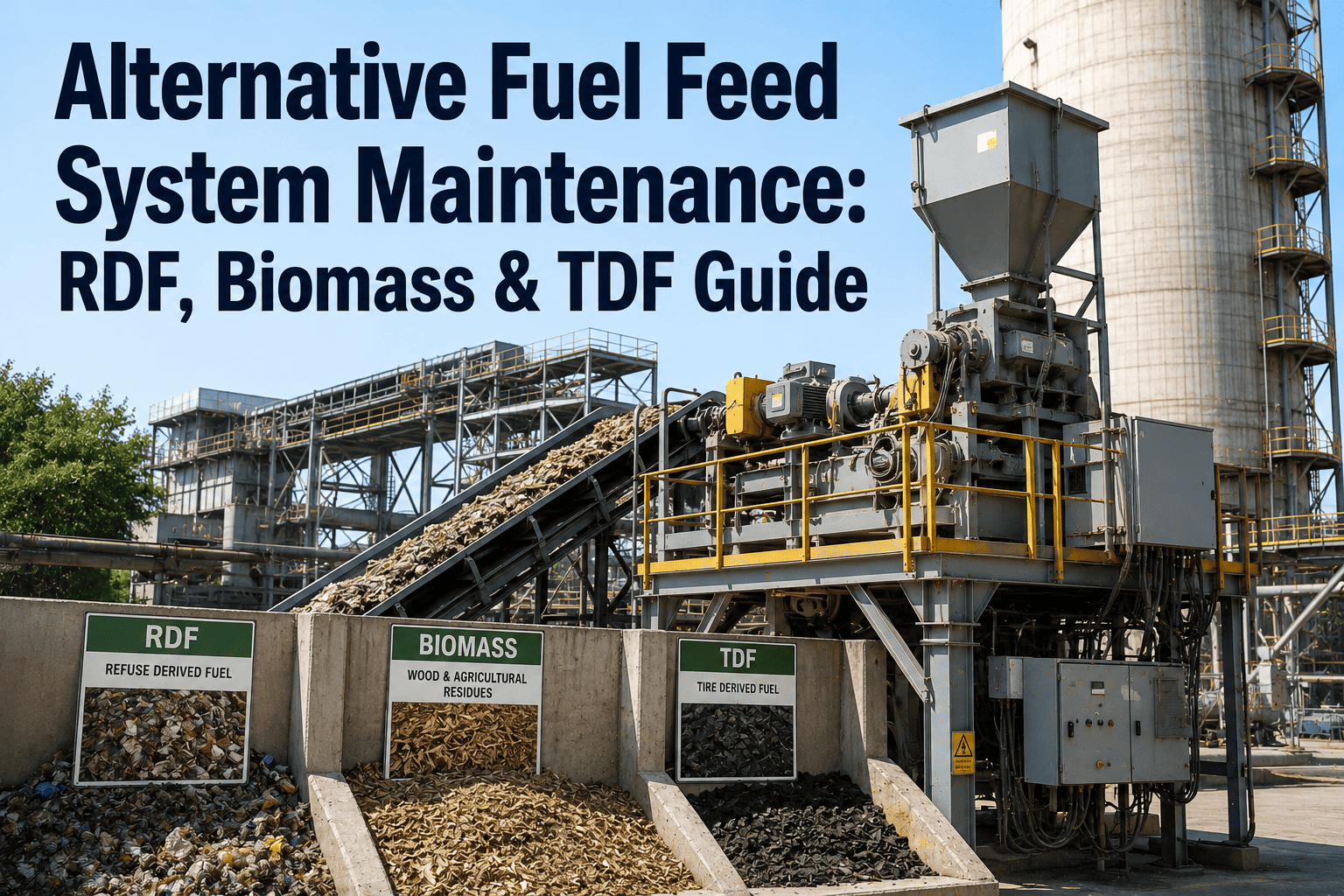
RDF, biomass and tyre-derived fuel all get called "alternative fuel" like they're one system to maintain, but a dosing screw that handles fluffy RDF without complaint will choke on tyre chips, and a chain conveyor tuned for biomass moisture will jam differently than one running shredded waste. Without preventive cleaning and wear-part replacement, solid alternative fuel feeding systems accumulate material and wear at rates that cause blockages 3 to 5 times per campaign. Start a free trial to see how Oxmaint schedules condition-based PM separately for RDF, biomass and TDF feed equipment.
3-5x
Blockages per campaign on solid alternative fuel feed lines without a structured PM program
62%
Of cement plants miss flame detector calibration intervals without structured PM scheduling
90 days
Typical flame detector calibration interval that keeps false trips and missed loss-of-flame events low
Last Point
Feeding and dosing is described as the last viable detection point before material reaches the calciner
Why a Blockage Isn't the Only Thing at Stake
Storage areas for RDF and alternative fuel are particularly vulnerable to spontaneous combustion and temperature changes that are hard to detect early. Once material starts moving toward the calciner, feeding and dosing equipment becomes the last realistic point to catch a developing fire before it reaches the process, which is why chain conveyors, screw conveyors, and rotary valves need monitoring built in, not bolted on afterward.
Three Fuels, Three Different Ways to Jam a Line
| Fuel Type |
Handling Challenge |
Feed Equipment Priority |
| RDF |
Tends to compact and wad in auger or drag conveyors, creating pulsing feed |
Fine dosing conveyor calibration and fluffing consistency checks |
| Biomass |
Moisture variation swings flow rate and bulk density between deliveries |
Feeder throughput trending against moisture readings, not a fixed setpoint |
| TDF |
Longer retention time and heavier chips accelerate conveyor wear |
Wear-part inspection on belts, chains and shredder blades on a shorter cycle |
Separate PM Schedules for Every Alternative Fuel Line
Oxmaint tracks fuel quality parameters per batch and schedules condition-based PM for RDF dosing screws, biomass feeders, and tyre shredders individually, instead of one generic conveyor checklist. Sign up for a free trial to see it against your own AFR system, or book a demo and we'll walk through your feed line maintenance program.
Where Fire Protection Actually Needs to Sit
| Location |
Risk |
Detection Method |
| Storage bunker or silo |
Spontaneous combustion, hard to detect early in a static pile |
Thermal imaging surveillance, water or foam-based suppression |
| Feeding and dosing point |
Backfire risk toward the feed point as material approaches the calciner |
Flame detectors and thermal imaging at conveyors, valves and elevators |
How Oxmaint Supports Alternative Fuel Handling Teams
Oxmaint builds a distinct asset hierarchy for AFR receiving, pre-processing, dosing and combustion equipment, each with its own accelerated wear profile and inspection requirements, instead of forcing RDF, biomass and TDF lines into one standard conveyor checklist. Flame detector calibration, fire suppression checks and fuel quality records stay attached to the correct asset, and compliance documentation for EPA, EU Waste Framework Directive and regional co-processing regulations exports from the same platform. Book a demo to see it mapped against your own alternative fuel system.
Frequently Asked Questions
Q
Can RDF, biomass and TDF really run on the same maintenance checklist?
Not reliably. RDF tends to compact and wad in auger or drag conveyors, biomass flow rate shifts with moisture content between deliveries, and TDF's heavier chips and longer retention time wear conveyor components faster. A shared checklist tends to under-maintain whichever fuel type is least represented in it.
Q
Why is the feeding and dosing point called the last viable detection point?
Once fuel leaves feeding and dosing equipment, it's transported directly toward the calciner, so any undetected smouldering or flame at that stage has nowhere else to be caught before it reaches the process. That's why flame detectors and thermal imaging are concentrated at chain conveyors, screw conveyors, and rotary valves rather than further upstream alone.
Q
What happens if flame detector calibration intervals get missed?
Uncalibrated flame detectors either trigger false kiln trips, costing unnecessary downtime, or more dangerously fail to detect a genuine loss-of-flame event. A structured PM schedule around the typical 90-day calibration interval is what keeps both risks in check.
Q
Why is storage considered more dangerous than active feeding for AFR?
A static pile in a bunker or silo can develop spontaneous combustion slowly, with temperature changes that are genuinely difficult to detect until they've progressed. Active feed lines at least move material continuously, which is part of why storage areas need dedicated thermal surveillance rather than relying on the same monitoring used further down the line.
Keep Every Alternative Fuel Line Running, Not Just Fixed After a Jam
Oxmaint gives cement plant teams fuel-specific PM scheduling for RDF, biomass and TDF equipment, flame detector calibration tracking, and co-processing compliance documentation in one platform. Sign up for a free trial to explore it yourself, or book a demo and we'll walk through it against your own AFR system.