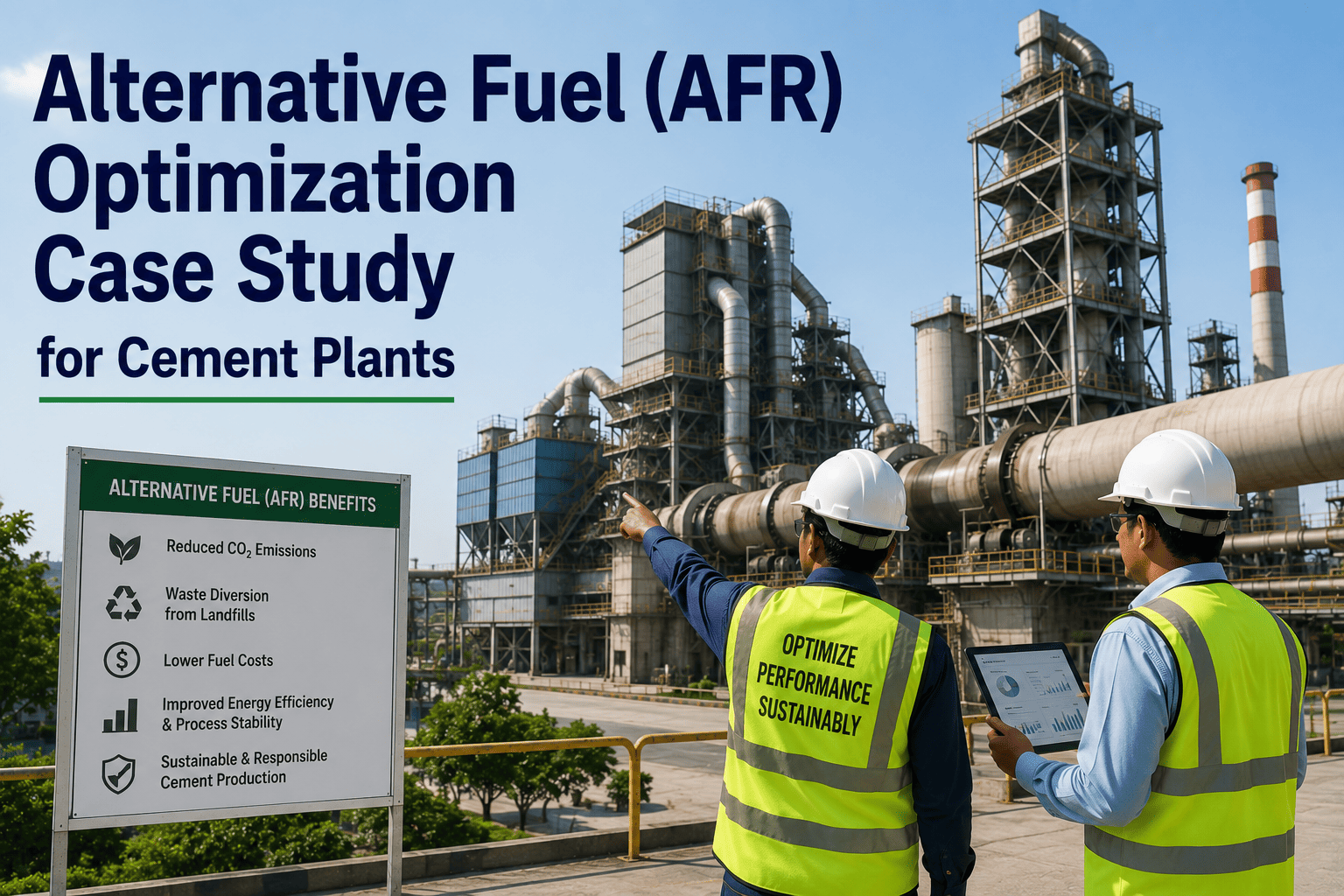
Feeding alternative fuels into a rotary kiln is a balancing act. Shredded tires, refuse-derived fuel, and biomass all burn differently from coal, and any inconsistency in how they're fed destabilizes kiln temperature and clinker quality almost immediately. Cement plants pushing for higher AFR substitution rates often find the equipment feeding that fuel, not the fuel itself, is what limits how far they can go. Predictive maintenance on dosing feeders, conveyors, and dampers is what lets AFR rates climb without kiln instability. Sign up to see how your own AFR feed line would benefit from condition-based tracking.
Cement plants raising AFR substitution rates often hit a ceiling set by feed equipment reliability rather than fuel availability. Dosing feeder jams, conveyor belt wear, and damper faults cause inconsistent fuel delivery into the kiln, forcing operators to pull back on AFR rates to protect clinker quality whenever the feed line becomes unreliable.
What Gets Monitored On The AFR Feed Line
Oxmaint tracks feeder, conveyor, and damper condition so fuel delivery stays consistent as your AFR substitution rate climbs. Sign up for a free trial to see it against your own feed line, or book a demo to walk through your AFR optimization plan.
AFR Feed Line Reliability Before And After
The fuel supply chain rarely limits AFR substitution as much as the equipment feeding it into the kiln. Once dosing feeders, conveyors, and dampers get the same predictive attention as core process equipment, feed rate consistency improves enough that plants can raise AFR substitution with confidence instead of holding back to protect clinker quality.
Why Feed Equipment Limits AFR Rates More Than Fuel Supply
Alternative fuels vary far more in size, moisture, and calorific value than coal, which makes consistent feed rate the single biggest factor in kiln stability. A dosing feeder losing calibration or a conveyor drifting out of alignment introduces exactly the kind of inconsistency that forces operators to pull back on AFR rates as a safety margin. Keeping that equipment in known condition removes the need for that margin.
Frequently Asked Questions
Make Your AFR Feed Line As Reliable As Your Kiln Demands
Oxmaint tracks feeder, conveyor, and damper condition so alternative fuel delivery stays consistent as your substitution rate climbs. Sign up for a free trial to see it against your own feed line, or book a demo to walk through your AFR optimization plan.