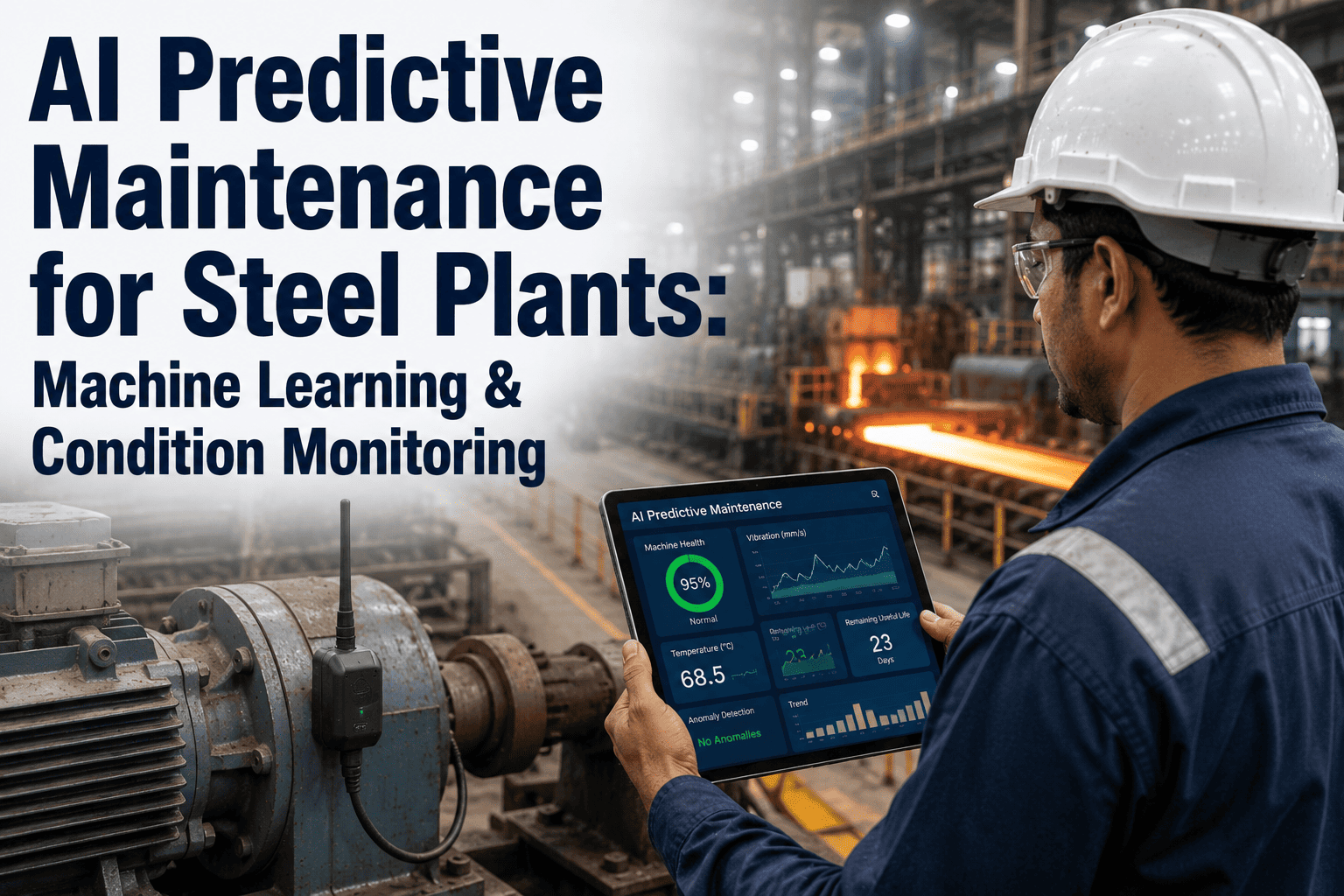
A bearing doesn't fail overnight, it whines a little louder, runs a little hotter, and vibrates a little differently for weeks before it actually seizes. Predictive maintenance is just the discipline of listening to those early signals instead of waiting for the alarm. Sign up to see how Oxmaint turns vibration and temperature data into an alert your team can act on weeks early.
2-6 Weeks
Typical early warning window before a bearing or motor failure actually occurs
30-40%
Reduction in unplanned downtime typically reported after predictive rollout
85-95%
Model accuracy typically reached once thresholds are tuned to your own assets
25%+
Typical reduction in spare parts and labor cost versus a fixed preventive schedule
Why Preventive Maintenance Alone Isn't Enough Anymore
A fixed preventive schedule replaces parts on a calendar whether they need it or not, which either wastes a perfectly good bearing or misses one that's already failing early. Condition monitoring flips that around: sensors track vibration, temperature, and current draw continuously, and machine learning models flag the moment a reading drifts away from that asset's own normal pattern, not a generic industry threshold.
Four Signals That Feed a Predictive Maintenance Model
| Signal |
Common Source |
What It Catches Early |
| Vibration analysis |
Accelerometers on motors, fans, and gearboxes |
Bearing wear, misalignment, and imbalance |
| Thermal monitoring |
Infrared sensors on bearings, electrical panels, drives |
Friction buildup and loose electrical connections |
| Current draw analysis |
Amperage sensors on motor circuits |
Winding faults and mechanical load abnormalities |
| Acoustic monitoring |
Ultrasonic sensors near compressors and valves |
Air leaks and early-stage cavitation |
From Sensor Reading to Work Order, Automatically
Oxmaint connects your IoT sensors directly to condition-based alerts, so a drifting vibration reading creates a work order before it becomes a breakdown, not after. Sign up for a free trial to connect your first asset, or book a demo and we'll walk through your current sensor setup.
Reactive, Preventive, and Predictive Maintenance Compared
| Approach |
Trigger for Action |
Typical Downside |
| Reactive |
Equipment has already failed or stopped |
Highest cost, unplanned downtime, safety risk |
| Preventive |
A fixed calendar date or run-hour threshold |
Wastes healthy parts or misses early-failing ones |
| Predictive |
Sensor data drifting from the asset's normal pattern |
Needs upfront sensor investment and tuning time |
Fixed Alert Thresholds vs a Machine Learning Model
Fixed Threshold Alerts
One generic limit applied to every asset of that type
Frequent false alarms on machines that just run a bit warmer
Misses slow, gradual drift that never crosses the fixed line
Machine Learning Model
Learns each asset's own normal operating pattern
Flags gradual drift away from that specific baseline
Fewer false alarms as the model recalibrates over time
How Oxmaint Supports AI-Driven Predictive Maintenance
Oxmaint pulls in vibration, temperature, and current draw data from your existing IoT sensors and learns what normal looks like for each asset individually. When a reading starts drifting, it generates a work order automatically, with the sensor trend attached, so your team knows exactly what to check and why. Book a demo to see it running against your own critical assets.
Frequently Asked Questions
Q
How much historical data does a predictive maintenance model actually need?
Models can start generating useful alerts within a few weeks of continuous sensor data, though accuracy keeps improving as more shutdown and failure cycles get fed back in over the following months.
Q
Which assets should a steel plant sensor first?
Start with assets where an unplanned failure is most expensive, typically kiln or furnace main drives, mill motors, and critical fans, then expand sensor coverage as the model proves itself.
Q
Does predictive maintenance replace preventive maintenance entirely?
Not usually. Most plants run both together, predictive for the critical, well-sensored assets, and a lighter preventive schedule for lower-risk equipment where sensor investment isn't worth it yet.
Q
What happens when the model flags a false alarm?
A technician checks the asset, logs what they actually found, and that outcome feeds back into the model. Over time this feedback loop is exactly what drives the false alarm rate down.
Catch the Failure Weeks Before It Happens, Not After
Oxmaint gives steel plant teams IoT-connected condition monitoring, machine learning-based failure prediction, automatic work order generation, and asset-specific accuracy that improves with every cycle. Sign up for a free trial to connect your first sensor, or book a demo and we'll walk through it against your own equipment.