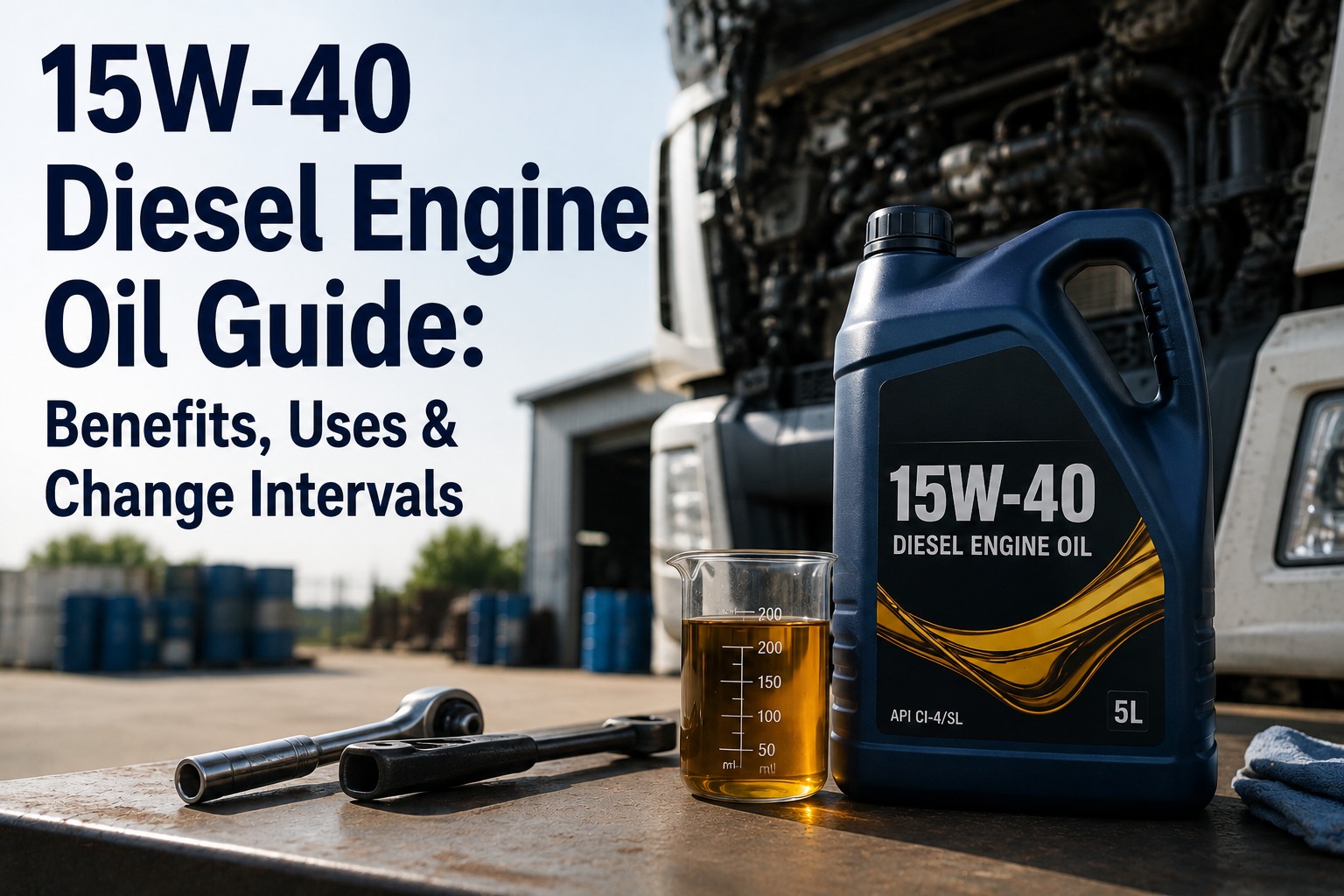
15W-40 diesel engine oil is the most widely used heavy-duty engine oil across UK commercial fleets, valued for its balance of cold-start flow and high-temperature film strength in turbocharged diesel engines. The "15W" rating means it pumps like a lighter grade at startup, while the "40" rating protects bearings and cylinder liners at full operating temperature — making it the default fleet engine oil for HGVs, plant machinery, and agricultural equipment across Britain. Choosing between conventional 15W-40 diesel motor oil and a semi-synthetic or full synthetic depends on duty cycle, ambient temperature, OEM specifications, and drain interval strategy. OxMaint helps UK fleet maintenance managers track lubricant specifications, oil analysis results, and drain intervals across every asset — so you can Start Free Trial and replace spreadsheet-based oil tracking with a defensible, data-driven CMMS.
Is 15W-40 Still the Right Diesel Engine Oil for Your UK Fleet?
Over 70% of UK heavy-goods fleets still specify 15W-40 as their primary diesel motor oil. But drain intervals, oil analysis trends, and OEM requirements are shifting. Without a CMMS to track lubricant decisions per asset, you are likely over-servicing some HGVs and under-protecting others.
A 120-HGV fleet running 15W-40 on a fixed 40,000 km drain interval typically spends £70,000–£90,000 per year on oil, filters, and labour. Oil analysis can safely extend that to 60,000+ km on healthy units — but only if you track results, viscosity trends, and contamination levels per asset.
What 15W-40 Diesel Oil Viscosity Actually Means
The Society of Automotive Engineers (SAE) J300 standard defines how 15W-40 behaves across operating temperatures. In the UK, this sits alongside the ACEA (European Automobile Manufacturers Association) sequences that govern heavy-duty diesel oil performance. Understanding these classifications is the first step in selecting the correct diesel oil for your operating environment.
The "W" grade means the oil pumps adequately at temperatures as low as -20°C — well within the range of British winters, including the Scottish Highlands. It flows to the turbocharger and camshaft bearings within the first few seconds of crank, critical for avoiding dry-start wear.
At 100°C the oil maintains a kinematic viscosity of 12.5–16.3 cSt. This film thickness protects piston rings, cylinder liners, and main bearings under sustained high-load and high-temperature operation on motorways and A-roads.
ACEA E9 is the current performance standard for modern 15W-40 diesel engine oil in the UK and EU. It provides enhanced oxidation resistance, shear stability, and low-SAPS chemistry compatible with DPFs and Euro VI aftertreatment systems.
Common 15W-40 Oil Uses Across UK Heavy Duty Fleets
15W-40 heavy-duty diesel oil is specified across a wide range of UK commercial vehicle and plant categories. Here is where it performs best — and where you should consider an alternative.
HGVs & Tractor Units
7.5t–44t rigids and artics with DAF, Scania, Volvo, Mercedes-Benz, or MAN engines. Ideal for long-haul and multi-drop regional work where operating temperatures are consistent and duty cycles are moderate to high.
OEM ApprovedPlant & Construction
JCB, Komatsu, and Caterpillar excavators, wheeled loaders, and dozers with high-idle duty cycles on UK sites. 15W-40 handles dust, heat, and heavy load — but monitor soot levels via oil analysis more frequently.
High Soot RiskAgricultural Machinery
John Deere, New Holland, and Massey Ferguson tractors and combines with seasonal use across arable and dairy operations. 15W-40 protects during long idle periods and high-load field work. Change oil by hours, not miles.
Hour-BasedGenerator Sets
Standby and prime-rated diesel gensets for data centres, hospitals, and commercial standby. 15W-40 is standard for Cummins, Perkins, and FG Wilson units. Limit drain intervals to 250–500 hours or annual, whichever comes first.
Standby Rated15W-40 vs Synthetic Diesel Oil: Which Is Right?
The 15W-40 vs synthetic debate is not about which oil is "better" — it is about which oil matches your operating conditions, drain interval strategy, and budget. Use this comparison to make a defensible decision for your UK operation.
| Factor | Conventional 15W-40 | Full Synthetic 5W-40 / 0W-40 |
|---|---|---|
| Cold-Start Performance | Good to -20°C; may thicken in extreme cold | Excellent to -40°C; faster cold pump |
| Oxidation Resistance | Moderate; shorter drain intervals | High; supports extended drains |
| Cost per Litre | £3.80–£5.50 | £6.50–£9.50 |
| Typical Drain Interval | 25,000–40,000 km | 60,000–100,000+ km |
| Fuel Economy Impact | Baseline | 0.5–1.5% improvement |
| Best For | Moderate UK climate, mixed-age fleets | Extreme cold, long-haul, new Euro VI engines |
Synthetic diesel oil always pays for itself in fuel savings.
A 1% fuel gain on a 160,000 km/year HGV saves roughly £380–£520 at current UK diesel prices. The £320+ annual synthetic oil premium often offsets that — unless you also extend drain intervals.
You can switch back and forth between 15W-40 and synthetic anytime.
You can, but without documenting the switch per asset, you lose the ability to correlate oil type with wear-metal trends in your analysis programme.
When to Switch from 15W-40 to Synthetic Diesel Oil
Switching lubricants is a maintenance decision that should be documented, tracked, and validated by oil analysis — not made on a hunch. Follow this timeline to manage a defensible transition, especially important for O-licence and DVSA compliance records.
Baseline Oil Analysis
Pull a sample from your current 15W-40 at the next drain. Send to a UKAS-accredited lab such as Millers Oils, Fuchs, or Castrol for wear metals (Fe, Cu, Pb, Al), soot %, viscosity, and TBN. This is your benchmark for comparing synthetic performance.
Pilot on 10-15% of Fleet
Select a representative sample of HGVs — mix of route types and engine hours. Switch to synthetic and log the change in your CMMS with the date, oil brand, viscosity grade, and reason for the switch — useful evidence for Traffic Commissioner reviews.
Sample at 3 Intervals
Run oil analysis on the pilot group for three consecutive drain cycles. Compare wear-metal trends, TBN retention, and viscosity stability against the 15W-40 baseline. Look for measurable improvement.
Calculate ROI
If synthetic extends drains from 40,000 km to 65,000 km, you eliminate roughly one oil change per HGV per year. At £180 per service, a 120-HGV fleet saves £21,600 — offsetting the higher per-litre cost. Document the maths for finance sign-off.
Roll Out or Revert
If the data supports it, roll out fleet-wide and update the lubricant specification for every asset in your CMMS. If not, stay with 15W-40 — you now have the data to justify the decision to the transport manager and ownership.
How OxMaint Helps UK Fleets Manage Oil Selection & Drain Intervals
Tracking lubricant specifications, oil analysis results, and drain intervals across dozens or hundreds of assets is impossible on spreadsheets — and inadequate for DVSA earned recognition or O-licence audits. OxMaint turns fleet lubrication into a structured, auditable, data-driven process.
Lubricant Specification Tracking
Assign the correct oil grade, brand, and ACEA/API category to each asset record. When an OEM updates a specification or you switch from 15W-40 to synthetic, the change is logged with a timestamp — defensible for DVSA audits and warranty claims.
Oil Analysis Integration
Upload UKAS lab results directly to the asset's work order history. OxMaint flags abnormal wear metals, viscosity drift, or TBN depletion — so you can extend or shorten drain intervals based on actual oil condition, not a calendar guess.
Condition-Based Drain Intervals
Move from fixed mileage to dynamic, analysis-driven PMI schedules that align with your 6-weekly safety inspection cycle. OxMaint automatically generates the next oil-change work order based on lab results, engine hours, or kilometres — reducing unnecessary oil changes by 25-40%.
Maintenance Analytics & Cost Tracking
See per-asset and fleet-level lubrication costs in pounds, drain-interval trends, and oil-related downtime events in one dashboard. Quantify the ROI of switching from 15W-40 to synthetic with real numbers — not estimates.
See How OxMaint Tracks Every Oil Decision Across Your Fleet
Book a 30-minute demo and we will show you how to replace spreadsheet-based lubrication tracking with a CMMS that logs every oil type, analysis result, and drain interval — per asset, defensibly, and ready for DVSA scrutiny.
15W-40 Diesel Engine Oil: FAQs
Answers to the most common questions UK fleet managers ask about 15W-40 diesel oil, viscosity, switching, and drain intervals.
What does 15W-40 mean in diesel engine oil?
15W-40 is an SAE multi-grade viscosity rating. The "15W" indicates the oil flows like a winter-grade oil rated for cold starts down to approximately -20°C — well within typical UK winter conditions — protecting the engine during the critical first seconds after ignition. The "40" means the oil maintains a kinematic viscosity of 12.5–16.3 centistokes at 100°C, providing a robust protective film at full operating temperature under heavy load.
How often should I change 15W-40 diesel oil in an HGV?
Most OEMs recommend a drain interval of 25,000–40,000 km for conventional 15W-40 in on-highway heavy-duty diesel engines under normal service. With a consistent oil analysis programme and good filtration, that interval can often be safely extended to 60,000 km or more. For plant and off-highway equipment, follow hour-based intervals — typically 250–500 hours. Always defer to your specific OEM guideline and oil analysis results, which you can track in OxMaint alongside your 6-weekly PMI records.
Is 15W-40 better than synthetic diesel oil?
Neither is universally better — it depends on operating conditions. Conventional 15W-40 is cost-effective, widely available across UK factors and distributors, and meets OEM specs for most moderate-climate fleet operations. Full synthetic diesel oils (like 5W-40) offer superior cold-flow, oxidation resistance, and longer drain potential, making them better for Scottish winters, extended drains, or severe duty cycles. The right choice requires tracking oil analysis data per asset, which is where a CMMS adds significant value.
Can I use 15W-40 in cold weather below -20°C?
15W-40 is rated for cold starts down to about -20°C. This covers almost all UK winter conditions, though sustained cold snaps in the Highlands, Cairngorms, or northern Pennines can occasionally exceed this. For fleets operating in those regions or exporting to Scandinavia, a 5W-40 or 0W-40 synthetic is recommended. If you must run 15W-40 in extreme cold, use engine block heaters and verify cold-start performance with oil analysis. Document the operating conditions and switch decisions in a CMMS like OxMaint for audit readiness.
What is the current specification for 15W-40 diesel oil in the UK?
In the UK and EU, heavy-duty 15W-40 diesel engine oil is primarily specified against ACEA E9 (for Euro VI engines with DPFs and SCR aftertreatment) and API CK-4. ACEA E9 is a low-SAPS formulation compatible with modern emissions systems. Always verify that the oil you purchase meets your engine manufacturer's specific approval — such as MAN M 3575, Mercedes-Benz MB 228.31, Volvo VDS-4.5, or DAF Extended Drain — and log the approved spec in your CMMS asset record.
Stop Guessing. Start Tracking Every Oil Decision.
OxMaint gives UK fleets a single CMMS to manage lubricant specifications, oil analysis, drain intervals, and maintenance costs across every asset — DVSA-ready and O-licence defensible. See it in action — book a demo or start your free trial today.
Free 14-day trial · No credit card