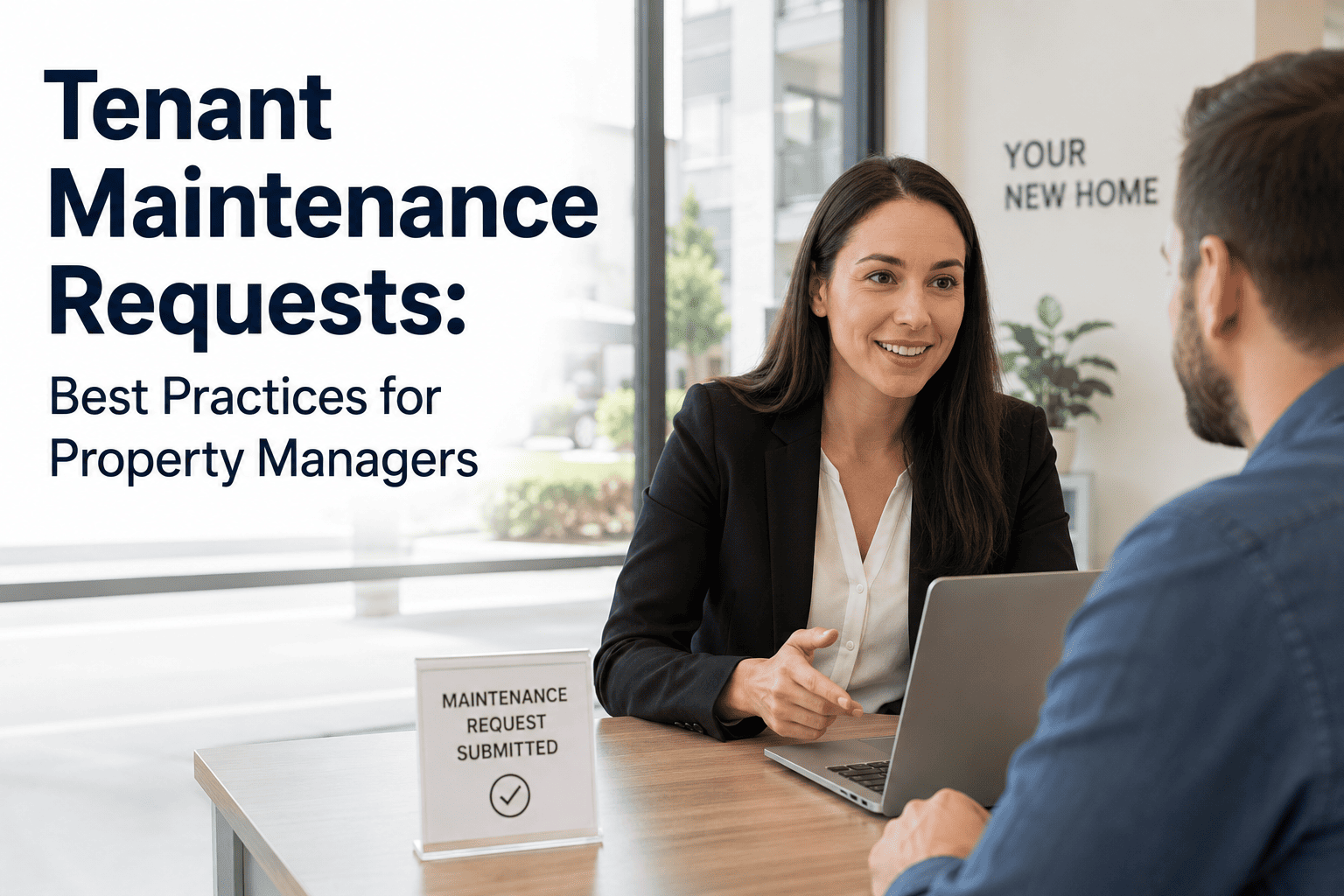
The gap between a tenant submitting a request and that request becoming a closed work order is where lease renewals are won or lost. It is not the broken tap or the faulty HVAC that drives tenants to leave — it is the silence that follows. No confirmation. No update. No idea whether anyone saw it. Most property managers do not have a process problem. They have a visibility problem: too many channels, too many handoffs, and no single place where every request is tracked from submission to sign-off. Start a free trial to see how Oxmaint centralises every tenant request, automates triage, and gives your team and your tenants live visibility at every stage.
31%
Higher lease renewal rates at properties holding under 2-hour acknowledgment and 24-hour resolution on maintenance requests
11.4hr
Median response time at properties without SLA tracking — versus under 2 hours at properties with structured workflows
25%
Reduction in turnover rates reported by properties that improve maintenance communication within six months
1–3mo
Cost of replacing a single tenant in lost rent, vacancy, and re-leasing — the real financial case for fast maintenance response
Why Most Maintenance Workflows Break — and Where
The Fragmented Intake Problem
Tenants call, email, text, and knock. Each channel produces a separate record — or no record at all. The same issue gets submitted three times by a frustrated tenant and generates three unlinked work orders. A technician attends twice before anyone notices. No single source of truth means no way to measure anything.
A request sits unacknowledged for 24 hours. The tenant has no reference number, no confirmation, no idea whether anyone saw it. They call to follow up. That call takes your time. Frustration has already built before a single technician has been assigned — not because the problem was not being fixed, but because nobody said anything.
The Contractor Handoff Problem
The work order goes to an external contractor. From that point, nobody in your team can see what is happening without picking up the phone. The job may be done. It may be waiting on a part. The SLA clock is running, the tenant is waiting, and your dashboard shows nothing. Contractor work is where most SLA breaches occur unnoticed.
The Missing Audit Trail Problem
A tenant disputes a repair was ever done. A deposit deduction is challenged. An inspector asks for maintenance records. Without a timestamped, searchable history per unit — with photos, dates, and technician sign-off — you have no defence. Spreadsheets and email threads are not an audit trail. They are a liability.
The Request Lifecycle — What Best Practice Looks Like End to End
Every tenant request should follow the same path regardless of channel, priority, or property. The steps below define that path — and identify where manual processes introduce the delays that cost you tenant relationships.
Structured Intake — One Channel, All Submissions
Every request — phone, email, app, portal, or walk-in — enters a single system and generates a reference number automatically. The submission form captures: tenant name and unit, issue category, written description, photo or video attachment, preferred access times, and access permission. The more context captured at submission, the fewer pre-visit phone calls your team makes. A well-designed intake form eliminates the most common delay between submission and first attendance.
Instant Acknowledgment — Within 60 Seconds
An automated confirmation is sent to the tenant within 60 seconds of submission. It includes the reference number, the category assigned, and the estimated response window based on priority tier. Setting the expectation upfront — before any human has reviewed the request — reduces follow-up contact significantly. Most tenant frustration is not impatience about repair time. It is the absence of any signal that the request was received at all.
Priority Classification and Auto-Assignment
The request is classified by priority — emergency, urgent, or standard — and assigned to the appropriate technician or contractor based on trade, property, and availability. This happens automatically based on the category selected at intake. Emergency requests bypass the normal queue entirely and trigger an immediate push notification to the on-call technician and the property manager. Manual classification is where non-emergency requests that should be urgent get buried — automated routing prevents that.
Proactive Status Updates Throughout the Job
The tenant receives the name of the assigned technician and the scheduled visit window — without needing to call and ask. A reminder goes out the morning of the scheduled visit. If there is a delay, a proactive notification goes out before the original window closes, not after. Tenants who receive unprompted status updates rate their maintenance experience significantly higher than tenants whose repair was completed faster but with no communication. The update is as important as the repair.
Verified Closure with Photo Evidence
The technician marks the job complete with photo evidence captured on mobile. The tenant receives a closure notification and a brief satisfaction prompt — a single question, not a survey. Closure is only confirmed once the tenant acknowledges. This creates an auditable, timestamped record of every repair with visual evidence attached — usable for deposit disputes, regulatory inspections, and asset lifecycle tracking. The closure record is not a formality. It is your legal documentation.
Post-Repair Review and Pattern Detection
The same unit requesting the same repair three times in 12 months is not a maintenance problem — it is an asset problem. A CMMS that records every request against its unit and property surfaces these patterns automatically. When repair frequency on a specific asset exceeds the cost-effective threshold, the data supports a capital replacement decision rather than a fourth repair. Without a searchable request history per unit, this analysis never happens — and you spend operating budget repeatedly fixing what the capital budget should replace.
Every Step Above Runs Automatically in Oxmaint
Intake, triage, assignment, tenant updates, photo closure, satisfaction tracking, and pattern reporting — all connected in one platform built for property managers. Sign up free or book a demo to walk through the full request lifecycle on your portfolio.
Priority Tiers — What Response Times to Commit To
Not all requests carry the same urgency. The industry operates on a three-tier model. Most tenant satisfaction failures happen not because emergency requests are slow — they happen because non-emergency requests are treated as permanently low priority with no defined resolution window at all.
Emergency
Same Day
Response within 2 hours, resolution same day
No heat, water leak, electrical fault, structural damage, no hot water, security breach
Requests in this tier constitute a potential breach of the Warranty of Habitability. Failure to respond creates legal exposure and regulatory risk in addition to tenant relationship damage. Emergency requests must bypass the normal queue and trigger immediate notification to the on-call technician — not sit in a work order backlog until morning.
Document your legal obligations per jurisdiction in the lease and PM procedure — habitability requirements vary and non-compliance has financial consequences beyond tenant dissatisfaction.
Urgent
24–48hr
Acknowledgment within 2 hours, resolution within 48 hours
Appliance failure, broken locks, HVAC not at setpoint, running toilet, pest sighting, lift fault
Issues in this tier significantly affect the tenant's comfort or security, but are not an immediate habitability crisis. The 24-hour acknowledgment and 48-hour resolution standard is widely regarded as the threshold between tenants who feel cared for and tenants who begin looking for alternatives. This is the tier where most properties fall short — the response exists, but it takes six days, not two.
Properties that drop from 90% SLA compliance to 70% in this tier over six weeks will take months to recover tenant trust. Weekly visibility into urgent request performance is essential.
Standard
3–7 Days
Acknowledged within 24 hours, scheduled and resolved within 7 days
Minor repairs, cosmetic issues, broken fixtures, non-urgent painting, common area wear and tear
These are the volume tier — the bulk of your request log. Standard requests do not require urgent resource allocation, but they still require a defined window and a confirmed close date. The most common standard-tier failure is not missed resolution — it is never telling the tenant when the job will happen. A scheduled date communicated clearly at acknowledgment closes most of the satisfaction gap before the work has even started.
Standard requests that age past 14 days without closure should auto-escalate to the property manager — not wait for a tenant to call again.
Contractor Coordination — Where SLAs Go to Die
External contractors handle most trade-specific work in managed residential and commercial portfolios. They also account for the majority of SLA breaches that go unnoticed until a tenant calls. The reason is structural: once a work order leaves your internal system and enters a contractor's inbox or job management tool, visibility disappears. You cannot see whether it was accepted, scheduled, attended, or completed without a phone call. Book a demo to see how Oxmaint keeps contractor work orders inside your SLA dashboard — not outside it.
| Contractor Management Practice |
Why It Matters |
Common Failure Without It |
| Dispatch work orders directly from CMMS |
Contractor receives all job context — photos, access notes, unit details — without a separate call |
Contractor attends without full information, cannot fix first visit, second attendance required |
| SLA clock applies to contractor work orders |
Breach risk is visible before the deadline passes, enabling reassignment or escalation |
Tenant waits six days, no one notices until the complaint arrives |
| Require photo completion evidence from contractor |
Creates verifiable closure record and reduces disputes about what was done |
Contractor marks job complete, tenant says it was not fixed, no evidence either way |
| Track SLA compliance per contractor over time |
Performance data enables vendor review, renegotiation, or replacement before tenants churn |
Same contractor misses SLA three months running — noticed only after a tenant escalation |
| Maintain a vetted contractor register per trade |
Ensures licensing, insurance, and coverage area are confirmed before dispatch |
Emergency job assigned to contractor without current insurance — liability event for the property manager |
5 Metrics Every Property Manager Should Track
Acknowledgment Time
Time from request submission to first response sent to tenant. Target: under 2 hours for urgent, under 60 seconds automated for all tiers. This is the single metric most correlated with tenant satisfaction scores.
Target: Under 2 hours (urgent), Automated same-minute (all)
Resolution Time by Tier
Time from submission to verified closure per priority tier. Track separately — a portfolio-wide average masks the tier where you are failing. Most SLA problems concentrate in the urgent tier.
Target: Emergency same day, Urgent 48hr, Standard 7 days
First-Time Fix Rate
Percentage of requests resolved completely on the first technician visit. A low first-time fix rate signals poor intake information, technicians arriving without correct parts, or work scope being misclassified at intake.
Target: Above 80% across all categories
SLA Compliance Rate
Percentage of requests resolved within the committed window for their tier. Acceptable performance is above 85%. Below 70% is active risk — requiring immediate workload, contractor, or resource review. Review weekly, not monthly.
Target: Above 85% per tier, review weekly
Tenant Satisfaction Score
Post-repair satisfaction score collected automatically at closure. Scores above 80% indicate strong retention health. Scores below 70% are a direct risk signal requiring audit of response times and communication quality — not just repair quality.
Target: Above 80%, below 70% requires immediate audit
The Repeat Request Pattern — What Your Data Is Telling You
The same tap in Unit 14 has been reported three times this year. Each time a plumber attended, fixed it, and closed the ticket. The repair history is fragmented across three different work orders, no one linked them to the same unit asset, and the total spend on that tap is now greater than replacing it. Without a CMMS that tracks requests per unit and surfaces repeat-repair patterns, this cycle runs invisibly. Sign up to Oxmaint to link every request to its asset record and automatically flag units with escalating repair frequency before the spend justifies a capital decision.
Frequently Asked Questions
Q
How quickly must a landlord respond to a maintenance request?
Legal response requirements vary by jurisdiction, but the universal standard under the Warranty of Habitability is that emergency repairs — those affecting habitability — must be addressed immediately and resolved as soon as reasonably practicable, typically same day or within 24 hours. Non-emergency repairs are generally required within a reasonable time, which courts and regulators typically interpret as 3–7 days for significant issues. Your lease should document your specific response commitments by tier, both to manage tenant expectations and to establish the standard against which your performance is measured.
Q
What is the best way to receive tenant maintenance requests?
A tenant portal or dedicated app that generates a reference number at submission, captures photos, and auto-creates a work order in your CMMS is the most effective intake method. The key requirement is that all channels — phone, email, and portal — feed into a single system with no manual re-entry step. Properties that enforce portal-only submission after an initial transition period typically see adoption above 85% within one quarter — once tenants experience instant confirmation and status updates, they prefer it over calling.
Q
How do I manage maintenance requests across a large portfolio?
Portfolio management at scale requires a unified dashboard that shows all open requests across every property — filterable by priority, property, trade, contractor, and age. Properties that go dark — where no one has visibility into the request queue — are where SLA breaches and tenant churn accumulate unnoticed. The primary operational requirement at scale is not handling volume: it is preventing any single property from falling below SLA standards while attention is elsewhere. Automated escalation and weekly performance reporting per property are the minimum controls required.
Q
Can maintenance request software handle both residential and commercial tenants?
Yes. The workflow is the same — intake, triage, assignment, communication, and verified closure — but commercial tenants typically have more formal SLA expectations written into their lease, requiring more structured reporting and audit trail documentation than residential. A platform that supports custom SLA tiers per property type and generates compliance-ready reports satisfies both. The critical requirement for mixed portfolios is that a single platform handles both — managing commercial and residential maintenance in separate systems creates the same visibility and reporting fragmentation as having no system at all.
Give Every Tenant a Faster, Better Maintenance Experience
Oxmaint automates request intake, priority triage, technician assignment, contractor dispatch, tenant status updates, and post-repair satisfaction tracking — all in one platform built for property managers handling portfolios of any size. No missed requests. No silent queues. No surprise SLA breaches at month end.
Tenant Request Portal
Automated SLA Tracking
Contractor Dispatch
Proactive Tenant Updates
Portfolio Dashboard