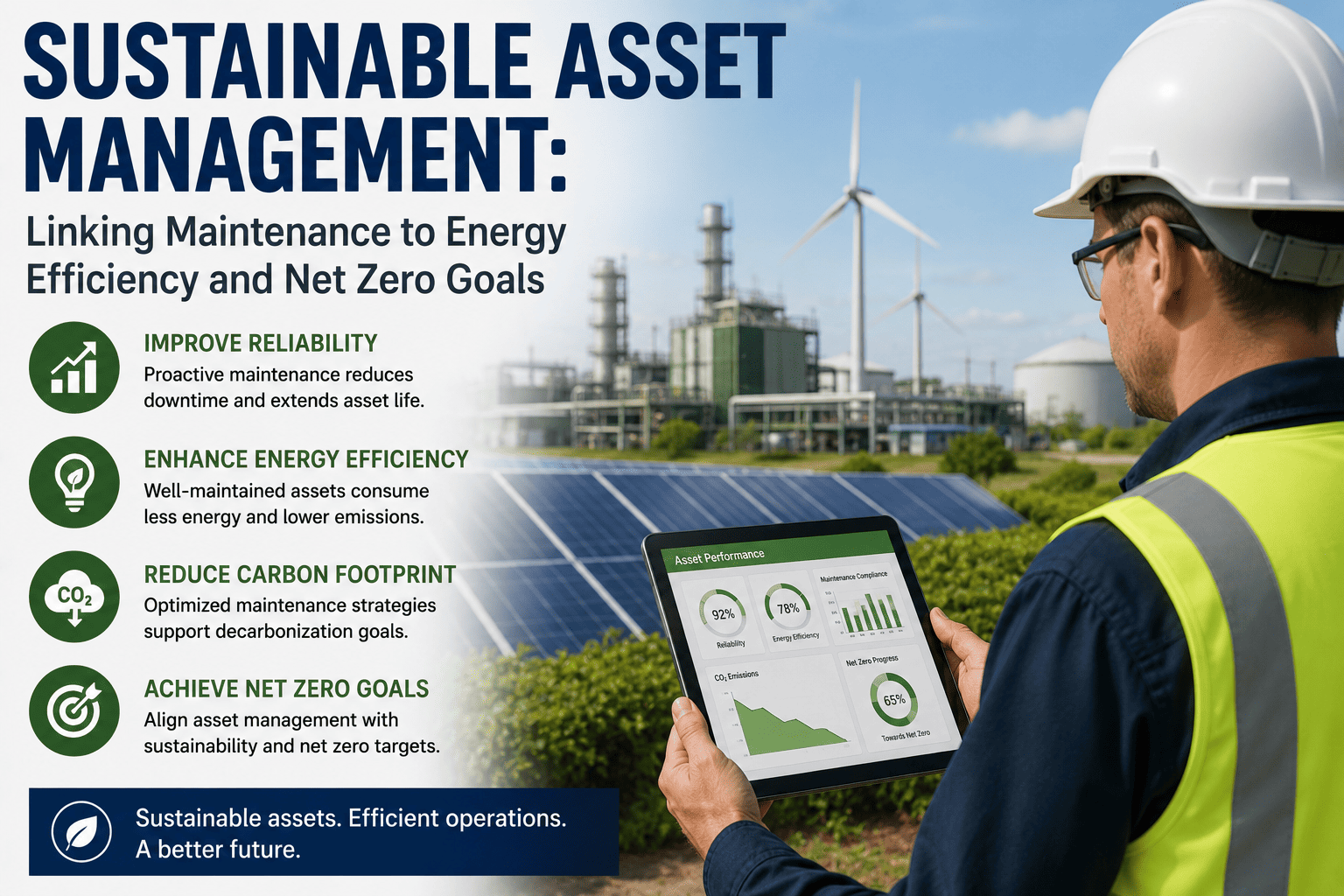
A compressed air leak nobody fixed for eight months doesn't show up as a sustainability failure on any ESG dashboard — it shows up as a slightly higher electricity bill that finance assumes is just the cost of doing business. But that single neglected leak can waste 20 to 30% of a compressor's total output, and across U.S. industry, poorly maintained compressed air systems alone waste an estimated $3.2 billion in electricity annually. Multiply that pattern across motors, HVAC, and process equipment plant-wide, and the uncomfortable truth becomes clear: a meaningful share of every facility's carbon footprint is not a design problem or a technology problem — it's a maintenance backlog. A CMMS like OxMaint turns that backlog into visible, measurable, fixable energy waste instead of a line item nobody questions.
Your Maintenance Backlog Is Also Your Carbon Reduction Plan
OxMaint connects PM compliance, equipment condition, and energy performance — turning routine maintenance data into the evidence base your sustainability reporting actually needs.
Maintenance Is a Decarbonization Lever, Not Just a Cost Center
Predictive maintenance alone typically delivers 8 to 12% energy savings, and when layered with AI-driven optimization and process improvements, total reductions of 20 to 30% are achievable before a single dollar is spent on renewables or electrification. That ordering matters — maintenance-driven efficiency is almost always the cheapest decarbonization lever available, and it's the one most facilities haven't fully pulled yet. Book a demo to see how OxMaint surfaces this opportunity from data you're likely already collecting.
Combined, these layers achieve 20–30% total energy reduction — before capital investment in renewables or electrification
How Specific Failure Modes Translate Directly Into Wasted Energy
Most energy waste from poor maintenance is invisible day to day — no alarm sounds, no production line stops. Sign up free and let OxMaint flag these specific failure modes through your existing PM schedule before they quietly inflate your energy bill for months.
The Reporting Pressure Is No Longer Optional
The EU's Carbon Border Adjustment Mechanism moves from reporting to actual financial payments starting January 2026 — importers without facility-specific emissions data face punitive default tariffs.
ISSB-aligned climate disclosures are converging international reporting expectations, requiring evidentiary documentation and version-controlled emissions data, not estimates.
The carbon management system market is projected to nearly triple from $14.2 billion in 2025 to $36.8 billion by 2035, signaling how central measurable emissions data has become to enterprise operations.
From Maintenance Data to ESG-Ready Reporting
PM compliance and work order completion data captured per asset, as part of normal CMMS operation
Equipment condition trends (vibration, temperature, runtime) linked to energy consumption patterns over time
Facility-specific energy and efficiency data aggregated, replacing generic industry-average assumptions
Documented, auditable evidence feeding directly into sustainability and carbon compliance reporting
Five Maintenance Practices That Directly Cut Energy Use
Schedule Compressed Air Leak Surveys
Ultrasonic leak detection on a recurring cycle keeps leak rates under 10% of compressor output, instead of the 20–30% common in neglected systems.
Tie Coil Cleaning to a Fixed Calendar
Clean condenser and evaporator coils on HVAC and refrigeration units quarterly rather than reactively, before reduced heat transfer drives up compressor runtime.
Track Motor and Belt Alignment
Log alignment checks as a recurring PM task on critical rotating equipment — small mechanical inefficiencies compound into significant electrical waste over a motor's lifetime.
Connect Condition Data to Energy Trends
Watch for energy consumption creeping upward on an asset with no corresponding output increase — it's often the earliest sign of developing mechanical failure.
Document Everything for Reporting
Every completed PM task becomes a data point supporting facility-specific emissions reporting — far more defensible than generic industry-average estimates.
How OxMaint Connects Maintenance to Sustainability Reporting
Equipment Health & Energy Trends
Track condition indicators alongside runtime and output, surfacing the assets quietly driving up your facility's energy intensity before they trigger a failure alarm.
PM Tasks Targeted at Energy Waste
Schedule leak surveys, coil cleaning, alignment checks, and lubrication on recurring cycles tied directly to the failure modes that drive unnecessary consumption.
Auditable Documentation Trail
Every completed work order is timestamped and asset-linked, building the facility-specific evidence base regulators and investors increasingly require.
Exportable Performance Reporting
Pull PM compliance and equipment condition data directly into sustainability reporting workflows, instead of reconstructing it manually each reporting cycle.
Find the Energy Waste Hiding in Your Maintenance Backlog
OxMaint connects PM compliance, equipment condition, and energy performance into one system — making maintenance the most cost-effective decarbonization lever you haven't fully used yet.
Frequently Asked Questions
How much energy does poor equipment maintenance actually waste?
It varies by system, but the documented examples are significant. Compressed air leaks alone waste 20 to 30% of compressor output in poorly maintained systems, costing U.S. industry an estimated $3.2 billion annually in electricity. Predictive maintenance programs that catch these issues early typically deliver 8 to 12% energy savings on their own, and when combined with broader optimization efforts, total reductions of 20 to 30% are achievable before any capital investment in new equipment. Sign up free to start tracking these patterns in your own facility with OxMaint.
What is the Carbon Border Adjustment Mechanism and why does maintenance data matter for it?
The EU's Carbon Border Adjustment Mechanism (CBAM) requires importers to purchase certificates for embedded carbon in products like steel, aluminum, and cement, moving from reporting obligations to actual financial payments starting January 2026. Companies without facility-specific emissions data face punitive default tariffs, which makes documented, equipment-level maintenance and energy data a direct competitiveness issue, not just a sustainability nicety.
Which maintenance tasks have the biggest impact on energy efficiency?
Compressed air leak detection and repair, coil cleaning on HVAC and refrigeration equipment, motor and belt alignment, and consistent lubrication on rotating equipment are among the highest-impact, lowest-cost interventions. Each addresses a specific mechanical inefficiency that otherwise forces equipment to consume more electricity to deliver the same output. Book a demo to see how OxMaint schedules these tasks automatically.
Can a CMMS actually support sustainability and ESG reporting?
Yes — a CMMS that tracks PM compliance, equipment condition, and runtime data is generating exactly the kind of facility-specific, auditable evidence that sustainability reporting increasingly requires, especially as regulators move away from accepting generic industry averages. Rather than building a separate sustainability data system from scratch, organizations can extend their existing maintenance data into the reporting pipeline.
Is predictive maintenance more cost-effective than buying new energy-efficient equipment?
As a first step, generally yes. Predictive and condition-based maintenance addresses the energy waste already happening inside equipment you already own, typically delivering 8 to 12% savings without any capital outlay. Most sustainability and energy roadmaps recommend exhausting maintenance-driven efficiency gains first, since they are faster to implement and lower-cost than electrification or renewable energy investment — and the resulting equipment data also clarifies which assets genuinely warrant capital replacement.