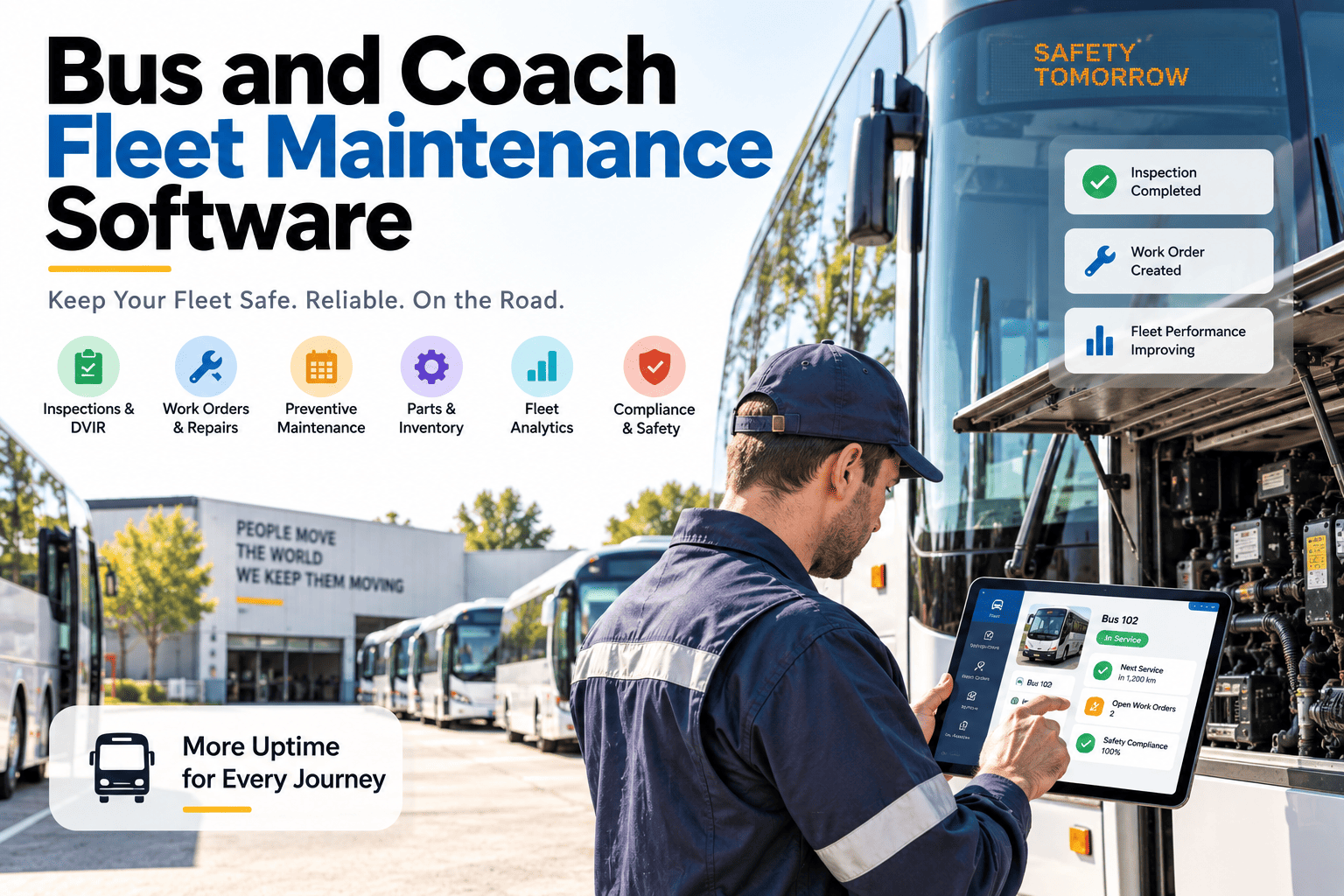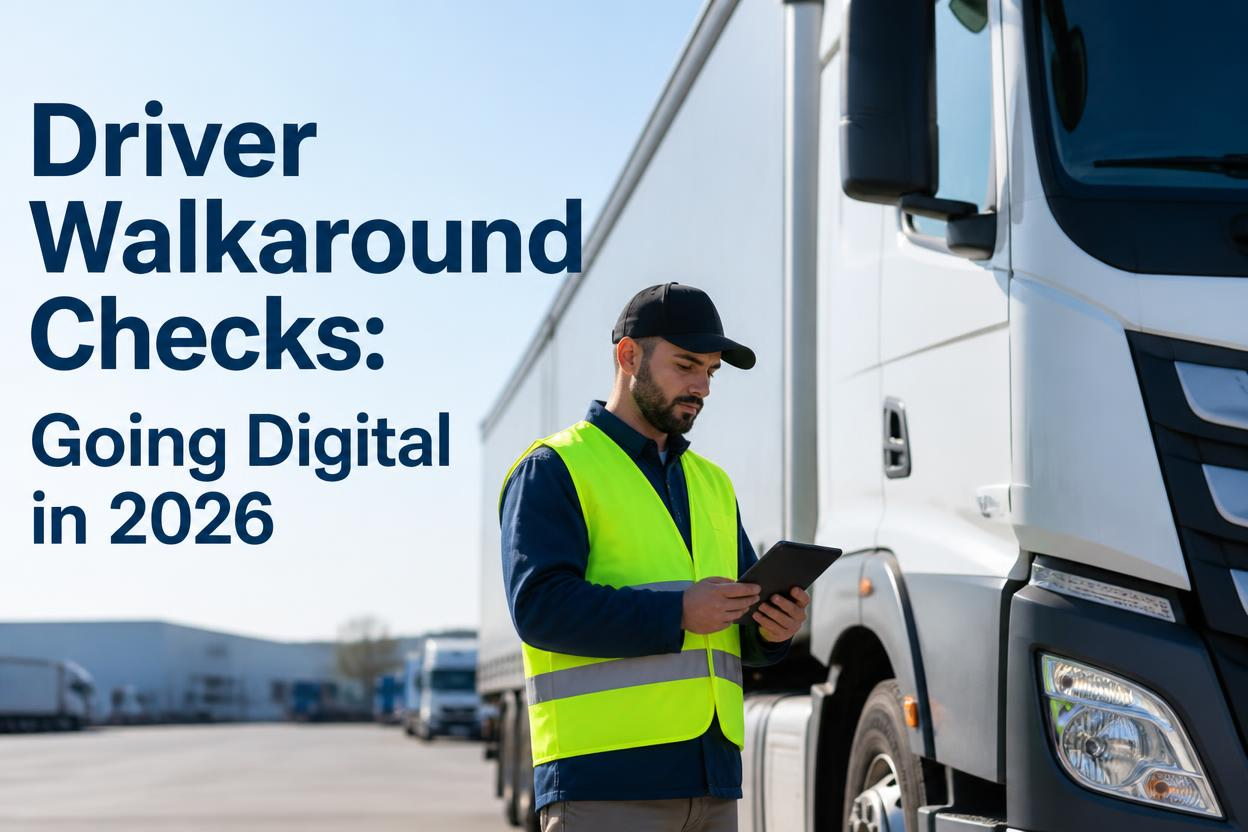
Paper walkaround sheets are still perfectly legal in 2026. They're also the slowest, easiest-to-lose part of most fleets' compliance record, and the first thing an auditor tests when they suspect checks aren't being done properly.DVSA is clear that digital walkaround check apps can improve accuracy and streamline reporting, though they remain a support tool rather than a replacement for the physical inspection itself. That distinction matters: going digital doesn't change what a driver needs to check, it changes how reliably that check gets proven afterward. A CMMS like OxMaint turns every walkaround into a time-stamped record linked straight to the vehicle's maintenance history, not a form that disappears into a cab door pocket.
Move Your Fleet's Walkaround Checks Digital
Time-stamped checks, photo evidence, and defect categorisation linked directly to your maintenance system, ready for any DVSA audit.
What a Digital Walkaround Actually Adds
The checklist itself doesn't change. What changes is everything that happens to the record after the driver finishes it.
Photo Evidence
A photo attached to a flagged defect removes any ambiguity about what was found and when it was first reported.
Time-Stamped Trail
Every check is logged with an exact time and location, closing the gap a missing or backdated paper sheet leaves open.
Defect Categorisation
Structured Dangerous, Major, or Minor tagging pushes urgent defects to the right person instantly, not at end of shift.
Maintenance Integration
A flagged defect creates a work order automatically, instead of waiting for someone to transcribe a paper report.
Getting Defect Categorisation Right
| Category | What It Means | What Happens Next |
|---|---|---|
| Dangerous | An immediate risk to road safety, such as a brake or steering fault | The vehicle must not be driven until it's repaired and cleared |
| Major | A significant safety or compliance issue that needs prompt attention | Flagged for urgent repair before the vehicle's next journey |
| Minor | A defect that doesn't yet threaten roadworthiness | Logged and scheduled into routine maintenance, not urgent |
| Nil Defect | No issues found during the check | Still recorded, creating a continuous audit trail with no gaps |
Rolling Out a Digital Walkaround App
Pick a Checklist That Matches Your Fleet
Build the digital checklist around your actual vehicle types, not a generic template that skips fleet-specific items.
Train Drivers on Photo Capture
Show drivers exactly what a usable defect photo looks like, since a blurry or distant shot defeats the purpose.
Set Clear Categorisation Rules
Give drivers simple guidance on what counts as Dangerous versus Minor, so categorisation stays consistent across the fleet.
Link Defects to Maintenance
Connect the app to your maintenance system so a flagged defect creates a work order without manual re-entry.
Digital Walkaround Maturity
Paper and Prayer
Sheets get completed inconsistently, filed in a cab pocket, and often can't be produced quickly when an auditor asks.
Digital but Standalone
Checks are logged through an app, but defects still need a manual step before they reach the maintenance team.
Digital and Connected
Every check, photo, and defect flows straight into the maintenance system, producible instantly for any audit.
What Doesn't Change When You Go Digital
DVSA guidance is clear that the walkaround check counts as working time and drivers must be given adequate time to complete it properly, and going digital doesn't shrink that requirement. A proper daily check typically takes around 15 minutes, and a fast app doesn't excuse rushing through it — the physical inspection still has to happen, the app just makes the evidence of it easier to trust.
The fleets getting the most value from digital walkarounds aren't the ones with the flashiest app. They're the ones where a flagged defect turns into a scheduled repair the same day, because the check and the maintenance record finally live in one place. Sign up free to connect driver walkarounds to your maintenance workflow, or book a demo to see a flagged defect turn into a work order in seconds.
Turn Every Walkaround Into Maintenance-Ready Evidence
Photo evidence, defect categorisation, and instant work order creation, so nothing gets lost between the cab and the workshop.
Frequently Asked Questions
Do digital walkaround apps satisfy DVSA requirements on their own?
An app supports the process, but DVSA still expects a genuine physical inspection to have taken place; the app improves the evidence trail rather than replacing the check itself.
Should a nil defect result still be recorded?
Yes, logging a nil defect creates a continuous, gap-free record that demonstrates checks are being carried out every day, not just when something is found.
How long should walkaround records be kept?
Walkaround check reports and defect records should be retained for at least 15 months, in line with other HGV maintenance record retention requirements.
What's the difference between a Major and a Dangerous defect?
A Dangerous defect poses an immediate safety risk and means the vehicle must not be driven, while a Major defect needs prompt repair but may not stop the vehicle being used immediately, depending on the specific issue.
Does going digital reduce how long a walkaround check should take?
No, the check itself still needs to be thorough, typically around 15 minutes; digital tools speed up recording and reporting, not the physical inspection.