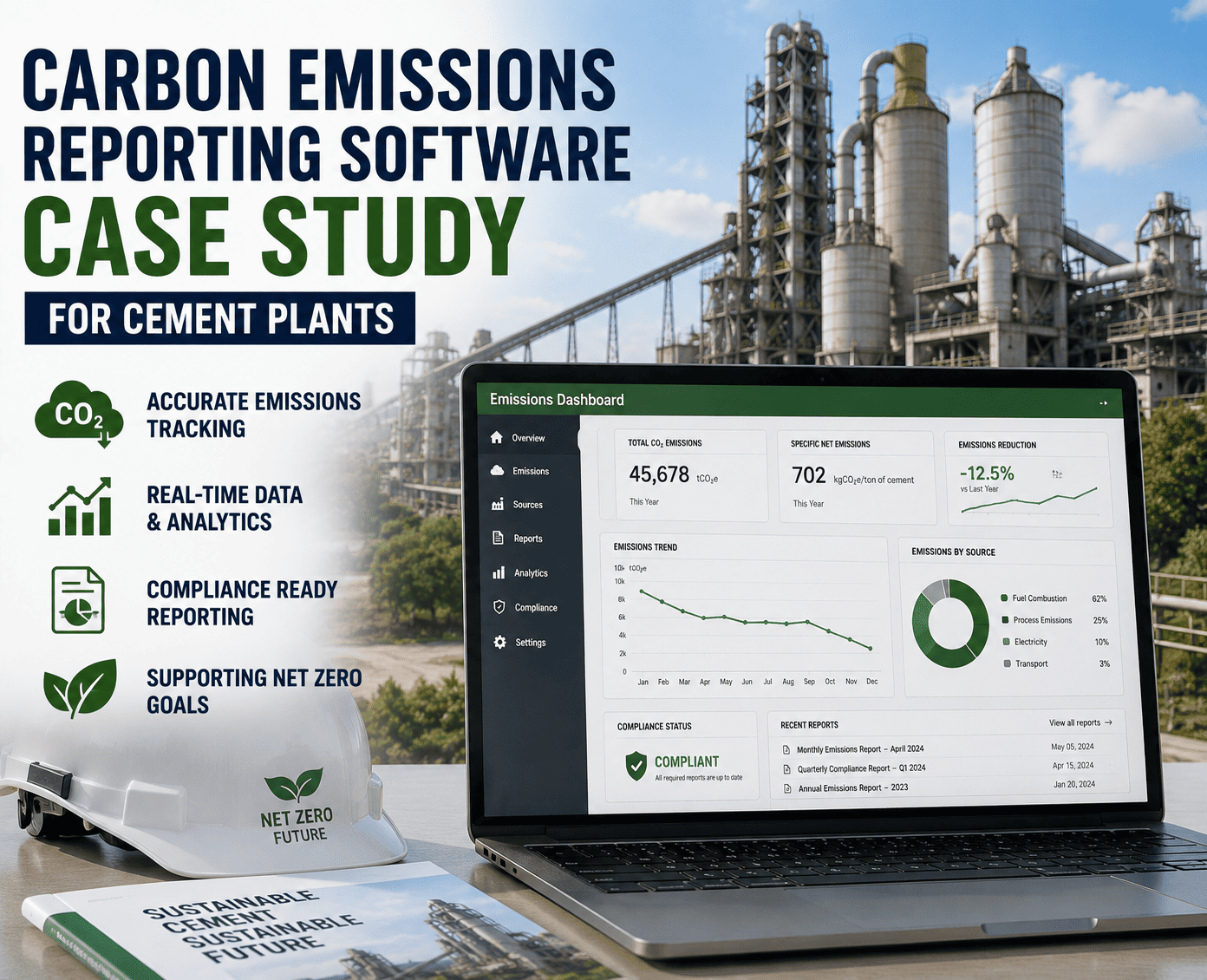
A cement plant's sustainability team spends the last week of every quarter doing the same thing, pulling kiln fuel logs from one system, grid power readings from another, and maintenance downtime from a third, then stitching it all into a spreadsheet before it can even start calculating Scope 1 and Scope 2 numbers. By the time the ESG report is ready, the data behind it is already a month old. This case study covers how one cement manufacturer moved carbon emissions reporting into its CMMS, tying energy and equipment data directly to sustainability reporting instead of rebuilding it by hand every quarter. Sign up to see how the same automated reporting could work for your plant.
Fuel consumption, grid electricity, and equipment run-hours lived in separate systems that never talked to each other, so calculating Scope 1 and Scope 2 emissions meant manually re-entering numbers every reporting cycle. Energy waste from underperforming or poorly maintained equipment went unnoticed because nobody connected maintenance data to energy use, and every ESG report risked errors that would not survive a real audit.
Results After Automating Carbon Emissions Reporting
How Emissions Data Flows Through The CMMS
Oxmaint connects fuel, energy, and maintenance records to automatically calculate Scope 1 and Scope 2 emissions, so sustainability reporting stops being a quarterly scramble. Sign up for a free trial to see your own emissions data flow through, or book a demo to walk through the full ESG reporting setup.
Carbon Reporting Before And After The CMMS
Emissions reporting stopped being a quarterly fire drill built from disconnected spreadsheets. Fuel, power, and equipment data fed straight into Scope 1 and Scope 2 calculations, ESG reports could be generated on demand instead of assembled by hand, and predictive maintenance started catching the energy waste that used to go unnoticed until the utility bill arrived.
Frequently Asked Questions
Make Your Next ESG Report A Few Clicks Away
Oxmaint ties your maintenance and energy data straight into Scope 1 and Scope 2 calculations, so sustainability reporting stops starting from a blank spreadsheet. Sign up for a free trial to connect your first plant, or book a demo to see automated ESG reporting in action.