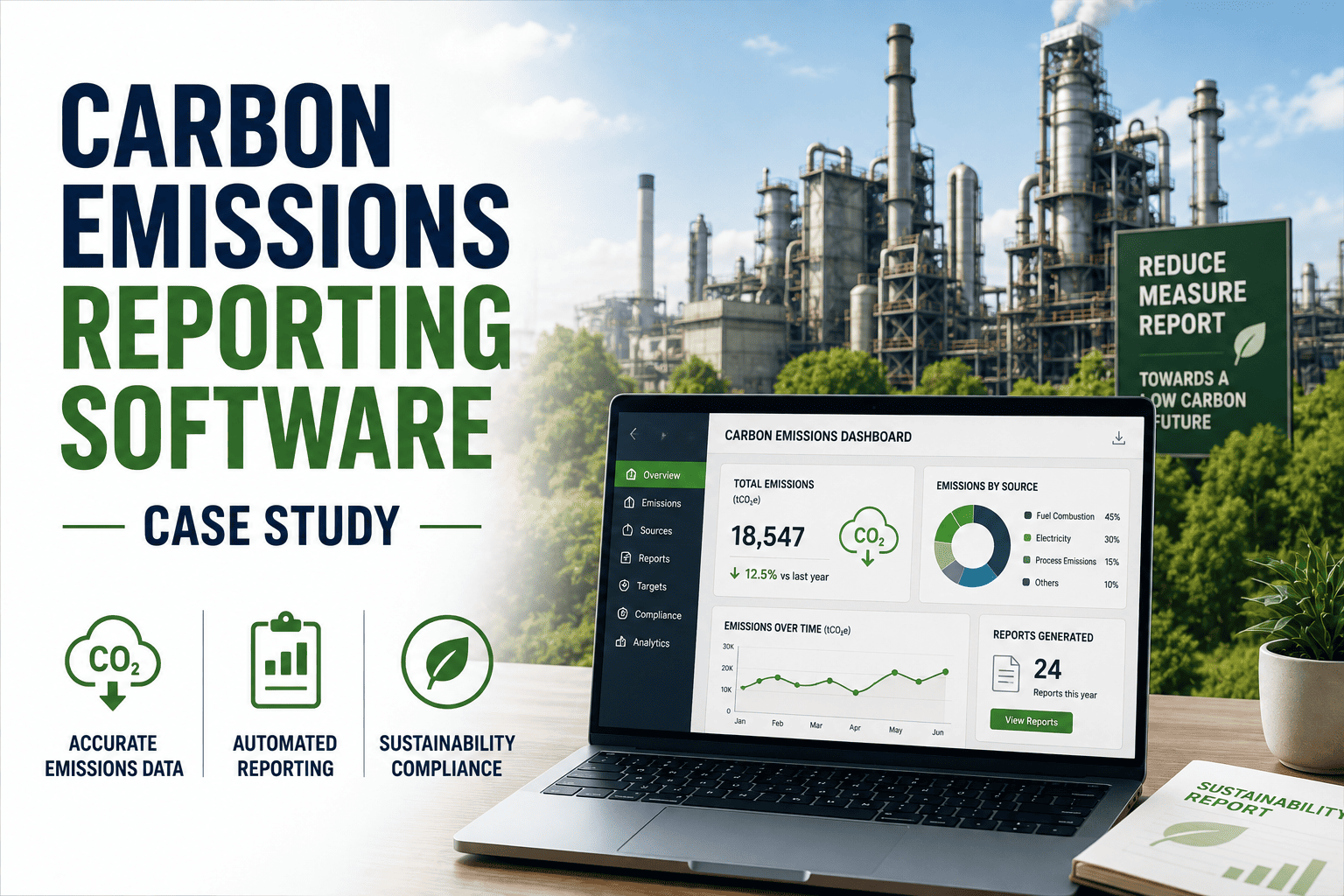
Most steel plants still build their Scope 1, 2, and 3 emissions reports by hand, pulling fuel invoices, electricity bills, and supplier data into spreadsheets that take an average mid-size plant close to 280 hours a year to compile before a single report gets reviewed. That manual process also tends to undercount, with Scope 3 emissions from procurement and logistics frequently underreported by 5 to 12 times actual. This case study covers how one steel plant connected its CMMS directly to emissions reporting, and what that did to reporting time, data accuracy, and CBAM exposure. Sign up to see the same reporting set up against your own plant data.
The Challenge
Fuel consumption logs, sub-metered electricity data, and supplier emissions figures all lived in separate systems, so every reporting cycle meant reconciling spreadsheets by hand under deadline pressure. Reported emissions routinely differed 15 to 25% from actual consumption, which was tolerable as an internal estimate but became a real financial exposure once CBAM certificate costs and investor ESG mandates started attaching a price to that gap.
Results After Connecting Maintenance Data To Emissions Reporting
-90% Reporting Hours
Cut from the roughly 280 hours a year previously spent manually compiling Scope 1, 2, and 3 data
±2-3% Accuracy
Emissions accuracy achieved through continuous metering, ahead of the ±5% threshold verifiers require
One Data Entry Point
CBAM, GHG Protocol, and investor ESG disclosures now generated from a single live carbon inventory
Where Each Scope's Data Actually Comes From
Scope 1
Direct combustion, drawn from fuel consumption logs and work order records for blast furnace gas, coke oven gas, and reheating furnace burners.
Scope 2
Purchased energy, drawn from sub-metered electricity and purchased steam data tied to each production line.
Scope 3
Value chain emissions, drawn from procurement and logistics records, filled in by supplier data instead of estimated after the fact.
Turn Maintenance Data Into Audit-Ready Emissions Reports
Oxmaint pulls Scope 1, 2, and 3 data directly from your existing CMMS workflows, so emissions reporting stops being a separate spreadsheet project. Sign up for a free trial to run it against your own plant data, or book a demo to walk through this case study in detail.
ESG Reporting Before And After
| Area |
Before |
After |
| Data collection |
Manually compiled from invoices, meter reads, and maintenance logs |
Pulled automatically from CMMS work orders and connected meters |
| Scope 3 tracking |
Estimated from limited supplier outreach, often understated |
Supplier portal feeds procurement and logistics data directly into the inventory |
| CBAM and CDP reports |
Built separately for each framework from the same raw data |
Generated together from one live carbon inventory |
| Anomaly detection |
Fuel spikes or grid intensity changes found during report review |
Flagged automatically for investigation as they occur |
The Results
Emissions reporting stopped being a quarterly scramble and became a byproduct of maintenance and operations data that was already being captured. The sustainability team spent its time reviewing numbers instead of assembling them, and when a CBAM or CDP submission came due, the data behind it had already been building all year instead of getting reconstructed at the deadline.
Frequently Asked Questions
Q
Why is Scope 3 the hardest emissions category to report accurately?
Scope 3 covers value chain emissions from raw material suppliers, logistics, and downstream processing, all outside the plant's direct control, so without a structured data feed from suppliers it tends to be estimated rather than measured, and consistently underreported as a result.
Q
How does maintenance data connect to Scope 1 and 2 reporting?
A CMMS already holds fuel consumption logs, equipment run-time, and energy metering records tied to specific assets, which is exactly the activity data the GHG Protocol requires for Scope 1 combustion and Scope 2 purchased energy calculations.
Q
Why does emissions accuracy matter beyond compliance?
Under CBAM, producers who cannot demonstrate verified actual emissions are assigned default values set at the high end of the industry benchmark, so unverified reporting creates a direct financial penalty rather than just a compliance gap.
Turn Your CMMS Into Your Carbon Reporting Engine
Oxmaint tracks Scope 1, 2, and 3 emissions from the same maintenance and energy data your plant already captures, generating CBAM, GHG Protocol, and ESG reports from one live inventory. Sign up for a free trial to see it against your own plant data, or book a demo to walk through the full case study.