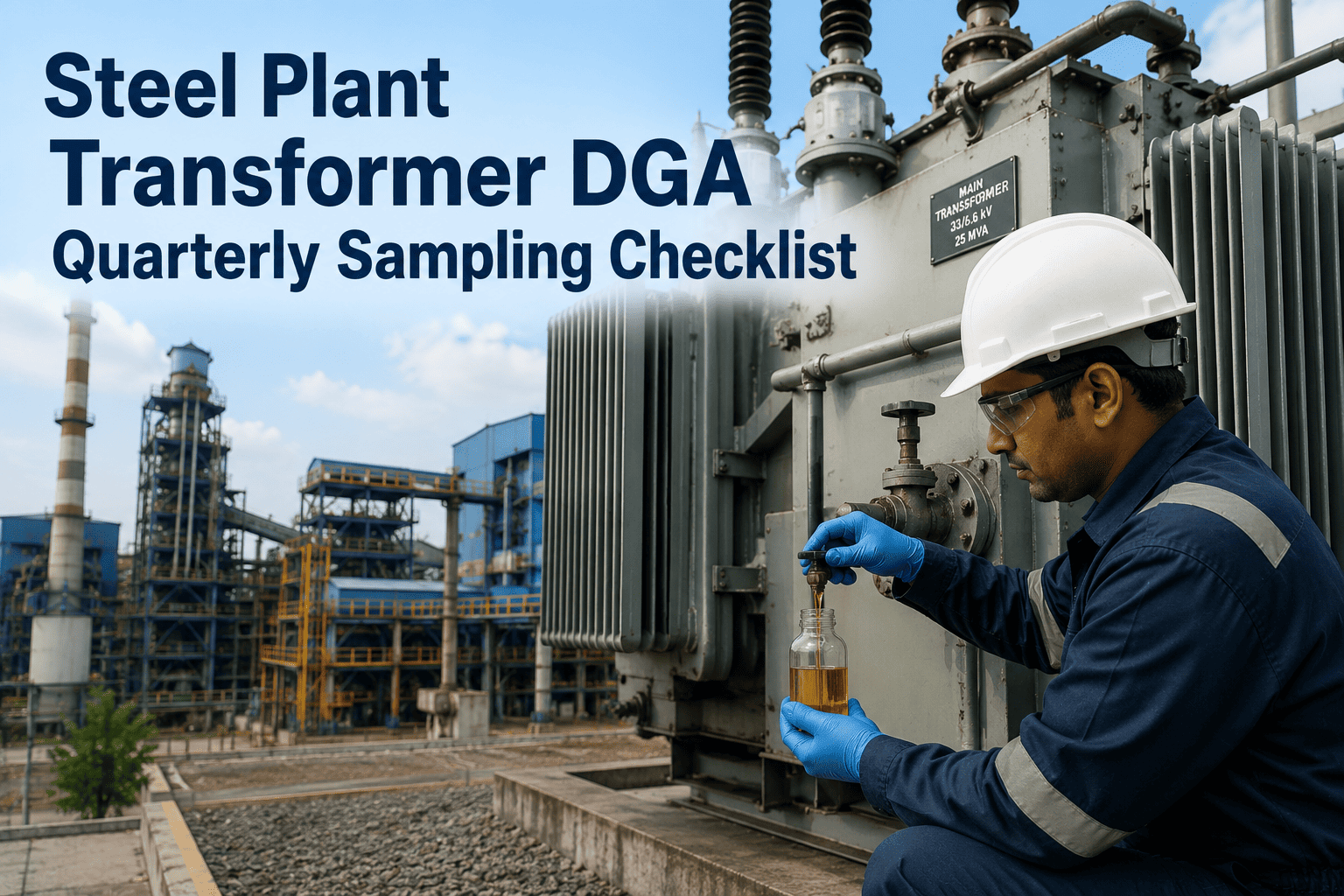
A furnace transformer feeding an EAF doesn't fail on the day someone finally notices the hum changed. It fails after months of internal arcing or overheating that was already visible in the oil, one gas at a time, to anyone pulling a sample and reading it against the right standard. Sign up to log every quarterly DGA sample against its own transformer's trend history, and route a rising acetylene reading to an engineer the same day the lab report comes back.
Why It Matters
Dissolved gas analysis is the earliest reliable warning available for an oil-filled power transformer, catching electrical and thermal faults developing inside the tank long before they show up as an alarm, a trip, or a fire. Under the Electricity at Work Regulations, maintaining this equipment in a safe condition depends on evidence, and a DGA trend history is exactly that evidence.
What Each Key Gas Points To
Hydrogen And Methane
Rising hydrogen combined with methane typically signals partial discharge or corona activity inside the insulation, an early-stage electrical fault.
Ethylene
Elevated ethylene points to high-temperature overheating above 300°C, often from a loose connection or circulating current inside the tank.
Acetylene
Only forms above roughly 700°C, so even a small acetylene reading indicates high-energy arcing and warrants urgent investigation.
Quarterly Sampling Checklist
Draw the sample from the transformer's dedicated sampling valve: following safe isolation procedure and using a clean, dry syringe to avoid introducing air into the result
Label with transformer ID, load condition, and sample date: a result reviewed without load and event context loses much of its diagnostic value
Request the full nine-gas panel, not just hydrogen: methane, ethane, ethylene, acetylene, CO, and CO2 together are what a ratio or triangle method needs to actually classify a fault
Compare against the transformer's own history, not a single value: a stable Level 2 reading over three years is a different situation from one that doubled in six months
Apply the Duval Triangle when a fault is suspected: plotting methane, ethylene, and acetylene proportions helps classify whether the developing fault is thermal or electrical
Escalate any acetylene detection immediately: even a small reading warrants urgent inspection rather than waiting for the next scheduled quarterly sample
Every Sample Trended, Every Transformer Covered
Oxmaint schedules quarterly DGA sampling per transformer, stores every gas result against that unit's own history, and flags an acetylene detection or a rapid rate of change the same day the lab report lands. Sign up for a free trial to run it on your own transformer fleet, or book a demo to see it configured for your plant.
Rate Of Change Matters More Than The Number Itself
A single gas concentration read in isolation can mislead as easily as it informs. A furnace transformer running near its Level 2 threshold but stable for three consecutive years represents a very different risk than a unit that started the year clean and doubled its ethylene reading in six months. The second case is an active fault progressing in real time, even if the absolute number hasn't yet crossed into an alarm range, while the first is often just that transformer's normal operating signature. This is exactly why DGA sampling has to run on a consistent quarterly schedule with every result compared against the previous one, rather than evaluated as a pass or fail against a fixed limit. A transformer's own trend line is the real diagnostic tool, the single reading is only the input to it.
IEEE C57.104 Condition Levels
| Condition Level |
General Meaning |
Recommended Action |
| Level 1 |
Normal operating gas levels |
Continue routine quarterly monitoring |
| Level 2 |
Gas levels above normal, monitor caution |
Increase sampling to monthly or as directed |
| Level 3 to 4 |
High to excessive gas levels, active fault likely |
Investigate immediately, consider load reduction or outage |
Frequently Asked Questions
Q
Why does acetylene get treated as urgent even at low readings?
Acetylene only forms at temperatures above roughly 700°C, which corresponds to high-energy arcing rather than gradual overheating. Because the fault type it indicates is severe, even a small detected quantity is treated as a signal for urgent inspection rather than something to monitor at the next quarterly interval.
Q
Is a single DGA test enough to confirm a fault?
No. A single elevated reading generally calls for a confirmation test and trend analysis before drawing conclusions, since sampling error or a transient event can produce a one-off anomalous result. Consistent scheduling and comparison against that transformer's own history is what turns a single number into a reliable diagnosis.
Q
What does the Duval Triangle actually add over a key gas reading?
The key gas method gives a fast first-level screen but can misdiagnose a meaningful share of cases on its own. Plotting methane, ethylene, and acetylene proportions on the Duval Triangle adds a graphical cross-check that helps distinguish thermal faults from electrical discharge faults with more confidence.
Turn Quarterly DGA Into An Early Warning System, Not A Filing Cabinet
Oxmaint keeps every gas result tied to its transformer's own trend history, tracks rate of change instead of just absolute values, and turns a rising acetylene reading into an immediate work order. Sign up for a free trial to run it on your own transformer fleet, or book a demo to see it configured for your plant.