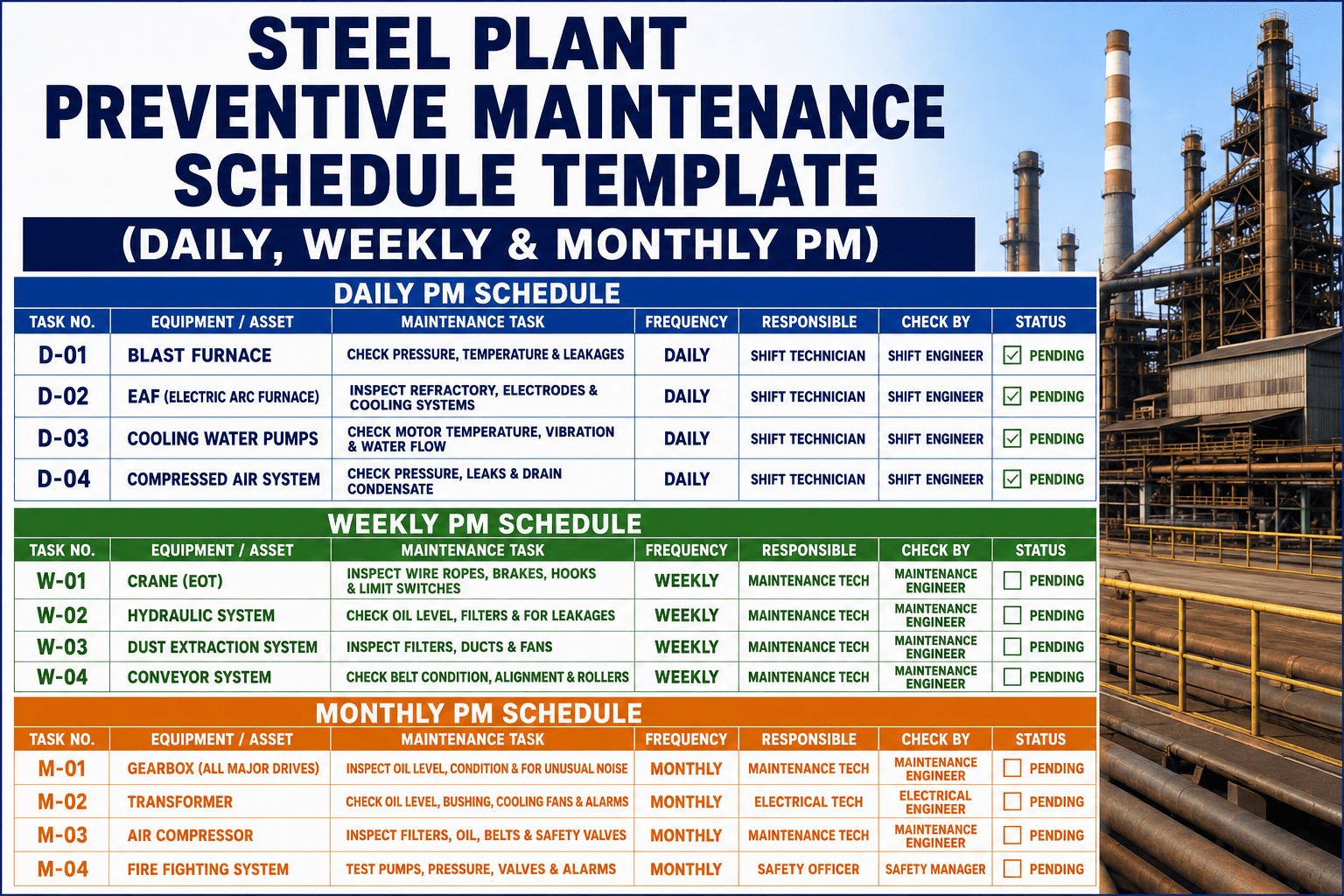
Preventive maintenance only works if the frequency matches the failure pattern, and in a steel plant that pattern is different for every asset class. A blast furnace tuyere needs daily eyes on it, a gearbox needs quarterly oil analysis, and a rolling mill drive needs an annual teardown nobody wants to skip. This free template lays out exactly which PM activities belong at which frequency, so nothing gets checked too often or too late. Sign up to load the full schedule into OxMaint for your plant.
Why Frequency Matters
A single PM frequency for every asset either wastes labor on checks nothing needed yet or misses failures building up between visits. Daily walk-downs catch what fails fast, like a tuyere or a conveyor belt tear. Quarterly and annual work catches what fails slow, like bearing wear or refractory thinning. The schedule only works when both ends are covered.
PM Activities By Frequency
Daily
Visual inspection, lubrication checks, gauge readings, unusual noise or vibration checks
Weekly
Belt tension checks, oil level top-ups, filter inspection, safety interlock testing
Monthly
Vibration analysis, thermal imaging, alignment checks, electrical panel inspection
Quarterly
Gearbox oil analysis, structural checks, instrument calibration, motor insulation testing
Annual
Full equipment teardown, refractory inspection, major overhaul, insulation resistance testing
Shutdown-Linked
Furnace relining checks, mill roll changes, work only feasible when the line is down
How PM Load Is Spread Across A Typical Week
Task counts based on a mid-size production line running blast furnace, EAF, and rolling mill assets. Daily checks carry the most volume but the least time per task, while annual work carries the least volume and the most downtime risk if skipped.
Reactive Maintenance vs A Scheduled PM Program
| Area |
Reactive Only |
Scheduled PM Program |
| Failure detection |
Found after equipment stops or fails outright |
Found during scheduled checks before failure |
| Downtime |
Unplanned, often at the worst possible moment |
Planned around production schedules |
| Parts and labor |
Emergency sourcing at premium cost |
Ordered and staged ahead of the scheduled date |
| Equipment lifespan |
Shortened by unaddressed wear and repeat failures |
Extended by catching wear before it compounds |
Never Miss A Scheduled PM Again
OxMaint auto-generates daily, weekly, monthly, quarterly, and annual work orders on schedule, so nothing depends on someone remembering. Sign up for a free trial to load this PM schedule for your plant, or book a demo and we'll help you set the frequencies right.
Frequently Asked Questions
Q
How do we decide which frequency an asset needs?
Start with how fast a failure develops and how costly it is if missed. Fast, high-consequence failures like a tuyere burn-through get daily checks, while slow-developing wear like gearbox degradation fits a quarterly or annual cycle.
Q
What happens to PM tasks that only fit during a shutdown?
Those get flagged as shutdown-linked rather than assigned a calendar frequency, so they queue up and get batched into the next planned outage instead of being missed or forced onto a running line.
Q
Can the schedule adjust if a PM task keeps finding nothing wrong?
Yes, frequencies should be reviewed against actual findings. A task that consistently finds no issues can move to a longer interval, while one that keeps catching problems should move to a shorter one.
Get The Free Preventive Maintenance Schedule Template
Daily, weekly, monthly, quarterly, and annual PM activities, mapped for blast furnace, EAF, and rolling mill assets. Sign up for a free trial to load the schedule into OxMaint, or book a demo to see it built around your plant.