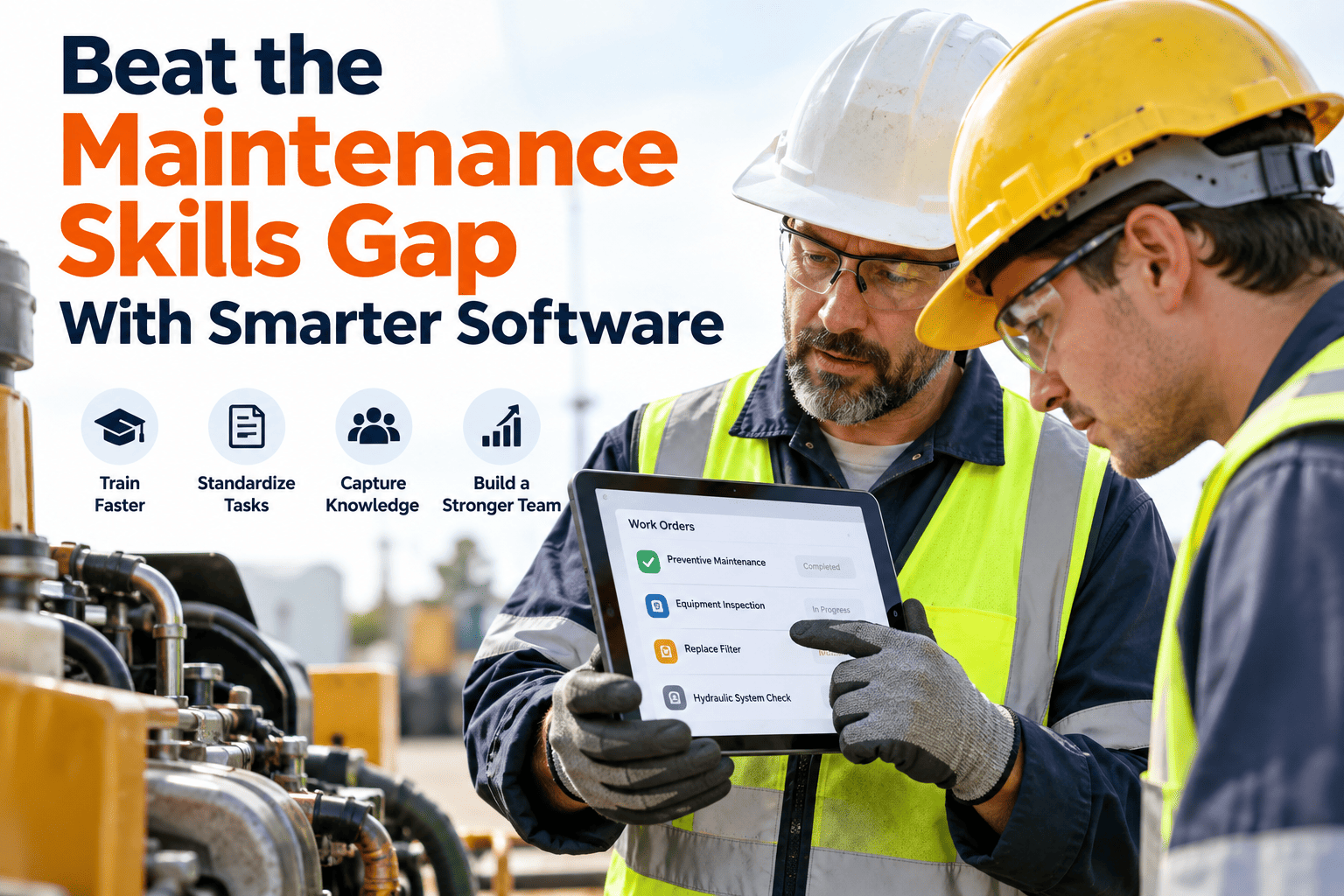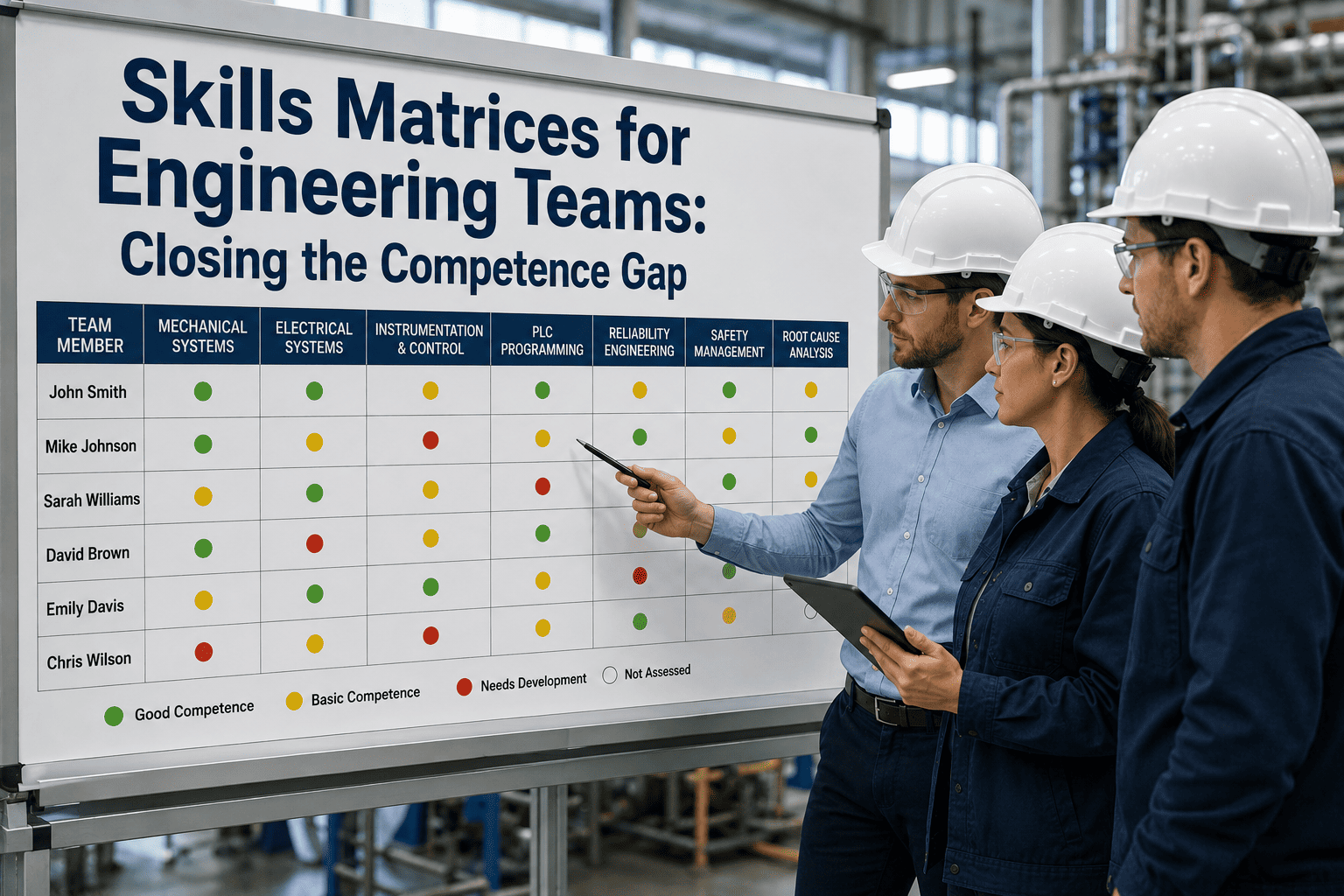
Ask most Operations Directors who can repair the plant's largest compressor and you'll get a name. Ask what happens if that person is off sick, on leave, or leaves the company, and the room goes quiet. That single moment of silence is a single-point-of-failure risk sitting unaddressed in your maintenance team — and it stays invisible until the exact week it matters most. A skills matrix doesn't add a new skill to anyone's CV. It shows you, in one view, where your team's competence actually runs out. A CMMS like OxMaint turns that matrix into a living gap-analysis tool instead of a spreadsheet nobody opens after week one.
Find Every Single-Point-of-Failure Skill Gap on Your Team
A live skills matrix linked to asset criticality and training records — so the next competence gap shows up before it becomes an incident.
What a Skills Matrix Actually Shows You
A skills matrix maps every technician against every skill your plant actually needs, with a proficiency score at each intersection. Technicians sit on one axis, skills on the other, and the grid in between replaces "I think Dave knows the chiller system" with a documented, verifiable answer.
| Technician | PLC Fault Diagnosis | Hydraulics | Vibration Analysis | HV Electrical |
|---|---|---|---|---|
| J. Okafor | L3 | L2 | L1 | — |
| R. Patel | L2 | L3 | — | L1 |
| S. Whitfield | — | L1 | L3 | — |
| M. Costa | L1 | — | — | L3 |
Look at Vibration Analysis: only one technician holds L3 competency, and HV Electrical has exactly the same single-name problem. Both columns are a single-point vulnerability sitting in plain sight the moment they're laid out this way — invisible on a CV-by-CV basis, obvious the second they're in a grid. Book a demo to see this matrix built automatically from your team's existing training records.
Scoring Proficiency Without It Becoming Guesswork
No Exposure
No training or hands-on experience with this skill. Cannot be assigned this work even under supervision.
Supervised
Can perform the task with direct oversight. Trained but not yet independently verified.
Independent
Works unsupervised on routine cases, escalating anything outside standard procedure to a more senior technician.
Expert / Trainer
Handles complex and non-routine cases independently, and is qualified to verify and train others to this level.
A vague scale like "beginner, intermediate, expert" falls apart the moment two different supervisors apply it to the same technician and disagree. Each level needs an observable, specific definition — what a technician can actually do unsupervised at that level — or the matrix becomes opinion dressed up as data.
Building the Matrix: Four Decisions That Determine Whether It Gets Used
Limit the Skill List
10-15 skills per role, tied to what actually drives downtime and safety — not every certificate anyone has ever earned.
Combine Assessment Methods
Self-assessment alone overstates ability; manager review alone misses blind spots. Use both, plus certification records where they exist.
Link to Asset Criticality
A gap on a rarely-used asset is not the same risk as a gap on your highest-downtime-cost equipment. Rank gaps by consequence, not convenience.
Review on a Real Cadence
Quarterly for fast-changing technical skills, at minimum annually for everything else. A matrix nobody updates is worse than no matrix at all.
From Gaps to a Training Plan That Actually Reduces Risk
Sequence by Criticality, Not Speed
The fastest gap to close is rarely the one creating the most risk. Sequence training by consequence to the plant, not by which course is easiest to book.
Aim for Two Per Critical Skill
Industry practice targets at least two independently qualified technicians per critical asset category — one per shift where coverage allows.
Cross-Reference Failure History
A skill gap on an asset with a long failure history deserves training spend before a gap on equipment that rarely breaks down.
What Closing the Gap Actually Delivers
How OxMaint Turns the Matrix Into a Living Tool
Auto-Built Skills Matrix
Generate the matrix directly from training records and certifications already on file, instead of rebuilding it in a spreadsheet each quarter.
Criticality-Weighted Gap Analysis
Rank skill gaps against asset criticality and failure history, so training budget goes to the highest-risk gap first.
Certification Expiry Tracking
Automatic alerts before a certification lapses, so a technician's L3 status doesn't quietly expire unnoticed.
Skills-Matched Work Assignment
Route work orders to technicians actually qualified for the asset and fault type, not just whoever is next available.
Stop Discovering Skill Gaps During an Incident
A criticality-weighted skills matrix, automatic gap analysis, and certification tracking — built so the next training decision is based on risk, not guesswork.
Frequently Asked Questions
What's the difference between a skills matrix and a competency framework?
A competency framework is the reference document defining what skills and behaviours a role requires. A skills matrix is the practical assessment tool built on top of it, mapping real people against those requirements with actual proficiency scores.
How many skills should a maintenance skills matrix track?
Around 10-15 core skills per role is the practical ceiling. Beyond that, the matrix becomes difficult to keep accurate and tends to include skills nobody ever actually uses for staffing or training decisions.
Should technicians self-assess their own skill levels?
Self-assessment alone tends to overstate proficiency, while manager assessment alone can miss genuine strengths. Combining self-assessment, manager review, and objective evidence like certifications produces a more reliable score.
How often should a skills matrix be updated?
Quarterly for fast-changing technical skills, and at least annually for slower-changing competencies. A matrix that isn't kept current quickly becomes less trustworthy than having no formal matrix at all.
What counts as a single-point-of-failure skill gap?
Any critical skill held at expert level by only one technician. If that person is absent, on leave, or leaves the organisation, no independently qualified capability remains to cover that work.