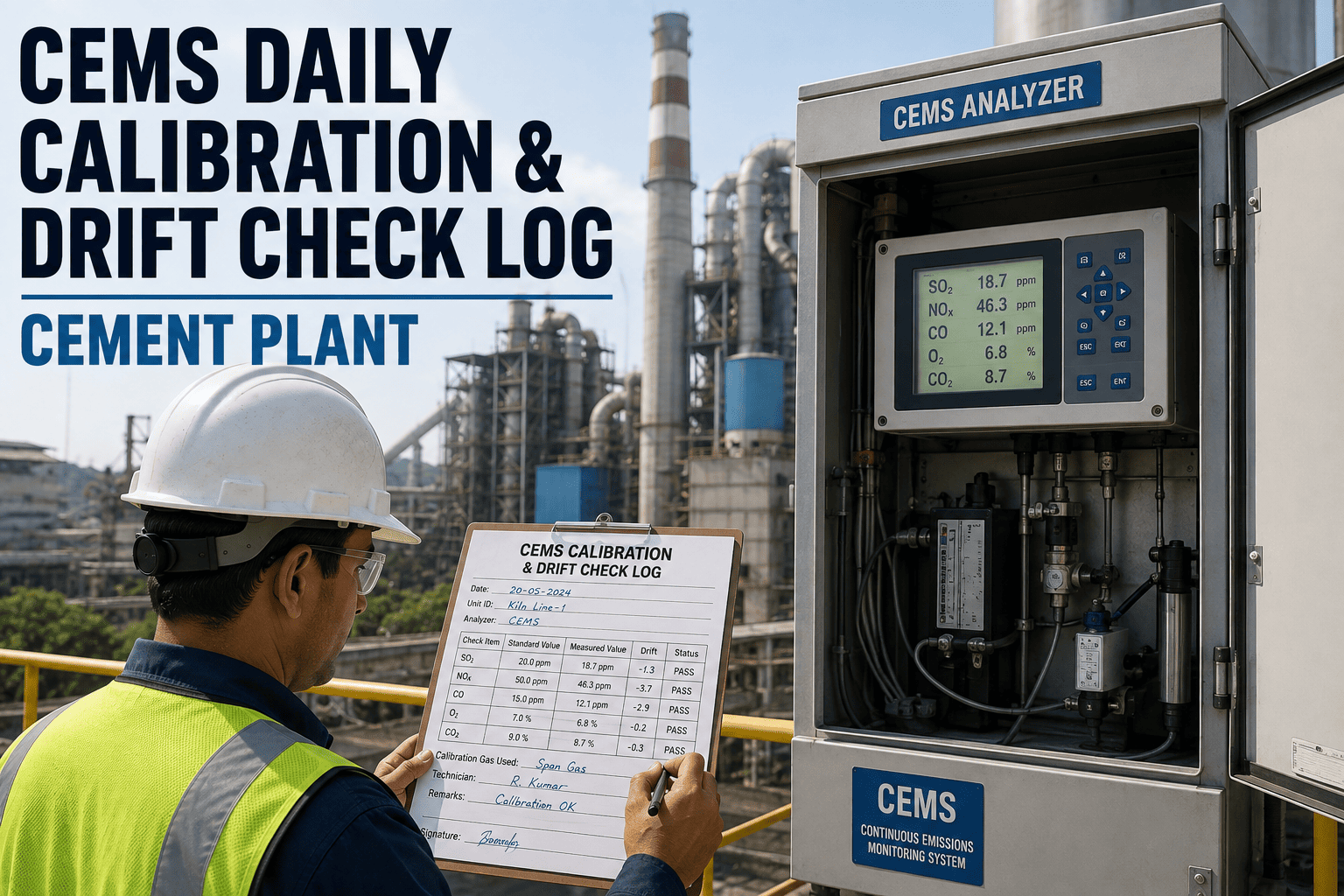
A CEMS analyzer doesn't fail loudly, it drifts. A zero or span value that creeps a fraction of a percent each day looks fine on any single reading, but three weeks later the plant is reporting emissions data that no longer reflects reality. The daily drift check exists to catch that creep before it becomes a data-quality finding, and it has to happen every operating day, logged, whether the analyzer passes or not. Sign up to log every drift check automatically and get flagged the moment an analyzer exceeds its allowable deviation.
Why It Matters
Zero and span drift checks verify that an analyzer's low and high reference points haven't shifted since the last calibration. A deviation beyond the allowable limit invalidates the data collected since the last passing check, which means a missed drift check doesn't just lose one reading, it can void an entire day's emissions record.
The Daily Check, Broken Down
Zero Drift
Low-end reference gas checked against the analyzer's baseline reading
Span Drift
High-end reference gas checked against the analyzer's upper-range reading
Calibration Gas
Certified cylinder, expiration date and concentration verified before use
Sample Line
Filters and heated line checked for leaks, condensation, or blockage
Deviation Limit
Result compared against the allowable percentage set by your permit
Adjustment Record
Any correction made to the analyzer logged with before and after values
Running The Drift Check, In Order
Verify calibration gas first: confirm cylinder certification, expiration date, and concentration match the analyzer's range
Introduce zero gas: record the analyzer's response and compare it to the expected zero-point value
Introduce span gas: record the analyzer's response and compare it to the certified span-gas value
Calculate percent drift: compare both readings against the allowable deviation set by your permit or method
Log the result regardless of outcome: passing checks get recorded too, a data-completeness requirement, not just failures
Flag and correct exceedances immediately: data since the last passing check may need to be invalidated and reported
Never Lose A Day's Data To A Missed Drift Check
OxMaint logs every zero and span drift check, tracks calibration gas expiration, and fires an alert the moment an analyzer exceeds its allowable deviation. Sign up for a free trial to run it on your own CEMS data, or book a demo to see it configured for your plant.
Result, Meaning & Next Step
| Check Result |
What It Means |
Next Step |
| Within limit |
Analyzer reading within acceptable deviation range |
Log result, resume normal monitoring |
| Minor drift |
Trending toward limit but still within spec |
Log trend, schedule preventive maintenance |
| Exceeds limit |
Analyzer drift beyond allowable deviation |
Recalibrate, flag affected data for review |
| Check skipped |
No drift verification performed for the day |
Treated as a data-completeness gap, report accordingly |
The Takeaway
The drift check is a small task that guards a large record. Five minutes with a certified gas cylinder either confirms the day's data is trustworthy or catches a problem before it spreads across weeks of readings. Skip it once and the gap in the log becomes harder to explain than any single bad reading would have been.
Frequently Asked Questions
Q
What's the difference between zero drift and span drift?
Zero drift measures how much the analyzer's baseline reading has shifted at the low end of its range, while span drift measures the same shift at the high end using a certified reference gas. Both need to be checked daily because an analyzer can drift at one end without drifting at the other.
Q
What happens to emissions data if a drift check fails?
Data collected since the last passing drift check is typically considered invalid and may need to be flagged or estimated using a substitute data procedure. This is why daily checks matter, the shorter the gap between checks, the less data is at risk if one comes back out of range.
Q
Does a passing drift check still need to be logged?
Yes. Data completeness requirements expect a record of every scheduled drift check, pass or fail, not just the days something went wrong. A missing entry for a passing day can be read the same as a skipped check when the record is reviewed.
Keep Your Drift Check Log Complete, Every Day
OxMaint automates your daily zero and span drift log, tracks calibration gas expiration, and fires an alert the moment an analyzer drifts out of range, so no day goes unrecorded. Sign up for a free trial to run it on your own CEMS data, or book a demo to see it configured for your plant.