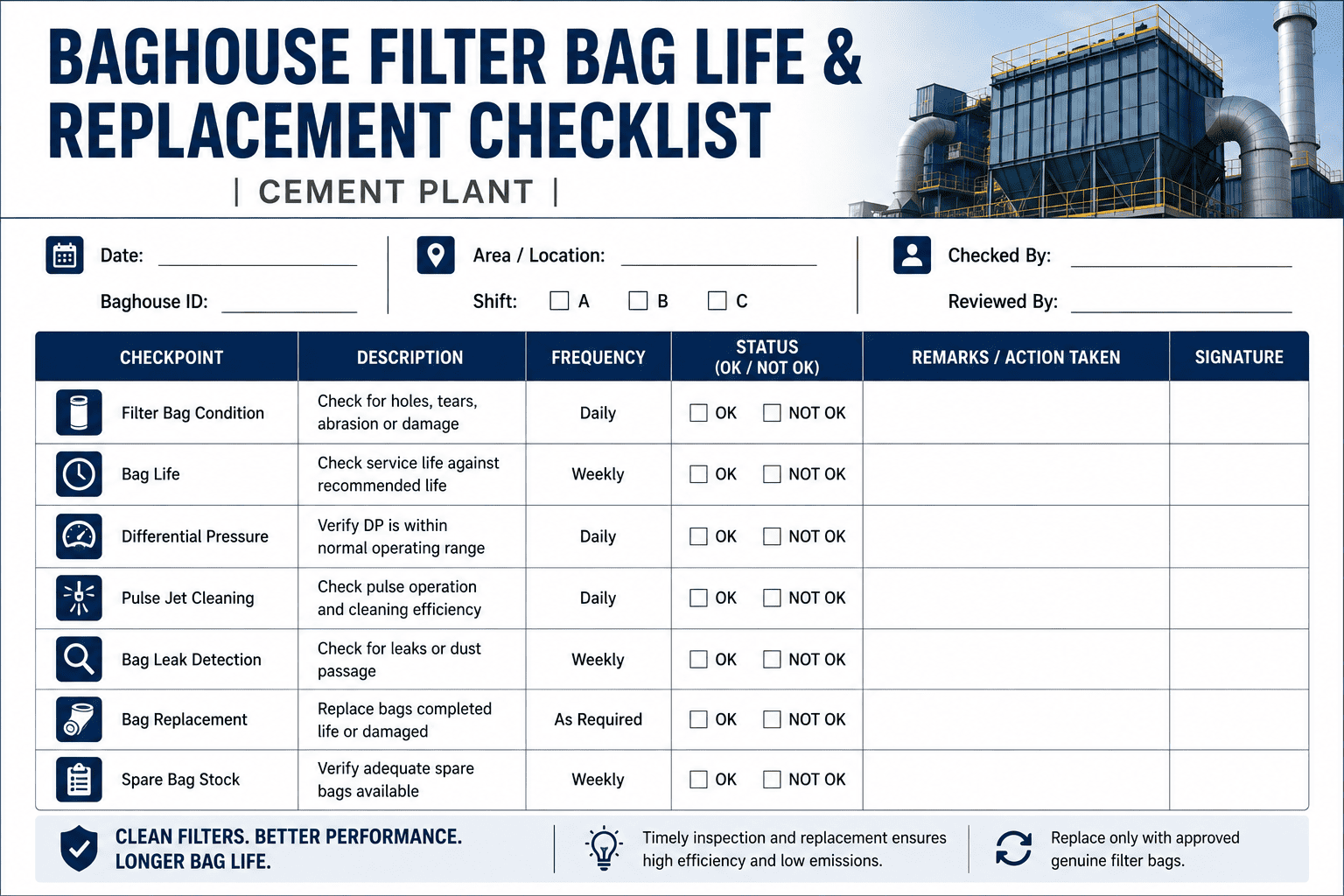
A filter bag doesn't fail on the date stamped on its install record, it fails on the date the dust cake, the air-to-cloth ratio, and the cleaning cycle finally catch up with it. Two bags installed the same week in the same baghouse can wear at completely different rates depending on which compartment sees the higher velocity. Sign up to track differential pressure, operating hours, and bag condition against your replacement schedule in one place.
Why It Matters
A single torn bag in a high-velocity compartment is enough to push a cement plant's particulate emissions over the permit limit. Replacing bags on a calendar schedule wastes good bags, waiting for a visible failure risks an opacity exceedance, the differential pressure trend is what tells you which bag actually needs attention.
What Actually Determines Bag Life
Operating Hours
Cumulative run time since install, the baseline every other factor is measured against
Differential Pressure
The primary diagnostic, rising DP signals blinding, falling DP signals a hole or tear
Air-To-Cloth Ratio
Below the minimum 3:1 ratio, dust cake builds faster and cuts bag life short
Dust Loading
Fine, alkaline cement dust packs denser cake than coarser material, wearing bags faster
Cleaning Response
A pulse valve that's slow to actuate leaves cake on the bag longer, accelerating wear
Visual Condition
Tears, pinholes, cage corrosion, and dust streaking on the clean side confirm what DP suggests
Signs A Bag Needs Replacing, Not Just Cleaning
DP stays high after a pulse cycle: if pressure doesn't drop back toward baseline after cleaning, the cake has penetrated the felt and cleaning alone won't recover it
DP drops suddenly and stays low: a sharp, sustained drop usually means a torn bag is letting air bypass the media entirely
Dust streaking appears on the clean side: visible streaks below a bag during inspection point directly to a hole or a failed seal at the cuff
Fabric feels brittle or thin when handled: heat and chemical exposure degrade felt strength well before a bag visibly tears, a snap test during inspection catches this early
Opacity trends upward with no process change: a slow opacity climb with stable production points at gradual bag degradation across the compartment, not one bag
Replace Bags On Condition, Not Guesswork
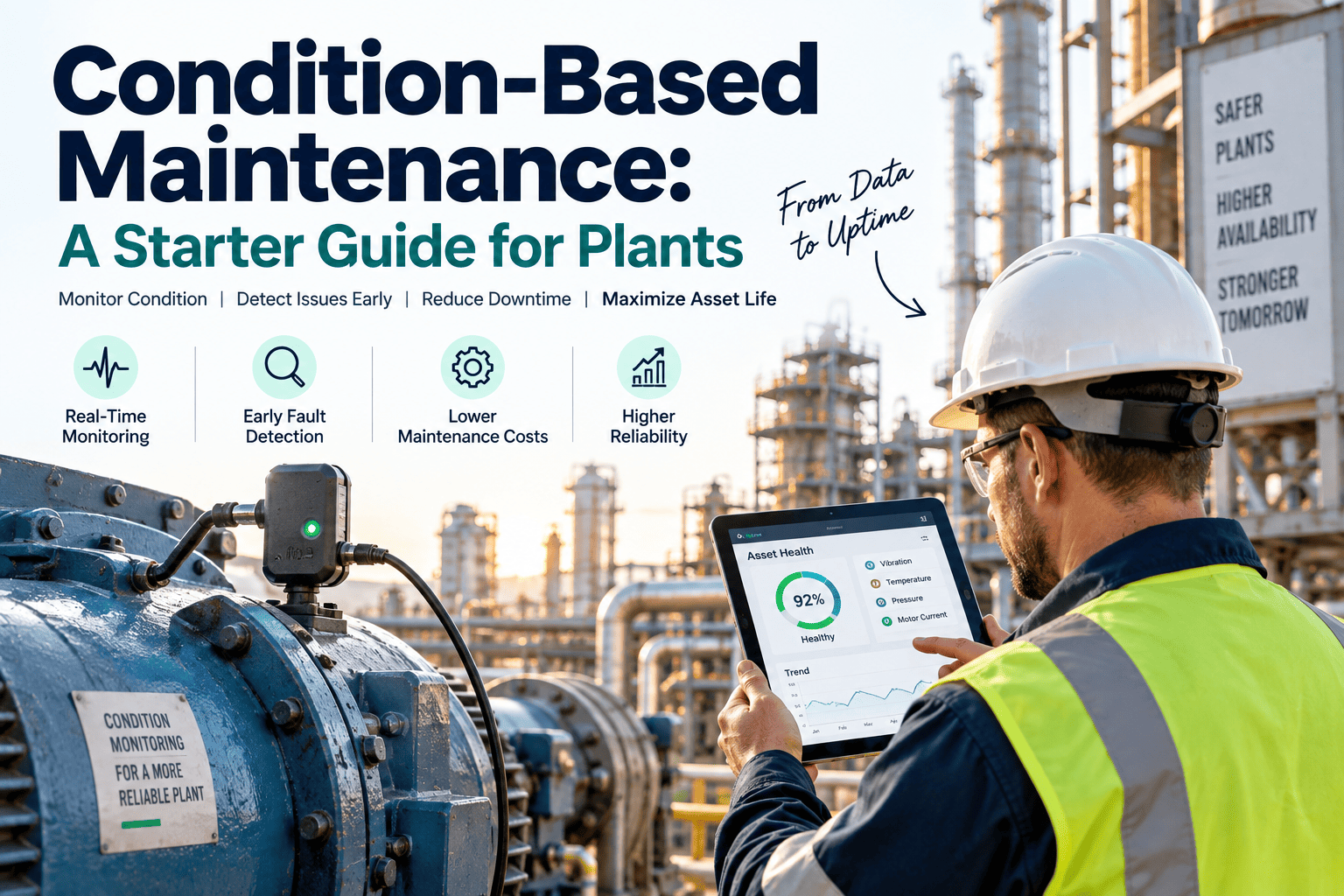
Oxmaint logs differential pressure per compartment, tracks bag operating hours against your replacement schedule, and flags a compartment the moment its DP trend breaks pattern. Sign up for a free trial to run it on your own baghouse data, or book a demo to see it configured for your plant.
Why Bags Don't Wear Out On A Schedule
Two bags in the same baghouse rarely age the same way. Compartments closer to the inlet see higher dust loading, bags at the edge of a row see uneven airflow, and any change in raw mill on/off cycling shifts temperature and moisture across the whole unit. Add abrasive, alkaline cement dust into the mix and a bag's real remaining life depends far more on where it sits and how consistently it's been cleaned than on the calendar. That's why a fixed two-to-three-year replacement interval is a starting estimate, not a rule, and the DP trend per compartment is what should move that date earlier or later.
DP Reading, What It Means & What To Do
| DP Reading |
What It Means |
Action |
| Stable, 100-200 mm WC |
Normal operating range for a clean-pulse baghouse |
Continue routine daily logging |
| Gradually rising |
Bag blinding, dust cake not fully clearing on pulse cycles |
Check pulse valve timing and air pressure, inspect fabric condition |
| Sudden, sustained drop |
Torn bag or failed seal allowing air bypass |
Isolate compartment, inspect and replace the affected bag same shift |
| High and not responding to pulse |
Advanced blinding, cake has penetrated the felt |
Schedule bag replacement, cleaning will not recover performance |
The Takeaway
Bag life is a trend, not a date on a calendar. The plants that avoid emergency bag swaps and opacity exceedances are the ones logging DP per compartment daily, so a bag gets replaced when its own data says it's time, not when the whole baghouse hits a fixed age.
Frequently Asked Questions
Q
How long do baghouse filter bags typically last in a cement plant?
Most cement plant filter bags last around two to three years, but that range depends heavily on air-to-cloth ratio, dust properties, and cleaning system performance. A bag running at a high air-to-cloth ratio in a heavily loaded compartment can wear out well before that window closes.
Q
What's the difference between high and low differential pressure?
High DP means dust cake is building up faster than the cleaning cycle removes it, usually a sign of blinding or a pulse valve problem. Low or suddenly dropping DP usually means a bag has torn or a seal has failed, letting air pass through with far less resistance than a clean bag should offer.
Q
Should bags be replaced one at a time or by compartment?
A single failed bag can usually be swapped on its own, but once DP data shows several bags in the same compartment trending the same way, replacing the full compartment together avoids repeated shutdowns for individual bags failing in sequence.
Know Which Bag Needs Replacing Before It Fails
Oxmaint tracks differential pressure, operating hours, and inspection findings for every compartment in your baghouse, so replacement decisions are based on condition data instead of a fixed calendar. Sign up for a free trial to run it on your own baghouse data, or book a demo to see it configured for your plant.