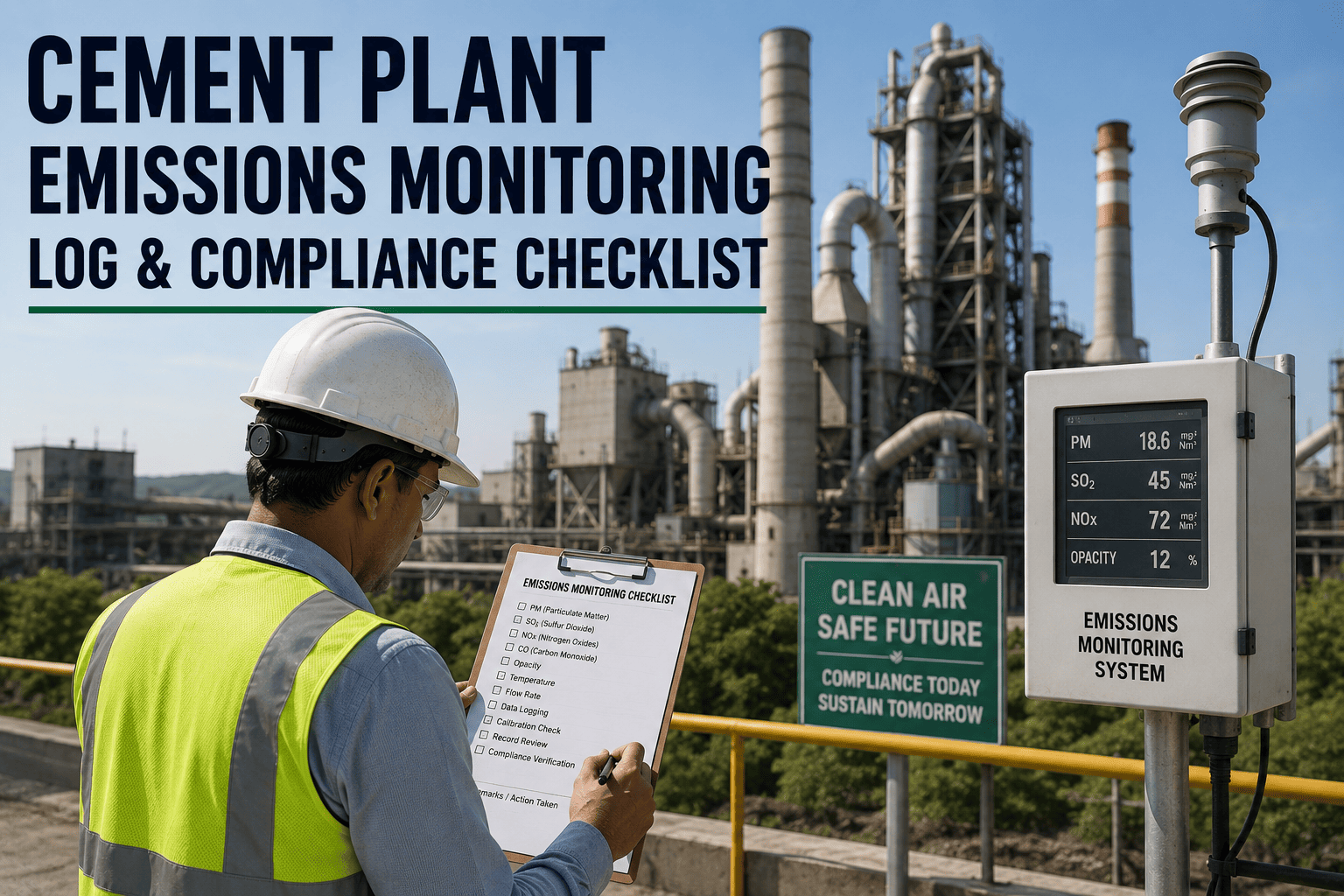
A cement kiln's air permit lives or dies by what the CEMS reports, NOx, SO2, CO, and particulate readings pulled continuously from the stack and compared against limits that don't care whether the sensor was calibrated on schedule. A drifted analyzer doesn't just produce bad data, it can mask a real exceedance or report a false one, and either way the plant is the one explaining the gap to the regulator. Sign up to log every CEMS reading against permit limits and get flagged the moment calibration drifts or a threshold is crossed.
Why It Matters
Continuous Emissions Monitoring Systems generate a data stream that regulators can pull at any time, and gaps in that record are treated the same as an exceedance. Calibration drift, downtime not logged, or a missing quality-assurance check all show up as findings, independent of whether the plant was actually operating within limits.
The Four Pollutants Your CEMS Tracks
NOx
Driven by kiln flame temperature, tracks closely with combustion efficiency
SO2
Tied to raw material and fuel sulfur content, watch feed changes closely
CO
Spikes signal incomplete combustion, often the earliest warning sign
Particulate
Directly reflects bag filter or ESP condition, the fastest to drift
O2 Reference
Corrects raw readings, an error here throws off every pollutant value
Opacity
Visual proxy for particulate, fast indicator between formal readings
Keeping The CEMS Record Defensible
Run daily calibration drift checks: zero and span verified each day, results logged even when within spec
Track data availability: monitor uptime against the minimum percentage required by your permit period
Log every downtime event: reason, duration, and substitute data method recorded for any monitor outage
Correlate readings to operating conditions: feed rate, fuel mix, and kiln temperature logged alongside emissions data
Flag exceedances the moment they occur: don't wait for the reporting period, corrective action needs a timestamp
Reconcile before the reporting deadline: quarterly and annual submissions checked against the raw log, not summarized blind
Never Miss A Calibration Or A Threshold Again
OxMaint logs every CEMS reading, tracks calibration schedules, and fires a prioritized work order the moment NOx, SO2, CO, or particulate crosses your permit limit. Sign up for a free trial to run it on your own emissions data, or book a demo to see it configured for your plant.
Pollutant, Likely Cause & First Response
| Pollutant |
Likely Cause Of Spike |
First Response |
| NOx |
Elevated flame temperature, burner misalignment |
Check burner settings and combustion air ratio |
| SO2 |
High-sulfur raw material or fuel batch |
Verify feed source, check scrubber if installed |
| CO |
Incomplete combustion, low oxygen |
Adjust air-to-fuel ratio, inspect burner |
| Particulate |
Bag filter tear or ESP field failure |
Inspect filter integrity, check pressure drop |
The Takeaway
Emissions compliance isn't decided at the quarterly report, it's decided every day the CEMS is running. A calibration missed on a Tuesday or a downtime event that never got logged shows up months later as a gap the plant can't explain, and that gap is what draws regulator attention faster than the reading itself.
Frequently Asked Questions
Q
How often does a CEMS need calibration verification?
Most permits require a daily zero and span drift check plus periodic quality-assurance testing on a longer cycle, such as quarterly or annual audits. The exact schedule depends on your specific air permit, but daily verification is the baseline most cement plants operate under.
Q
What happens if the CEMS goes down mid-shift?
Downtime has to be logged with the reason and duration, and most permits require a substitute data procedure to estimate emissions during the outage. Failing to document the outage properly is treated as a data-availability violation, separate from any actual emissions issue.
Q
Which pollutant tends to spike first when something's wrong?
CO is typically the earliest warning sign since it responds almost immediately to combustion problems, while particulate reflects filter condition more gradually. Watching CO alongside O2 reference readings can flag a developing combustion issue before it shows up as a formal exceedance.
Keep Your Emissions Record Reporting-Ready
OxMaint logs your CEMS readings, tracks calibration and downtime automatically, and fires a work order the moment an exceedance is flagged, so quarterly reporting never starts with a scramble. Sign up for a free trial to run it on your own emissions data, or book a demo to see it configured for your plant.