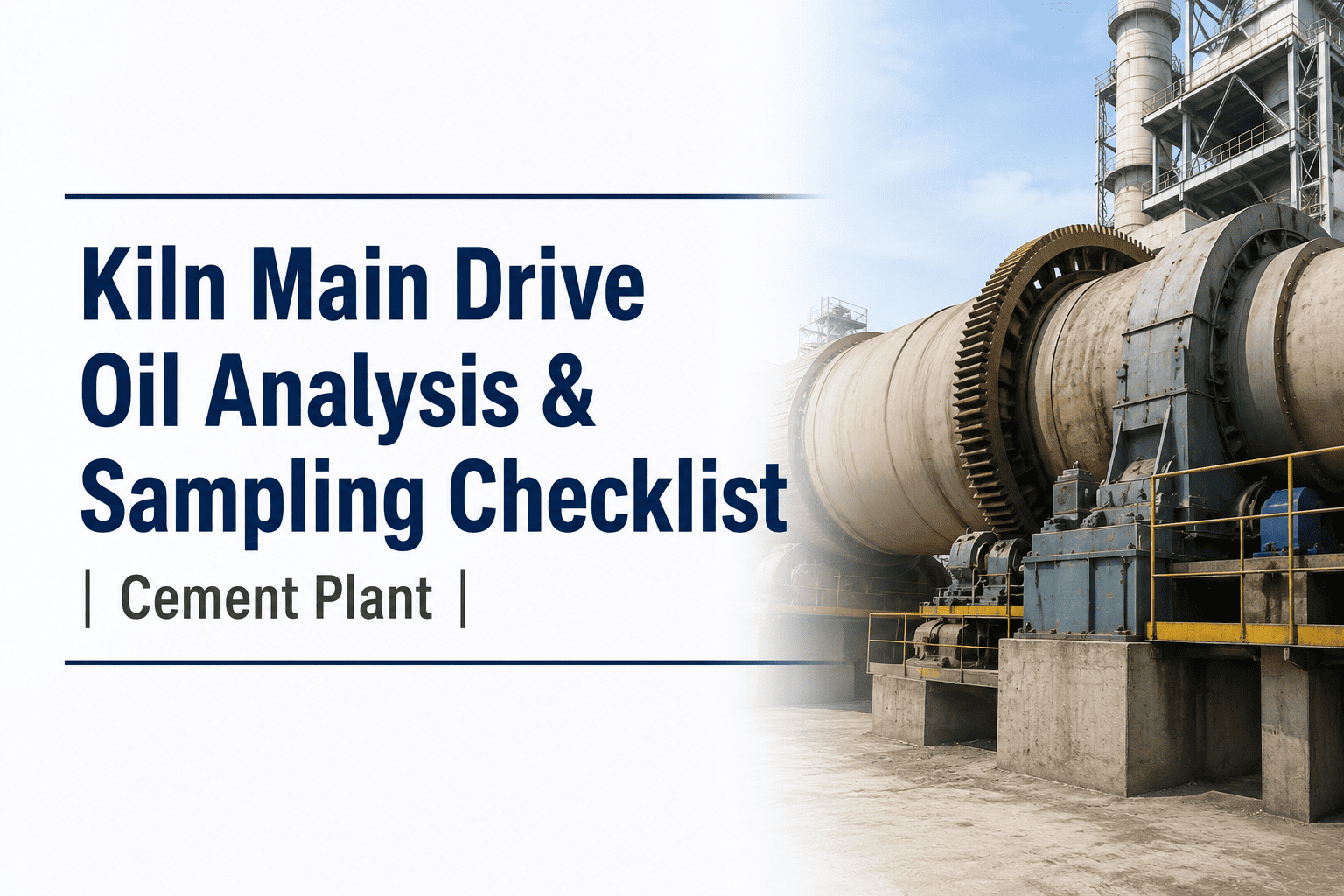
A kiln main drive gearbox doesn't announce a failing gear tooth with noise or heat, not at first, it announces it in the oil. Iron particles climb weeks before a bearing gets loud enough to hear, which makes the sample you pull today more useful than the vibration reading you'll take next month. Sign up to log every oil sample, trend result, and lab report against your kiln drive's history in one place.
Why It Matters
A kiln main drive failure can take a kiln down for days and cost hundreds of thousands of dollars in emergency parts and lost production. Wear debris typically shows up in the oil sixty to ninety days before a gear or bearing fails mechanically, which is exactly the warning window a consistent sampling routine is built to catch.
What Every Kiln Drive Oil Sample Should Cover
Sample Point
Mid-stream from a dedicated port while running, never the drain plug where sediment settles
Labeling
Equipment ID, sample date, running hours, and sample point recorded on every bottle
Viscosity
Measures resistance to flow, drift signals oxidation or the wrong oil was topped up
Wear Metals
Iron, copper, chromium levels point to which component is generating debris
Contamination
Water and dust ingress checked, both accelerate wear far faster than clean oil alone
Ferrography
Classifies particle shape to tell normal rubbing wear from active fatigue damage
The Sampling Checklist, Step By Step
Sample while the gearbox is running or immediately after shutdown: oil settled for hours misrepresents the actual particle suspension circulating during operation
Draw from the mid-stream sampling valve, not the drain: the drain plug collects sediment that skews wear metal readings high or low depending on how long it's settled
Flush the sample point before collecting: discard the first small volume so stagnant oil in the valve doesn't contaminate the sample
Label immediately, before the sample leaves your hand: equipment ID, date, running hours, and sample point, a mislabeled bottle makes a lab result useless for trending
Log the result against the previous sample, not just the alarm limit: a rate of change is often visible well before any single reading crosses a threshold
Trend Every Sample Instead Of Filing The Report
Oxmaint logs viscosity, wear metals, and contamination results against each kiln drive's history and flags a reading the moment it breaks trend, not just when it crosses a limit. Sign up for a free trial to run it on your own oil analysis data, or book a demo to see it configured for your kiln.
Why Oil Tells You Before Vibration Does
Vibration analysis tells you exactly where a problem is once it exists, but oil analysis tells you a problem is forming before it produces enough mechanical signature to register on a sensor. Rising iron content, a shift in particle shape under ferrography, or a slow climb in acid number all show a gear or bearing surface degrading while the gearbox still sounds and feels normal. The two methods work best together, oil catches the early chemistry, vibration confirms exactly which component is affected once the wear is active enough to locate.
Parameter, Target & What Deviation Means
| Parameter |
Target Range |
What Deviation Means |
| Viscosity |
Within 10% of the specified ISO VG at 40°C |
Oxidation, thermal breakdown, or wrong oil topped up |
| Acid number (TAN) |
Below 0.5 mg KOH per gram |
Rising value indicates oxidation and reduced film protection |
| Water content |
Below 500 ppm |
Seal failure or condensation, creates corrosive conditions |
| Ferrous particle count |
Below 300 mg per liter |
Active gear tooth or bearing wear, schedule a targeted inspection |
The Takeaway
A kiln main drive oil sample is only as useful as the consistency behind it. Same sample point, same labeling discipline, same trend comparison every time, that consistency is what turns a stack of lab reports into an early warning system instead of a filing exercise.
Frequently Asked Questions
Q
How often should kiln main drive oil be sampled?
Monthly to quarterly is typical, tied to running hours rather than the calendar. A kiln gearbox running heavy annual hours warrants more frequent sampling, and any parameter that starts trending should push the interval to monthly regardless of the baseline schedule.
Q
Why does the drain plug give an unreliable sample?
Heavier wear particles settle toward the bottom of the sump over time, so a drain sample can read artificially high in metals right after a shutdown or misleadingly low if the sump has been undisturbed. A mid-stream port while the gearbox is running gives a representative reading instead.
Q
What does ferrography add that a wear metals count doesn't?
A wear metals count tells you how much iron or copper is in the oil, ferrography tells you what shape and condition those particles are in. Normal rubbing wear looks different under analysis than fatigue spalling or cutting wear, which is what lets an analyst point to a specific failure mode rather than just a rising number.
Catch Gear And Bearing Wear While It's Still In The Oil
Oxmaint keeps every kiln drive oil sample, lab result, and trend line in one asset record, so a rising particle count turns into a scheduled inspection instead of an emergency shutdown. Sign up for a free trial to run it on your own oil analysis data, or book a demo to see it configured for your kiln.