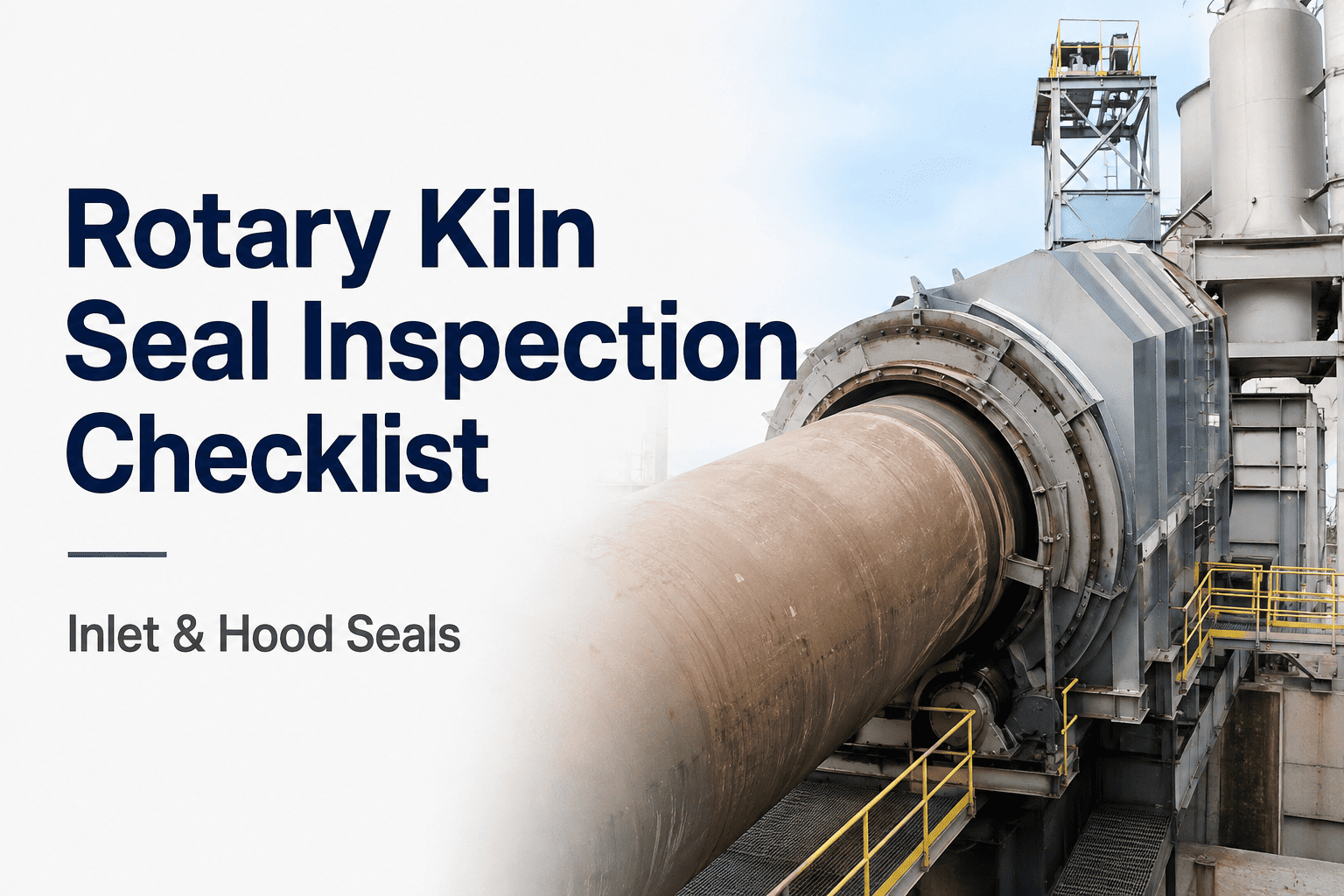
A worn kiln seal doesn't trip an alarm, it just lets cold air in a little at a time, and that air has to be heated to process temperature no matter where it entered. The inlet and hood seals alone account for most of a kiln's total false air, which makes them one of the highest-value five-minute inspections on the whole pyroprocessing line. Sign up to track seal condition, leakage readings, and replacement history against every inspection round.
Why It Matters
The kiln inlet and outlet or hood seals together account for roughly 60 to 75 percent of a kiln's total false air infiltration. Every percent of false air adds around 3 kcal/kg of wasted fuel, so a pair of degraded seals can quietly burn extra fuel every single day without ever showing up as a single alarm.
What To Look At On Every Seal Round
Plate Condition
Fish-scale or graphite plates checked for cracking, warping, or excessive wear at the contact edge
Air Leakage
Audible hiss or visible dust plume at the seal line signals active false air ingress
Shell Alignment
Ovality or shell runout opens uneven gaps that a fixed seal design can't fully follow
Spring Tension
Contact seals rely on consistent spring load, weak or broken springs let the plate lift off the shell
Dust Ingress
Dust buildup in the housing points to material escaping through the same gap air enters
Anchor & Housing
Bolts, brackets, and the stationary housing checked for looseness or heat distortion
The Weekly Inspection, Step By Step
Walk the seal line while the kiln is running: listen for hissing and look for a fine dust haze around the inlet and hood, both are early leakage indicators before any instrument confirms it
Check the O2 differential between kiln inlet and preheater exit: a rising gap against baseline is the instrumented confirmation of what a visual round suggests
Inspect plate overlap and contact pressure: gaps between fish-scale plates or light contact against the shell both let air through the same way a torn gasket would
Look for dust staining on the stationary housing: a consistent stain pattern marks exactly where the seal is losing contact, useful for targeting repair instead of a full replacement
Log wear grade and compare against the last shutdown record: a seal graded fine three inspections in a row that's suddenly worse warrants a closer look at shell movement, not just the seal itself
Turn A Fuel Bill Line Item Into A Scheduled Inspection
Oxmaint records seal wear grade, leakage readings, and replacement intervals for every inlet and hood seal, and correlates seal condition against specific energy consumption so the cost of a worn seal is visible before the fuel bill shows it. Sign up for a free trial to run it on your own kiln data, or book a demo to see it configured for your seals.
Why Seal Leakage Stays Invisible So Long
False air doesn't show up as a single number on any one gauge, it shows up as a slightly higher fuel rate, a slightly harder-working ID fan, and a combustion profile that's a little less stable than it used to be, none of which points directly back to a seal. Shell ovality makes the problem worse over time, because a seal designed for a round shell can only follow so much distortion before contact pressure drops in specific spots rather than failing all at once. That's exactly why a scheduled visual and instrumented check catches what a fuel consumption trend alone takes months to reveal.
Sign, Likely Cause & Action
| Sign |
Likely Cause |
Action |
| Audible hissing at seal line |
Plate gap or lost contact pressure |
Inspect and adjust or replace the affected plates |
| Rising O2 differential |
Increasing false air across inlet or hood seal |
Schedule a targeted seal inspection before the next shutdown |
| Dust staining on housing |
Localized contact loss at a specific point on the shell |
Target repair at the stained section rather than a full seal replacement |
| Sudden fuel rate increase |
Shell ovality opening an uneven seal gap |
Check shell alignment alongside the seal, not the seal alone |
The Takeaway
Kiln seals are cheap compared to the fuel their failure wastes, but only if someone is actually looking at them. A five-minute weekly walk of the inlet and hood, backed by a thorough check at every shutdown, keeps false air near industry-best levels instead of letting it climb unnoticed into a permanent line item on the fuel bill.
Frequently Asked Questions
Q
How often should kiln inlet and hood seals be inspected?
A visual walk during normal operation is recommended weekly, with a thorough inspection at every planned shutdown. Weekly checks catch wear patterns early, while shutdown inspections allow close-up assessment of plate condition and shell contact that isn't safe to do with the kiln running.
Q
What's a reasonable target for total false air in a kiln system?
Industry best practice targets total false air infiltration below 5 percent of preheater gas volume, measured as the oxygen differential between the kiln inlet and preheater exit. Since inlet and hood seals account for most of that infiltration, seal condition is usually the fastest lever to pull when the number climbs.
Q
Does a worn seal only waste fuel, or does it affect emissions too?
Both. False air dilutes kiln exhaust and disrupts the controlled combustion atmosphere, which can destabilize temperature control and affect NOx formation alongside the direct fuel penalty. A leaking seal is a combustion problem as much as it is an energy problem.
Stop Losing Fuel Through A Seal Nobody Checked
Oxmaint tracks inlet and hood seal condition, air leakage signs, and replacement history against every scheduled inspection, so a worn seal gets caught on a checklist instead of a fuel bill. Sign up for a free trial to run it on your own kiln data, or book a demo to see it configured for your seals.