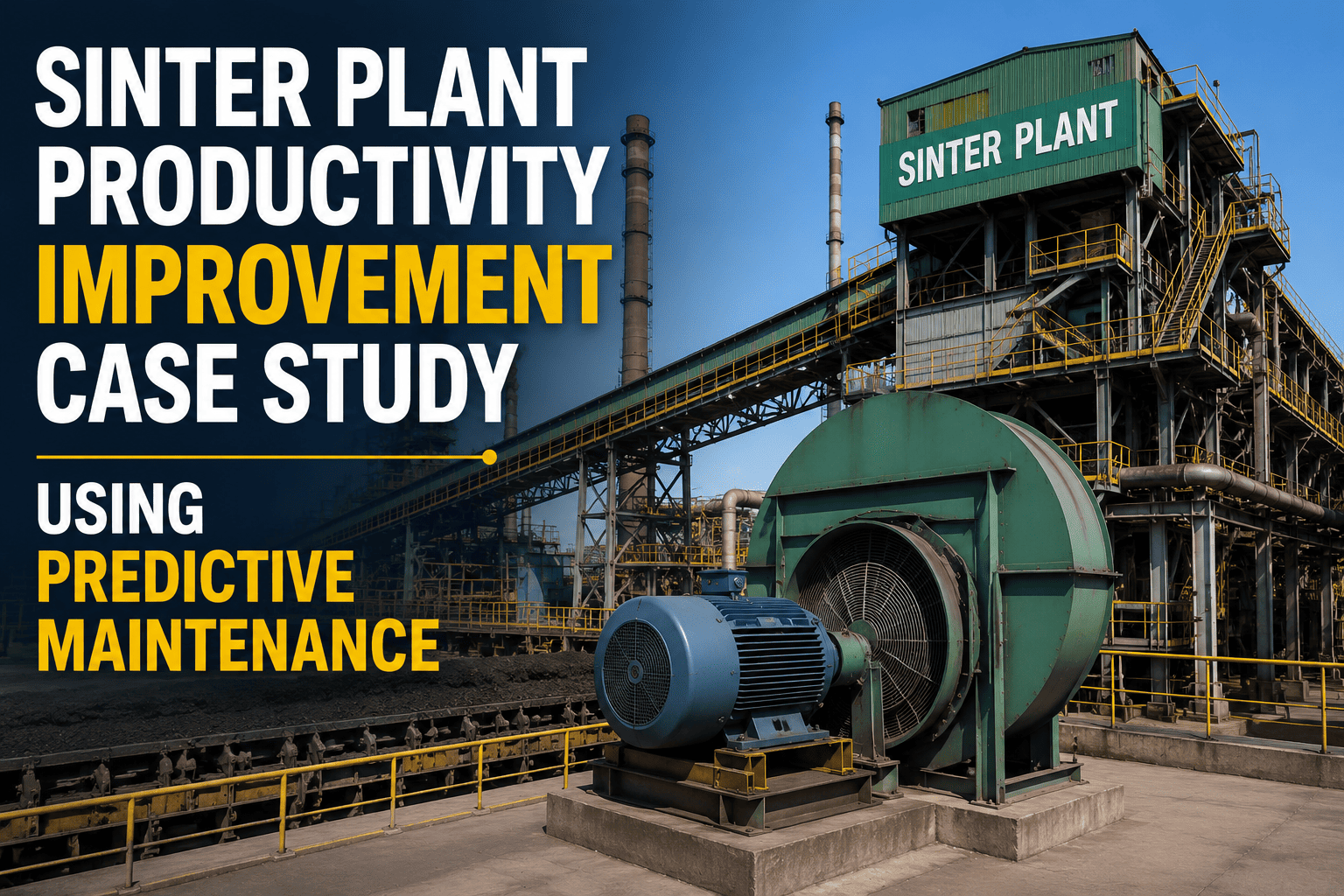
A sinter plant's output is only as fast as its slowest link, the strand, the crushers, the cooler, the screens all have to keep pace together. One plant kept hitting production targets on paper while actual tonnage lagged behind, because unplanned stops on secondary equipment kept eating into strand uptime nobody was tracking closely. Moving to predictive maintenance across the full line is what closed that gap between planned and actual output. Sign up to see where your own sinter line is losing productive hours.
Production reports focused on strand speed and output targets, while the equipment feeding and following the strand, crushers, screens, coolers, got only reactive attention. A jammed screen or a worn crusher liner would stop the whole line just as fast as a strand fault, but nobody was tracking those secondary assets closely enough to catch wear before it caused a stoppage.
Where Productivity Was Actually Being Lost
Oxmaint tracks condition data across the full sinter line, not just the strand, so secondary equipment stops less often. Sign up for a free trial to see where your own line is losing productive hours, or book a demo to walk through your production improvement plan.
Sinter Line Performance Before And After
Strand speed was never really the constraint, the line was losing hours to crusher jams, blinded screens, and cooler fan faults that nobody was watching closely. Once those secondary assets got the same condition monitoring treatment as the strand, unplanned stops dropped across the board and monthly tonnage started tracking much closer to target.
Why Secondary Equipment Decides Line Productivity
A sinter line only runs as fast as its most neglected asset, not its most watched one. Teams naturally focus maintenance attention on the strand because it's the visible heart of the process, but a jammed screen or a seized crusher stops production just as completely. Extending predictive maintenance to every asset in the material flow, not just the headline equipment, is what actually protects total output.
Frequently Asked Questions
Stop Losing Tonnage To Equipment Nobody Is Watching
Oxmaint extends condition monitoring and predictive maintenance across your full sinter line, from strand to cooler, so secondary equipment stops less often. Sign up for a free trial to see where your own line is losing productive hours, or book a demo to walk through your production improvement plan.