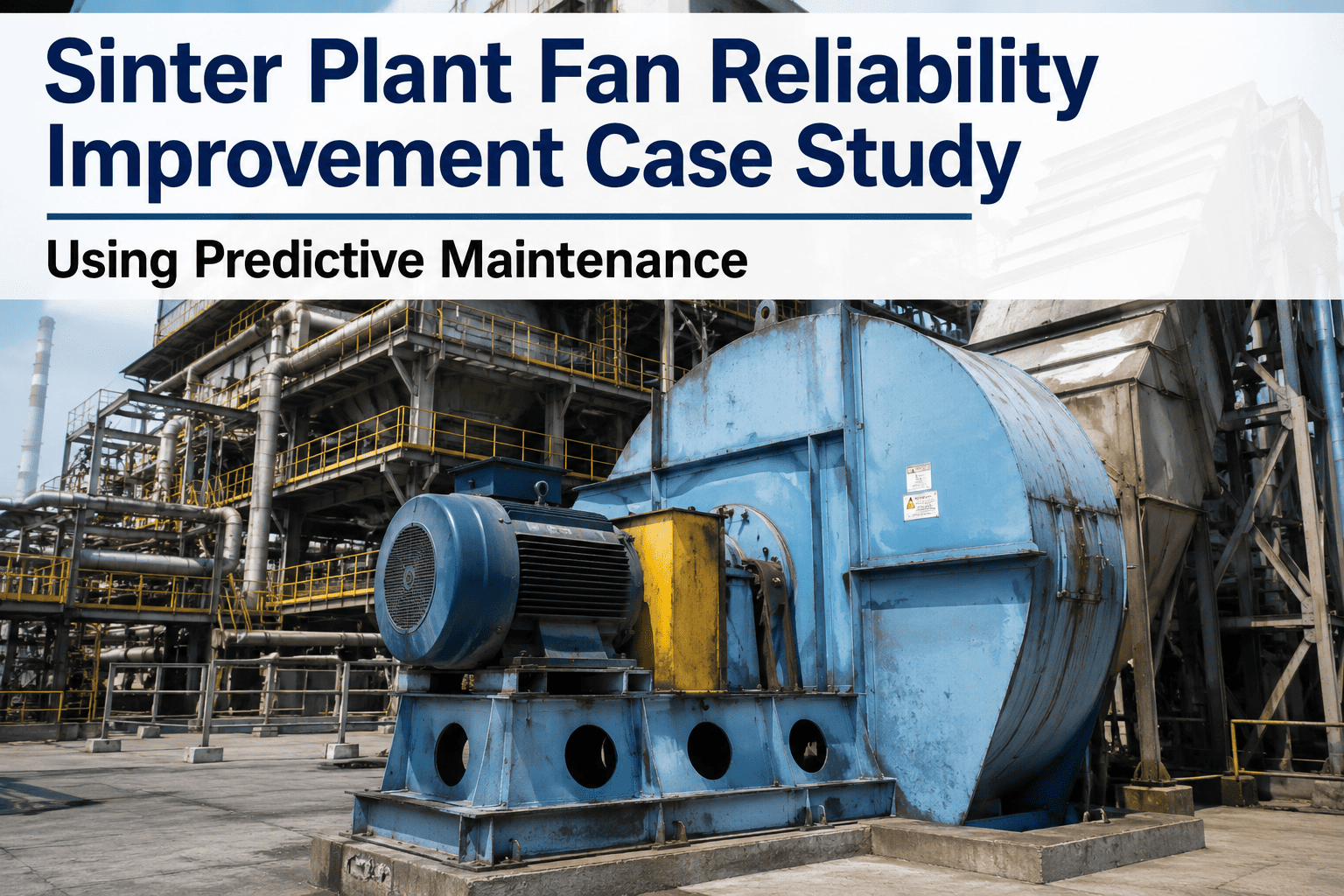
An exhauster fan at a sinter plant runs almost non-stop, pulling hot, dust-heavy gas through the sinter bed around the clock. When one of these fans trips unexpectedly, the whole sinter line stops with it. One steel plant kept losing that fight to bearing failures nobody saw coming until vibration levels were already critical. Moving to predictive maintenance changed when the plant found out, not just what it found. Sign up to see how predictive tracking would look across your own rotating equipment.
-70% Unplanned Trips
Drop in unplanned exhauster fan trips after vibration and oil monitoring went live
3 Weeks Warning
Average lead time between an early bearing fault signal and the point of failure
$40K/Hour Protected
Sinter line idle cost avoided for every hour the exhauster fan stays running
The Problem
The sinter plant's exhauster fans were only inspected on fixed monthly rounds, with bearing and lubrication checks done by feel and sound. By the time a technician heard a change in the fan, the bearing was already near failure, forcing an emergency shutdown of the entire sinter line instead of a planned repair.
What The Plant Started Tracking
| Monitoring Method |
What It Catches |
Action Trigger |
| Vibration Analysis |
Bearing wear, shaft misalignment, impeller imbalance |
Work order raised on rising vibration trend, before threshold breach |
| Oil Analysis |
Metal particles, moisture content, viscosity breakdown |
Lubrication change scheduled ahead of gearbox damage |
| Bearing Temperature |
Overheating from friction or lubrication loss |
Alert logged before thermal damage sets in |
| CMMS Work History |
Repeat failure patterns across fan sets |
Root cause review triggered after repeat findings |
Catch Fan Failures Weeks Before They Happen
Oxmaint pulls vibration, oil, and temperature readings into one work order trail so fan wear becomes a scheduled repair, not a shutdown. Sign up for a free trial to see it against your own rotating equipment, or book a demo to walk through your fan reliability program.
Fan Reliability Before And After
| Metric |
Before |
After |
| Failure detection |
By sound and feel during monthly rounds |
Continuous vibration and oil trend tracking |
| Bearing replacement |
Reactive, after audible failure |
Scheduled weeks ahead on trend data |
| Work order records |
Paper logs, no failure history trail |
CMMS history linked to each fan asset |
| Unplanned line stoppages |
Frequent, halting the full sinter line |
Down 70%, most faults caught early |
The Results
Every bearing and gearbox fault the plant used to discover by sound had already shown up in vibration or oil data weeks earlier. Once those readings were logged and trended in a CMMS, a fan fault became a scheduled work order with a clear owner, not a surprise shutdown for the whole sinter line.
Frequently Asked Questions
Q
Why does a single exhauster fan matter so much to a sinter plant?
The exhauster fan pulls process gas through the entire sinter bed, so if it trips, the whole sinter line stops with it, making fan reliability a direct driver of plant output.
Q
How early can vibration analysis actually detect a bearing fault?
Vibration trends typically show early bearing wear signatures weeks before the fault would be noticeable by sound or touch, giving enough lead time to plan a repair instead of reacting to a trip.
Q
Does predictive maintenance replace routine fan inspections?
No, it works alongside routine inspection rounds, adding continuous condition data between checks so wear-driven faults don't go unnoticed until the next scheduled visit.
Turn Fan Failures Into Scheduled Repairs, Not Shutdowns
Oxmaint brings vibration analysis, oil analysis, and work order tracking into one CMMS so every exhauster fan gets caught before it becomes a stoppage. Sign up for a free trial to see it against your own fan fleet, or book a demo to walk through your reliability program.