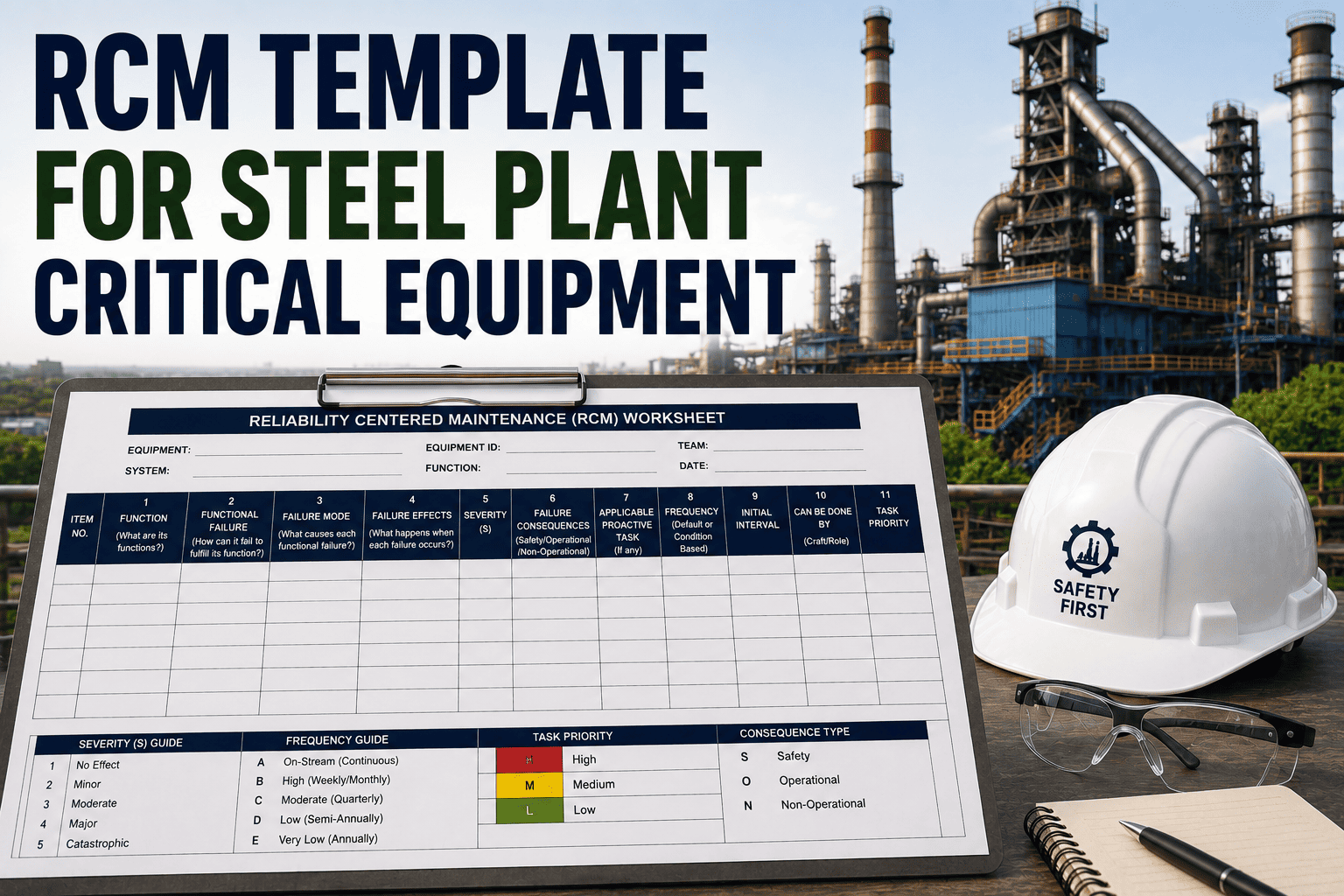
Two furnaces in the same plant get the exact same monthly preventive maintenance, even though one of them stops the entire production line if it fails and the other has a backup unit ready to take over in minutes. Neither maintenance plan was built around that difference, so the plant spends equal effort protecting unequal risk. Reliability-Centered Maintenance fixes that by asking, for every piece of critical equipment, what happens if this fails, how likely is that, and which maintenance strategy actually makes sense here. This page walks through how to build an RCM template for steel plant equipment, the decision logic behind choosing preventive, predictive, run-to-failure, or redesign, and how plants are running that logic through a CMMS so the strategy sticks instead of drifting back to one-size-fits-all schedules. Sign up to build your own RCM-based maintenance plan.
Most plants set maintenance intervals once, copy them across similar equipment, and rarely revisit them against actual criticality. That means high-risk assets sometimes get under-maintained until they fail, while low-risk equipment gets serviced more often than it needs, tying up technician hours that could go toward the failures that would actually hurt output or safety.
What Changes When Maintenance Strategy Follows Criticality
The RCM Decision Path For Choosing A Strategy
Oxmaint lets you run this RCM decision logic against every critical asset and turn the outcome straight into a preventive or predictive maintenance schedule inside your CMMS. Sign up for a free trial to build your own RCM template, or book a demo to see criticality-based planning in action.
The Five Steps Behind Every RCM Template
An RCM analysis built once in a document goes stale the moment failure patterns change. Inside a CMMS, the strategy chosen for each asset turns directly into a scheduled task, actual failure history feeds back into the criticality ranking, and the plan for a critical furnace stays visibly different from the plan for a low-risk conveyor instead of drifting back to the same interval for everything.
Frequently Asked Questions
Build A Maintenance Strategy That Matches Real Risk
Oxmaint turns this RCM template into a working maintenance plan, so critical equipment gets predictive attention while low-risk assets stop eating up technician hours they do not need. Sign up for a free trial to score your first critical asset, or book a demo to see RCM logic connected to a live CMMS.