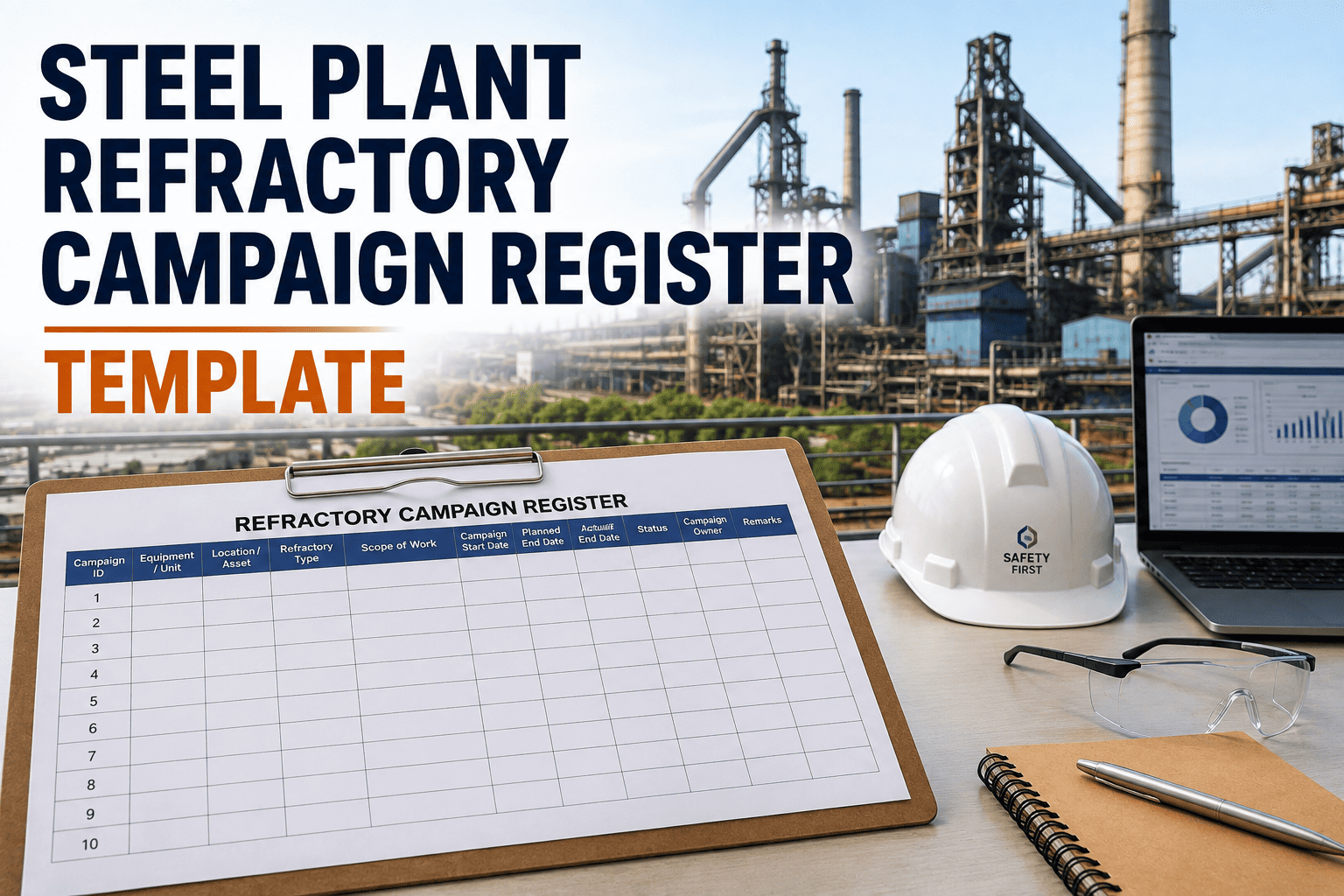
A blast furnace, a BOF vessel, and a tundish all wear their refractory lining on completely different clocks, and most plants track that history in whatever notebook or spreadsheet the last shift supervisor happened to use. A campaign register puts every vessel's lining history in one place, so wear trends, brick performance, and reline costs can actually be compared across campaigns instead of getting lost between shifts. This free template gives you that register, built for five vessel types at once. Sign up to run your refractory register inside OxMaint.
Why A Register Matters
Without a register, nobody can say whether the last brick grade actually outlasted the one before it, or whether a ladle's campaign life is trending down for a reason worth investigating. History lives in someone's memory or a folder nobody opens, so every reline decision starts from scratch instead of building on what the last ten campaigns already proved.
What The Register Tracks
Campaign Start & End Dates
Every lining's install date and reline date, logged against the vessel
Heat / Cycle Count
Total heats or pours the lining carried before it was pulled
Thickness Readings
Periodic measurements plotted across the campaign's full life
Brick Grade & Supplier
Which lining material was used, so performance can be compared over time
Inspection Findings
Hot spots, spalling, and erosion patterns noted at each check
Cost Per Campaign
Brick, labor, and downtime cost logged against each reline
Typical Campaign Life By Vessel Type
Bar length reflects relative campaign frequency, not a shared unit. A tundish gets relined almost every heat, while a blast furnace lining is expected to run for over a decade, which is exactly why one register needs to track both on their own terms.
Without A Register vs With This Template
| Area |
Without A Register |
With This Template |
| Campaign history |
Scattered across notebooks, shift logs, and memory |
One record per vessel, searchable across every campaign |
| Brick performance |
Impossible to compare one grade or supplier against another |
Life span compared side by side across suppliers |
| Wear trends |
A declining campaign life goes unnoticed until it fails early |
Flagged as soon as a vessel's trend breaks from history |
| Cost tracking |
Reline costs buried in general maintenance spend |
Cost per campaign visible for every vessel, every reline |
Give Every Vessel A Campaign History That Actually Helps
OxMaint keeps thickness readings, brick data, and reline costs on one register per vessel, so every new campaign builds on the last one instead of starting blind. Sign up for a free trial to start your register today, or book a demo and we'll walk through it with your team.
Frequently Asked Questions
Q
Can one register really cover vessels with such different campaign lengths?
Yes, each vessel gets its own campaign entry with its own unit of measure, whether that's heats for a BOF or years for a blast furnace, so the comparison happens within a vessel type, not across mismatched units.
Q
Who should be entering data into the register day to day?
Whoever performs the thickness check or inspection logs it directly against the vessel's active campaign, so the record builds itself in real time instead of being reconstructed later from memory.
Q
Does the register help justify brick supplier decisions?
Yes, once several campaigns are logged for the same vessel, comparing brick grade against actual heats achieved gives a factual basis for sticking with or switching a supplier.
Get The Free Refractory Campaign Register Template
Campaign dates, heat counts, thickness readings, brick data, and reline cost, tracked for blast furnace, BOF, EAF, ladle, and tundish vessels. Sign up for a free trial to build your register today, or book a demo to see it applied to your plant.