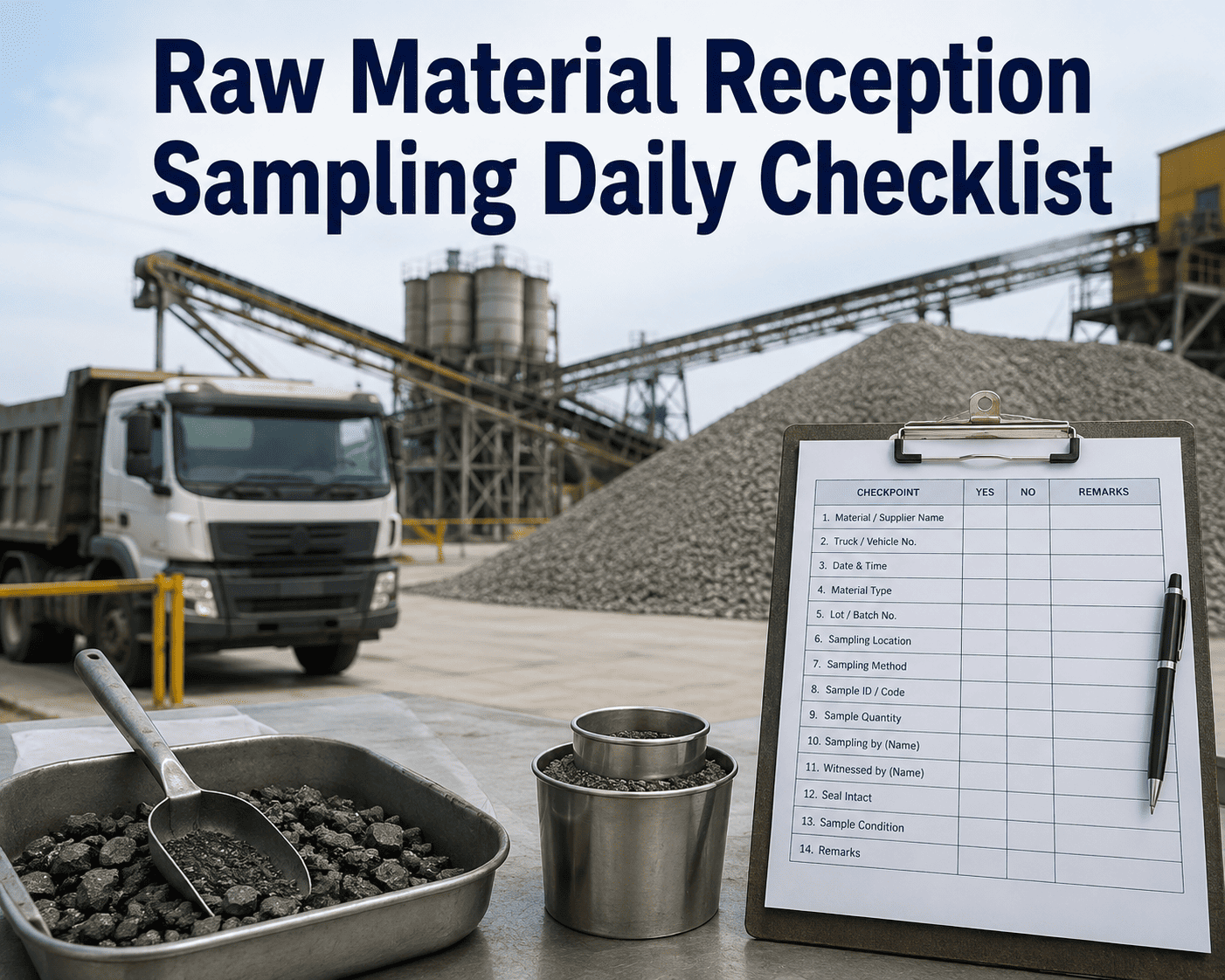
A truck of limestone rolls onto the weighbridge, drops its load, and rolls back out — all inside a few minutes. If nobody pulls a representative sample in that window, the plant has no way to know whether that load matches the CaO content the raw mix was designed around until the kiln is already chasing a chemistry correction. Reception sampling is the one checkpoint that catches an off-spec load before it ever reaches the blending bed. Sign up to log every reception sample against its spec range and keep a full traceable record for every incoming load.
Why It Matters
Limestone alone makes up roughly 78 to 82% of total raw material feed in an integrated cement plant, so a single off-spec delivery has an outsized effect on kiln feed chemistry. Catching it at reception, before it's tipped onto a shared stockpile, is far cheaper than correcting for it downstream with costly additives once it's already blended in.
Three Material Streams, Different Checks
Limestone
Sampled for CaO and MgO content, since this single material drives the majority of kiln feed chemistry and the smallest shift in composition changes clinker quality downstream.
Clay And Shale
Sampled for silica and alumina content plus moisture, since a wet or inconsistent clay load throws off the raw mix ratio before it ever reaches the raw mill.
Additives
Iron ore, sand, gypsum, and fly ash sampled individually, since each corrects a different moduli gap and a mislabeled or contaminated additive load corrupts the whole blend.
The Daily Reception Checklist
Verify the delivery note against the load: material type, declared source or quarry face, and quantity checked against the weighbridge reading before any sample is drawn
Draw a representative composite sample: increments taken across the load or stream, not from one point, since a single scoop rarely reflects the whole delivery
Reduce the sample with a riffle splitter: cutting the composite down to the correct test quantity without biasing particle size, per ASTM C702 sample-reduction practice
Run the applicable test: XRF for elemental composition, moisture check for clay and additives, visual screen for contamination or tramp material on every stream
Log the result and route the load: accept to stockpile, hold for re-test, or reject at the gate, with the result recorded against that delivery for traceability
Every Load, Every Result, One Record
Oxmaint logs every reception sample against its spec range, flags a hold or reject automatically when a result falls outside limits, and keeps a full traceable QC history tied to the delivery it came from. Sign up for a free trial to run it on your own reception gate, or book a demo to see it configured for your plant.
Why Representative Sampling Is The Hard Part
Testing is only as good as the sample it's run on. A grab sample taken from the top of a tipped load, or from one corner of a conveyor stream, almost never reflects the true composition of the full delivery, because larger particles and finer material segregate naturally as they fall. The larger the maximum particle size in the load, the bigger and more distributed the composite sample needs to be to stay representative. This is why a single scoop test can pass a load that a proper composite sample would have flagged, and why the sampling method matters as much as the analysis itself.
Accept, Hold, Or Reject
| Result |
General Guidance |
Recommended Action |
| Accept |
Composition and moisture within the agreed spec range |
Release to the designated stockpile or blending bed |
| Hold |
Result borderline or test inconclusive |
Divert to a separate holding area and re-sample before release |
| Reject |
Composition outside limits or visible contamination present |
Return the load at the gate and log the supplier exception |
Frequently Asked Questions
Q
Why can't one scoop from the top of the load be used as the sample?
Material segregates as it's tipped, so a single grab sample tends to reflect only the finer or coarser fraction that settled in that spot. A composite sample taken from multiple increments across the load is what actually represents the delivery as a whole.
Q
Does every additive need the same test as limestone and clay?
No. Each additive corrects a specific gap in the raw mix moduli, so gypsum, iron ore, sand, and fly ash are each checked against the parameter they're brought in for, rather than run through one blanket test that doesn't reflect why that material is on site.
Q
What happens if a load is put into the stockpile before the result comes back?
Once a load is blended into a shared stockpile, an off-spec result can no longer be isolated, and the whole pile's chemistry shifts with it. This is exactly why a load should sit in a holding or quarantine area until its sample result is confirmed.
Stop An Off-Spec Load At The Gate, Not At The Kiln
Oxmaint ties every reception sample to its delivery, applies your accept, hold, and reject limits automatically, and keeps a fully auditable QC record for limestone, clay, and every additive that crosses the weighbridge. Sign up for a free trial to run it on your own reception gate, or book a demo to see it configured for your plant.