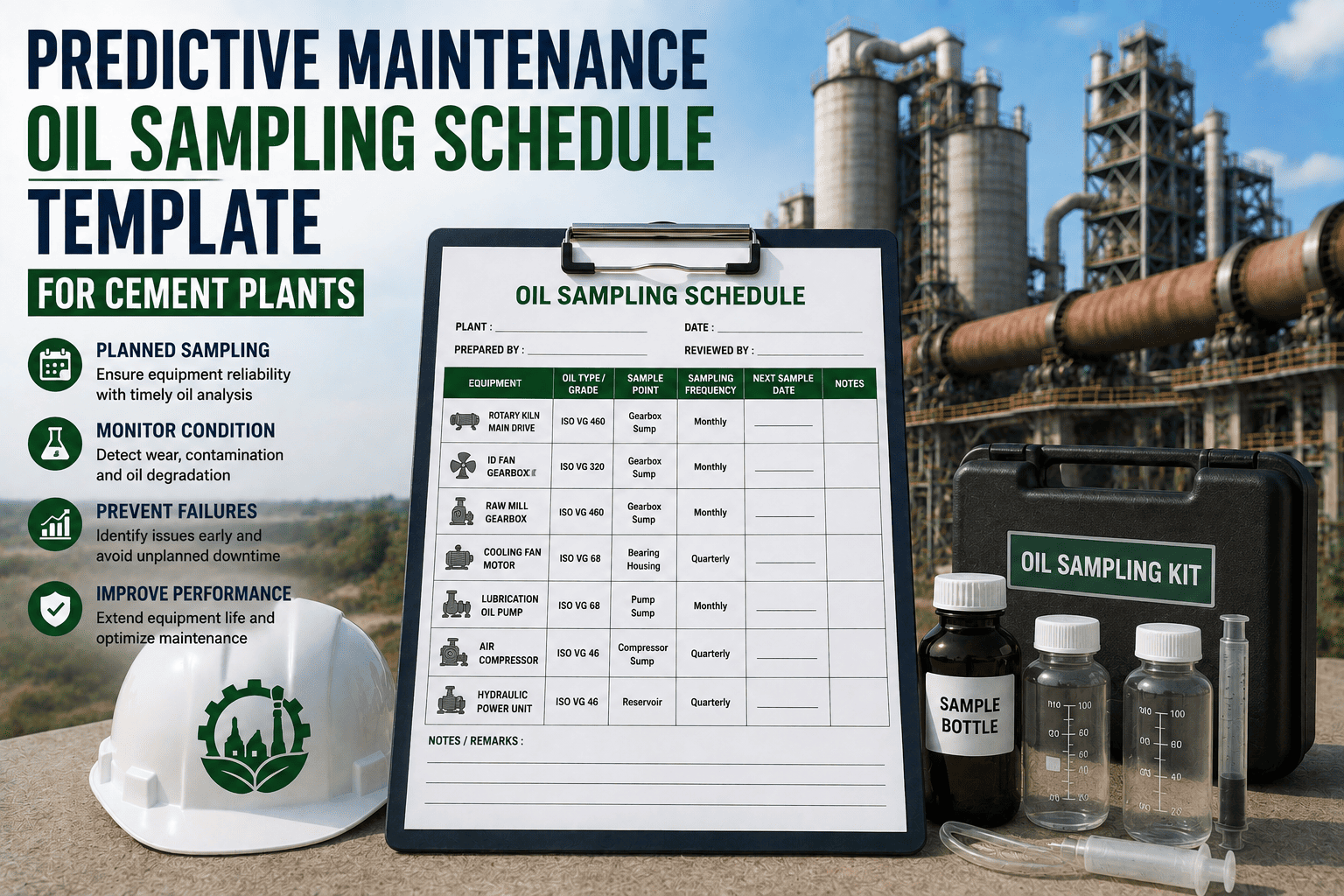
A gearbox can run for months with metal particles quietly building up in the oil, invisible to anyone until the failure finally shows up on the vibration route or, worse, on the shop floor. Oil analysis catches that story earlier than almost any other predictive method, but only if samples get pulled on a consistent schedule from the same point, not whenever someone remembers. This oil sampling schedule template gives cement plants a structured route across gearboxes, motors, pumps, and hydraulic systems, so wear trends show up in the data instead of in a breakdown. Sign up to run your oil sampling schedule through your own CMMS.
Why It Exists
Oil doesn't just lubricate, it carries evidence. Wear metals, moisture, and dirt all show up in a sample long before they show up as a failure, but only if the same point on the same machine gets sampled consistently enough to build a trend.
What A Sample Reveals
Wear Metals
Iron, copper, and chromium particles indicating which component is wearing and how fast
Contamination
Water and dirt ingress that accelerates wear long before a failure is visible
Viscosity
Whether the oil still provides the film strength the equipment was designed to run on
Additive Life
How much protective additive remains before the oil needs to be changed rather than just topped up
Sampling Intervals By Equipment
Kiln And Mill Gearboxes
Monthly
Main Drive Motor Bearings
Quarterly
Hydraulic Power Units
Monthly
Auxiliary Pumps And Fans
Semi-Annual
Turn Every Sample Into A Trend
Oxmaint logs each oil sample against the same equipment point, so wear metal and contamination trends build automatically instead of living in a lab report nobody revisits. Sign up for a free trial to set up your own sampling schedule, or book a demo to see the trending in action.
Proper Sampling Technique
Sample pulled while the equipment is running or immediately after shutdown, never from a cold, settled tank
Sample taken from the same designated port every time, not from a drain valve that collects settled sediment
Clean sample bottle used to avoid introducing contamination that skews the result
Sample labeled with equipment ID, date, and running hours before it leaves the site
Results logged against the equipment record as soon as the lab report comes back, not weeks later
Reactive vs Proactive Oil Analysis
| Factor |
Reactive |
Proactive |
| When sampling happens |
Only after a fault is already suspected |
On a fixed schedule regardless of suspicion |
| Trend data |
One-off snapshot with no history to compare against |
Continuous trend showing gradual wear before it accelerates |
| Lead time to act |
Days, if the failure hasn't already started |
Weeks to months, while wear is still gradual |
| Oil change decisions |
Based on calendar interval regardless of condition |
Based on actual additive depletion and contamination level |
The Takeaway
A single oil report is a data point. A schedule of samples, pulled the same way from the same point every time, is a story about how that gearbox or motor is actually holding up. The template only pays off if it's followed consistently enough for the trend to mean something.
Frequently Asked Questions
Q
What is ferrography and when is it used?
Ferrography separates and examines wear particles under magnification to identify their shape and source. It's typically used as a follow-up test once routine analysis flags rising wear metal levels, to pinpoint which component is generating the debris.
Q
Should oil be sampled hot or after it cools down?
Samples should generally be pulled while the system is running or immediately after shutdown, while particles and contaminants are still suspended, rather than after the oil has sat long enough for debris to settle out.
Q
Can oil sample results trigger a work order automatically?
Yes, in a CMMS a lab result that crosses a wear metal or contamination threshold can generate a work order automatically, so the finding gets acted on instead of filed away.
Read The Oil Before It Reads Like A Failure Report
Oxmaint keeps every oil sample logged against the same equipment point, so wear trends show up early enough to act on. Sign up for a free trial to set up your own sampling schedule, or book a demo to see it running on your equipment.