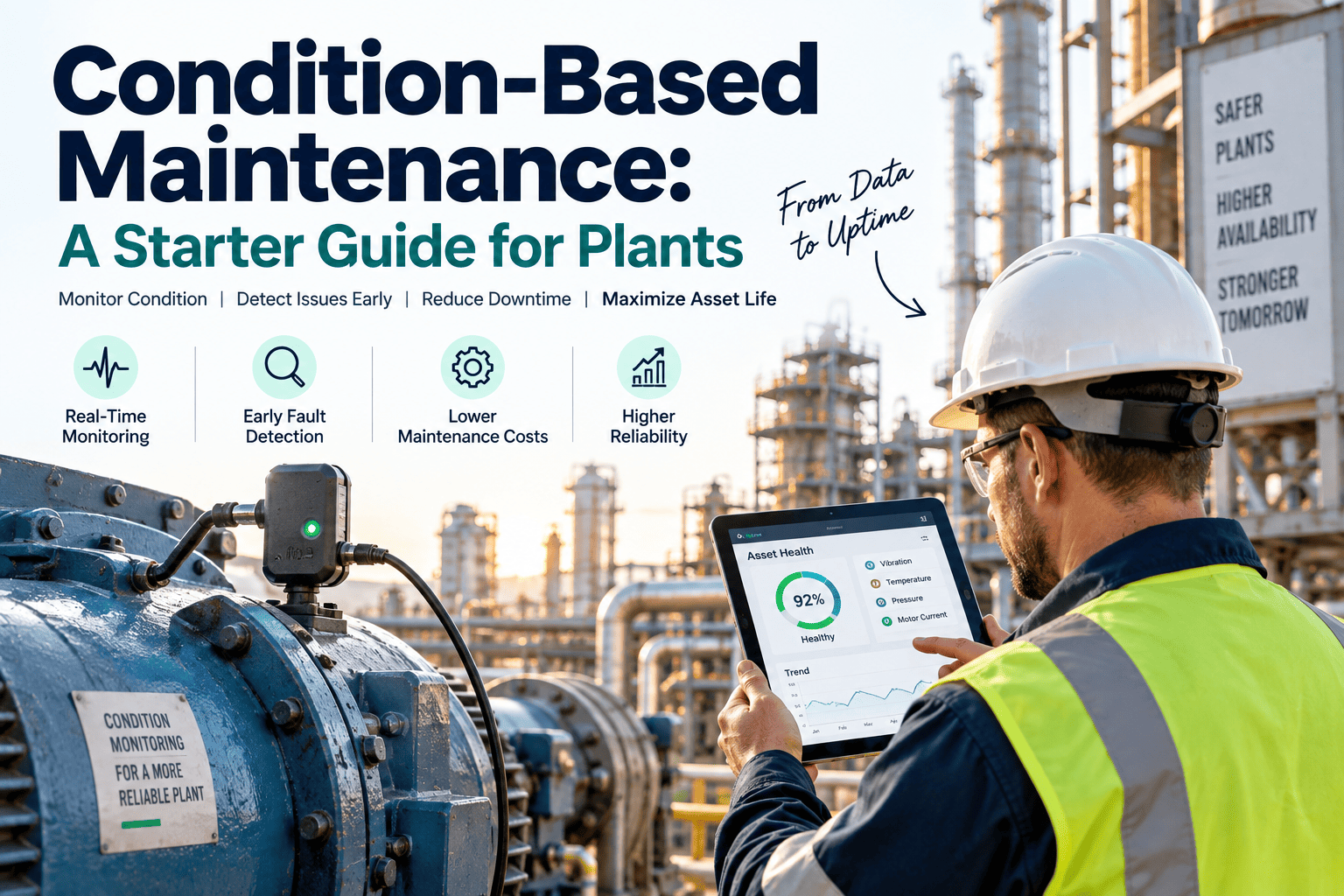
Preventive maintenance replaces a bearing on a schedule whether it needs it or not. Predictive maintenance waits until the data says it actually needs it, and catches the ones that would have failed early without the schedule ever flagging them. Cement plants run some of the most demanding rotating equipment in heavy industry, which makes them a natural fit for predictive techniques. Here are 10 applications worth building into your 2026 maintenance strategy. Sign up to see how condition data connects to your work order history in one system.
Why It Matters
A kiln drive failure or grinding mill bearing seizure can shut down production for days and cost six figures in lost output. Predictive maintenance exists to catch the early warning signs weeks before that happens, not to add another dashboard nobody checks.
10 Applications Worth Building Into Your Plant
Vibration Analysis
Catches bearing wear and misalignment on kiln drives, fans, and mill motors before they fail
Thermal Imaging
Spots hot spots on electrical panels, motor bearings, and kiln shell refractory thinning
Motor Current Signature Analysis
Detects rotor bar and winding faults from electrical signal patterns without stopping the motor
Oil Analysis
Tracks contamination and wear particles in gearbox and hydraulic system lubricants
Ultrasonic Testing
Finds compressed air leaks and early-stage bearing lubrication issues by sound frequency
Kiln Shell Scanning
Continuous infrared scanning tracks refractory lining wear along the full kiln length
Acoustic Emission Monitoring
Picks up bearing defects at an earlier stage than standard vibration analysis alone
AI-Based Failure Prediction
Learns failure patterns from historical work order and sensor data to flag emerging risk
Conveyor Condition Monitoring
Tracks belt tension, idler wear, and misalignment across long material handling runs
Process Parameter Correlation
Links process data like load and temperature to equipment stress patterns over time
Preventive vs Predictive, What Changes
| Aspect |
Preventive Maintenance |
Predictive Maintenance |
| Trigger |
Fixed schedule or run-hours |
Actual equipment condition data |
| Parts replaced |
Often earlier than necessary |
Closer to actual end of useful life |
| Setup effort |
Low, mostly scheduling |
Higher, needs sensors and baseline data |
| Best fit |
Low-cost, easily replaceable parts |
High-value rotating equipment like kilns and mills |
Turn Condition Data Into Action
Vibration readings and thermal scans only help if they trigger a work order before failure. Sign up for a free trial to connect condition monitoring to your maintenance workflow, or book a demo to see it in action.
Where To Start If You Are New To Predictive Maintenance
Pick one high-cost failure point, usually a kiln drive or main grinding mill bearing, as your pilot
Start with vibration or thermal monitoring since both have well-established baselines and thresholds
Route every alert into a work order system so readings actually turn into scheduled action
Expand to AI-based prediction only after six months of clean, consistent condition data
The Takeaway
Predictive maintenance is not a replacement for preventive maintenance, it is an added layer for the equipment where an unplanned failure would be the most expensive.
Frequently Asked Questions
Q
Which piece of equipment benefits most from predictive maintenance?
Kiln drives and main grinding mill bearings usually see the biggest return, since unplanned failures on either can halt production for days.
Q
Do we need new sensors to start predictive maintenance?
Many plants already have vibration or temperature sensors from process control systems. The gap is usually connecting that data to a maintenance workflow, not the sensors themselves.
Q
How much historical data does AI failure prediction need?
Most models start producing useful signals after six to twelve months of consistent work order and sensor data, though accuracy keeps improving well beyond that point.
Move From Reactive To Predictive
Sign up for a free trial to connect condition monitoring data to your maintenance workflow, or book a demo to see predictive maintenance built for cement plant equipment.