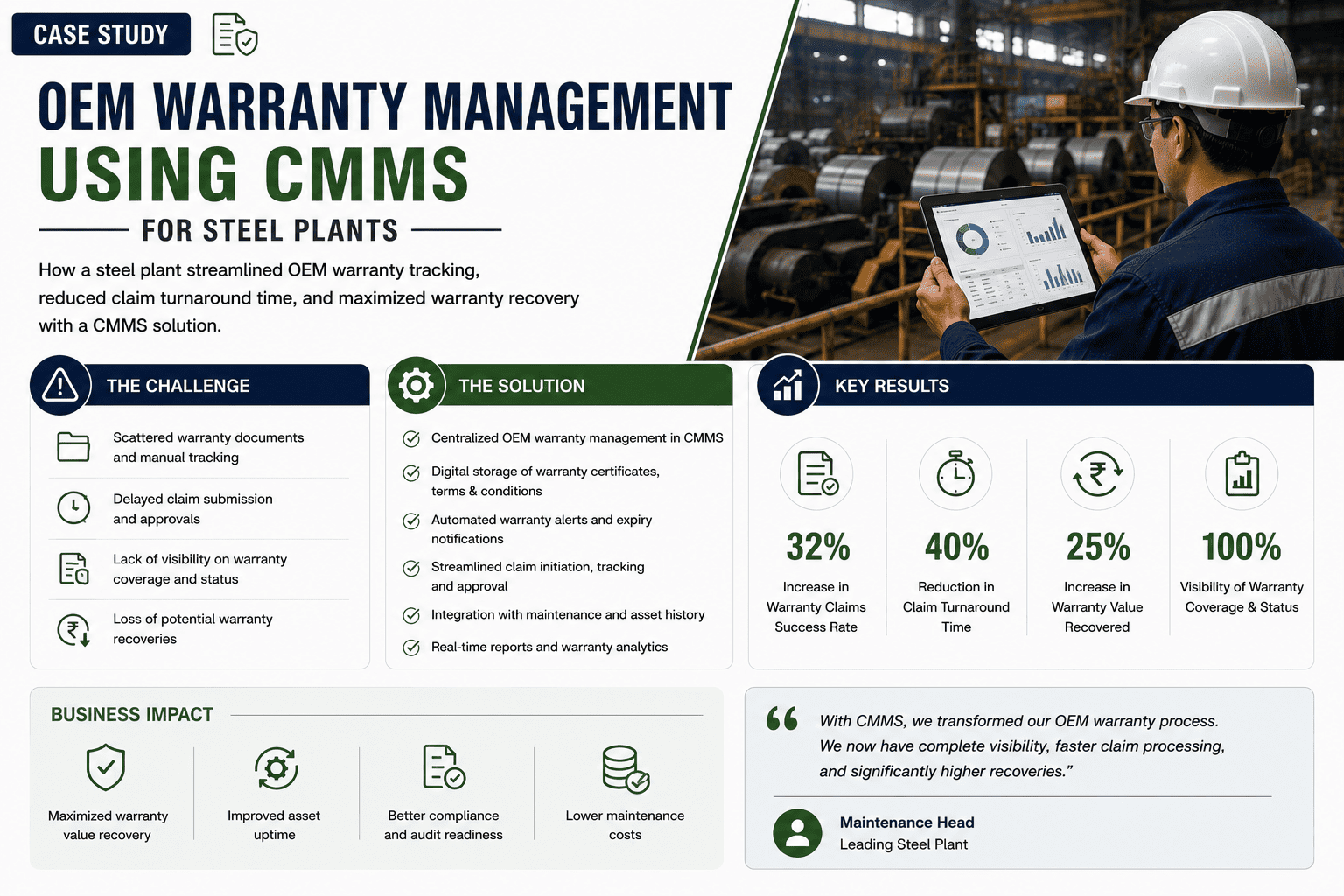
Warranty coverage on steel plant equipment is often worth more than anyone realizes, until a claim gets rejected because nobody could prove the maintenance was done to OEM spec. One plant was quietly paying out of pocket for roughly one in three repairs that should have been covered, simply because installation dates, service records, and coverage terms lived in different filing cabinets. Linking warranty data to the asset record in a CMMS turned missed claims into recovered budget. Sign up to see how much warranty coverage your own equipment might be leaving on the table.
Warranty certificates sat in a shared drive folder nobody could find during a breakdown, installation dates lived in a purchasing system, and maintenance history lived in the CMMS, three places that never talked to each other. By the time a failure was diagnosed, the claim window had often already closed.
Why Claims Were Getting Rejected
Every one of these is a documentation gap, not a coverage gap, the equipment was still under warranty, the paperwork just couldn't prove it in time.
Oxmaint attaches warranty terms, expiry dates, and maintenance history to every asset record, so claims are ready before the window closes. Sign up for a free trial to see it against your own equipment, or book a demo to walk through your warranty coverage.
Warranty Management Before And After
Nothing about the equipment or the OEM contracts changed, what changed was whether the plant could prove coverage and compliance in time. Once every repair against a covered asset automatically triggered a warranty check, the claims that used to slip through the gap started getting filed and paid.
Frequently Asked Questions
Recover The Warranty Coverage You're Already Paying For
Oxmaint links every asset to its OEM coverage and maintenance history, so claims get filed before the window closes instead of after. Sign up for a free trial to see it against your own equipment, or book a demo to walk through your warranty coverage.