MRO Inventory Optimization Case Study for Steel Plants

By Mark strong on July 31, 2026

mro-inventory-optimization-case-study-steel-plants

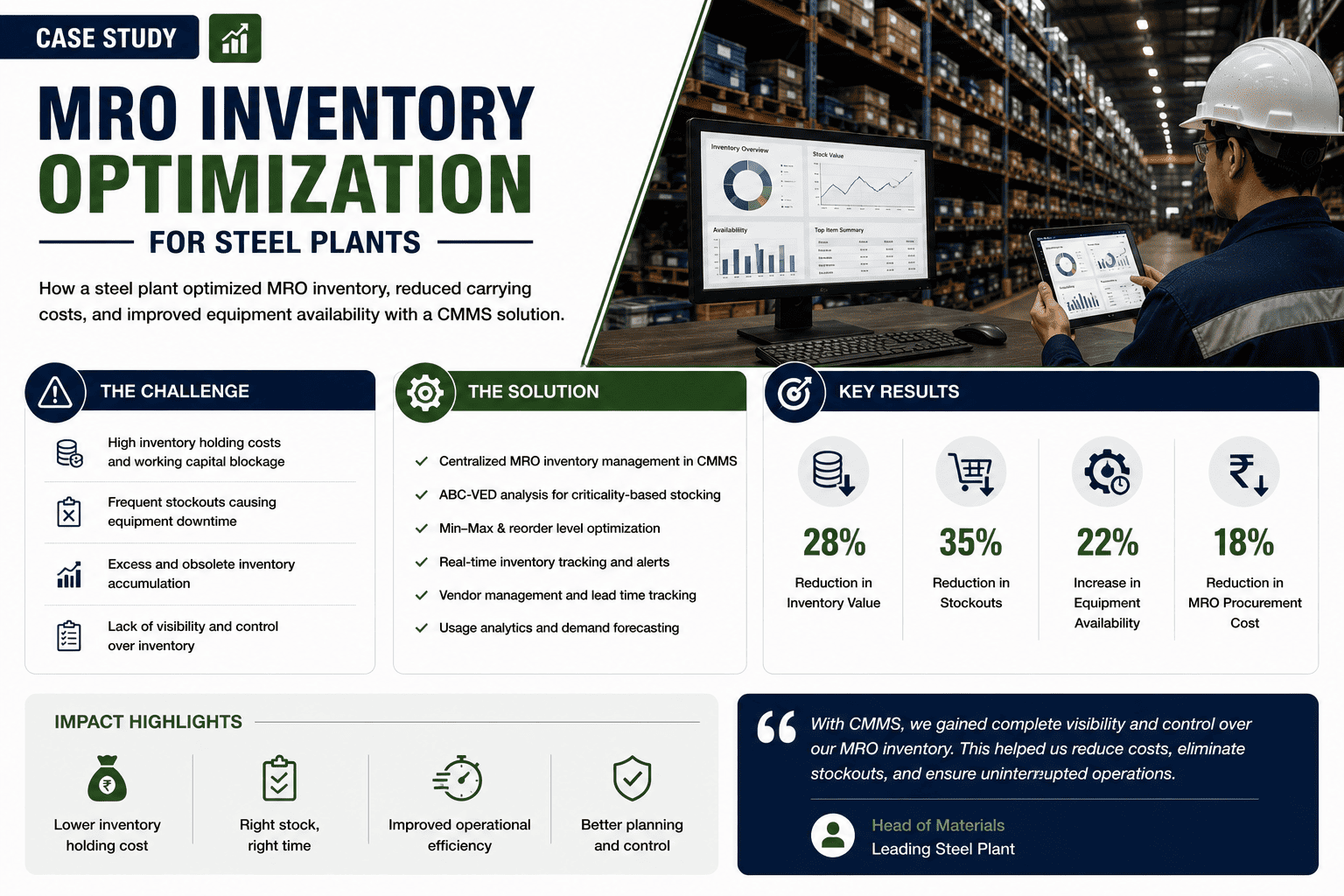
Ask a maintenance manager how much of the storeroom's value is actually protecting production, and most can't answer with confidence. One steel plant's spare parts strategy was "keep everything, just in case," which meant capital tied up in parts nobody had touched in years, while a handful of genuinely critical components still ran the risk of a stockout. Building a criticality matrix into the CMMS separated the two, and the storeroom got smaller and safer at the same time. Sign up to see what's really sitting in your own storeroom.

-22% Inventory Value
Reduction in total MRO inventory value within eighteen months
98% First-Pick
Availability rate for critical parts when a work order calls for them
-23% Carrying Cost
Drop in annual cost of holding spare parts on the shelf
The Problem

The storeroom held years of accumulated stock with no criticality logic behind it, motors and bearings tucked into every corner "just in case." Meanwhile, a handful of genuinely mission-critical components, the ones tied to an eighteen-month lead time, still carried real stockout risk because nobody had separated them from the general clutter.

Where The Inventory Value Was Sitting

Strategic Critical Spares60% of value

Low turnover, highest financial value, protects the biggest revenue risk
Routine Maintenance Consumables25% of value

High turnover, drives most of the day-to-day maintenance volume
Slow-Moving And Obsolete Stock15% of value

Rarely used or for retired equipment, tying up capital for no protection
See What's Actually Sitting In Your Storeroom

Oxmaint links spare parts to equipment criticality, consumption history, and PM schedules, so stocking decisions are based on data instead of gut feel. Sign up for a free trial to see it against your own inventory, or book a demo to walk through your storeroom.


Inventory Strategy Before And After

Metric Before After
Stocking decisions Gut feel, "keep everything just in case" Criticality-classified, based on failure impact and lead time
Critical part availability Buried among general clutter, stockout risk unclear 98% first-pick availability on classified critical spares
Reordering Manual, based on last year's usage plus a margin Automated reorder points tied to consumption and PM demand
Obsolete stock Sat on shelves indefinitely, tying up capital Identified and systematically disposed of
The Results

The goal was never to hold less inventory across the board, it was to hold the right inventory. Once parts were linked to the equipment they protect and the consumption patterns behind them, capital could move away from slow-moving stock and toward the small set of parts that actually prevent costly downtime.

Frequently Asked Questions

Q Why do plants end up with both stockouts and excess inventory at the same time?
Without a criticality framework, stocking decisions get made by gut feel, so low-value consumables get overstocked while a handful of genuinely critical parts still carry stockout risk.
Q What is a criticality matrix in MRO inventory management?
It's a way of classifying parts by failure impact, lead time, and substitutability, so stocking strategy matches the actual risk each part protects against.
Q Does reducing inventory value increase the risk of downtime?
Not when the reduction targets slow-moving and obsolete stock specifically, the parts that actually protect production stay stocked, often with better availability than before.

Stop Paying To Store Parts That Never Move

Oxmaint links every spare part to the equipment it protects, its consumption history, and its actual criticality, so your storeroom carries less risk and less waste. Sign up for a free trial to see it against your own inventory, or book a demo to walk through your storeroom.



Share This Story, Choose Your Platform!