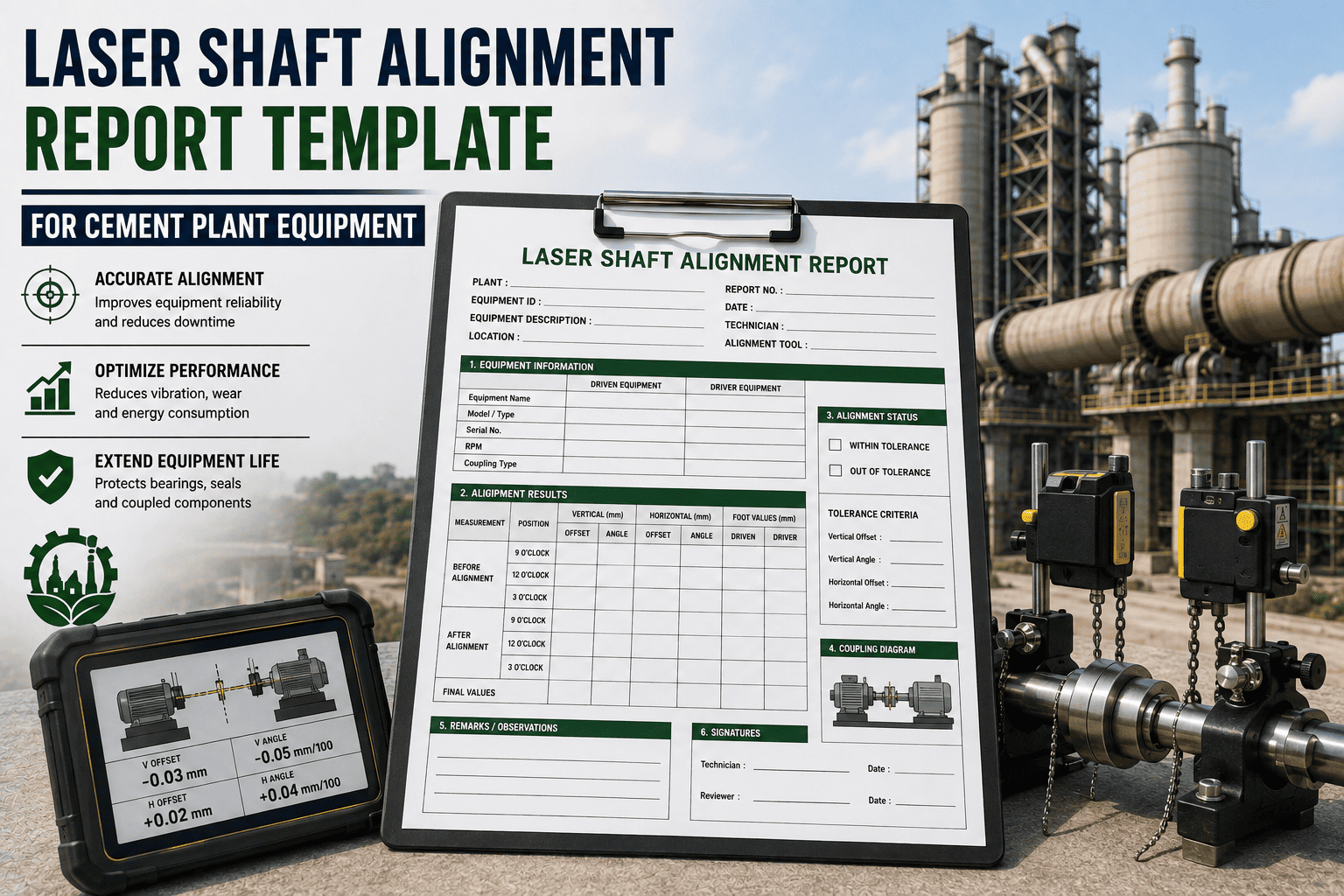
A coupling looks straight to the eye and still runs out of tolerance by several thousandths of an inch, quietly chewing through bearings and seals until the motor or gearbox fails months ahead of schedule. Laser alignment catches what a straightedge never will, but only if the reading gets recorded properly and checked against the right tolerance for that shaft speed. This laser shaft alignment report template gives cement plants a structured way to capture soft foot, thermal growth, and coupling measurements in one record that ties back to the equipment history. Sign up to keep every alignment report attached to your equipment inside your own CMMS.
Why It Matters
Misalignment doesn't announce itself. It shows up months later as premature bearing wear, coupling failure, or seal leaks that get blamed on the component itself rather than the shaft geometry that was never actually corrected.
Alignment Tolerance By Shaft Speed
| Shaft Speed |
Offset Tolerance |
Angularity Tolerance |
| Below 1000 RPM |
Wider offset generally acceptable |
Looser angular tolerance than high-speed shafts |
| 1000 to 3000 RPM |
Moderate offset tolerance, tightening with speed |
Moderate angular tolerance, tightening with speed |
| Above 3000 RPM |
Tight offset tolerance required |
Tight angular tolerance required |
Exact tolerance values depend on coupling type and manufacturer specification. The report should always reference the specific tolerance chart used for that equipment, not a generic figure.
The Four-Stage Alignment Procedure
1
Rough Alignment
Visual and straightedge check to get shims and position close before the laser goes on
2
Soft Foot Correction
Each foot checked and shimmed so the frame isn't distorted when bolted down
3
Thermal Growth Compensation
Target values adjusted for how the shaft position shifts once the equipment reaches operating temperature
4
Precision Alignment
Laser readings taken and adjustments made until offset and angularity are within tolerance
Keep Every Alignment Report With The Asset
Oxmaint attaches each alignment report directly to the equipment record, so the next technician can see exactly what tolerance was hit and when. Sign up for a free trial to build your own alignment report workflow, or book a demo to see it linked to a live asset.
What The Report Must Include
Initial as-found readings before any correction, for comparison against the final result
Soft foot values for each mounting point, corrected before any laser readings are taken
Thermal growth compensation values applied, with the source of those figures noted
Final offset and angularity readings for both horizontal and vertical planes
Technician name, date, and equipment identification tied to the work order
Misaligned vs Properly Aligned Equipment
| Component |
Misaligned |
Properly Aligned |
| Bearings |
Premature wear from uneven load distribution |
Load distributed evenly, running toward rated life |
| Seals |
Leaks from shaft deflection under load |
Consistent contact surface, fewer leak points |
| Energy use |
Higher draw from the motor fighting resistance |
Lower draw with the drivetrain running true |
| Vibration signature |
Elevated readings that mask other developing faults |
Clean baseline that makes new faults easier to spot |
The Takeaway
An alignment job that isn't documented might as well not have a tolerance target at all. The report is what turns a one-time correction into a reference point, so the next technician knows exactly what good alignment looks like on that machine.
Frequently Asked Questions
Q
Why does soft foot need to be corrected before alignment?
If a machine's feet aren't sitting flat, bolting it down distorts the frame and throws off every laser reading taken afterward, so any alignment done before soft foot is corrected won't hold once the bolts are torqued.
Q
Why does thermal growth matter if the machine is aligned cold?
Metal expands as equipment heats up, and that expansion can shift shaft position enough to move a properly aligned cold machine out of tolerance once it's running, so the cold target has to account for that expected movement.
Q
Can alignment history be tracked against future vibration readings?
Yes, keeping the alignment report attached to the same equipment record as vibration data makes it easy to check whether a rising vibration trend correlates with alignment drifting out of tolerance over time.
Make Every Alignment A Documented Baseline
Oxmaint keeps your alignment reports, tolerance targets, and thermal growth values attached to the equipment they belong to. Sign up for a free trial to set up your own report template, or book a demo to see it running on your equipment.