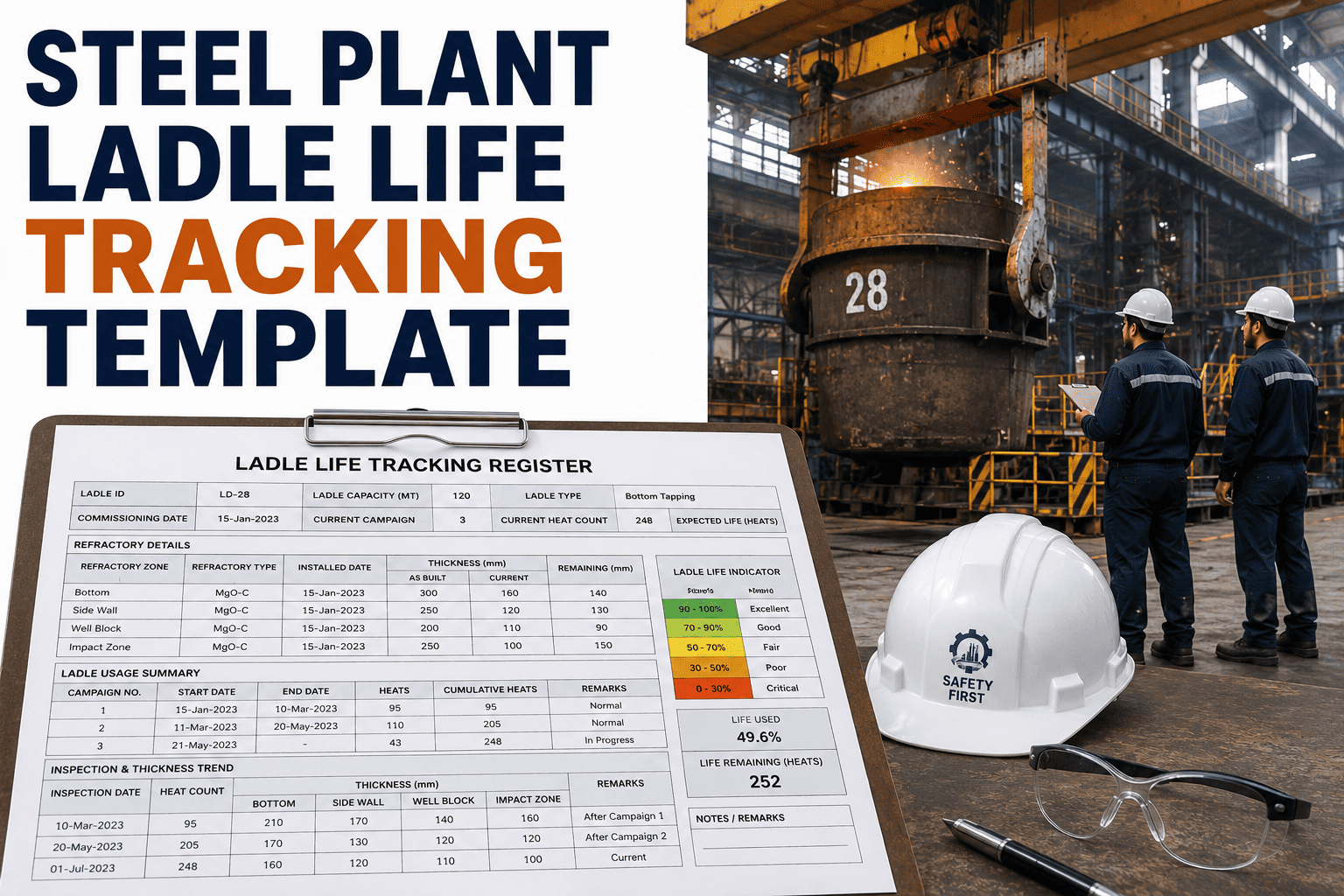
A ladle doesn't get one shutdown to worry about, it goes through the same cycle dozens of times a week, and every one of those cycles wears the lining, the slide gate, and the nozzle a little more. Miss the point where wear crosses into risk and you're looking at a breakout instead of a scheduled reline. This free template tracks ladle life heat by heat, component by component, so nothing gets pushed past its limit. Sign up to start tracking ladle life inside OxMaint.
Why Ladle Tracking Matters
A ladle carries several wear components on different clocks, the working lining, the slide gate plate, the nozzle, and the well block all fail at different heat counts. Tracked individually, each gets replaced right on time. Tracked as one vague "ladle condition," the shortest-lived part usually gets missed until it fails mid-teem.
What The Template Tracks
Heat Cycle Count
Running total of heats since the last lining reline
Refractory Wear Readings
Working and safety lining thickness logged per inspection
Slide Gate Condition
Plate wear and gate alignment checked against a heat threshold
Nozzle & Well Block Life
High-wear fittings tracked separately from the main lining
Preheat Cycle Log
Preheat duration and temperature recorded before every tap
Inspection Checkpoints
Fixed heat-count intervals where a physical check is required
The Ladle Heat Cycle
Preheat
Bring lining to temperature before tap
Tap
Steel received from the furnace
Hold
Temperature and chemistry maintained
Teem
Steel poured through the slide gate
Cool Down
Empty ladle cools before the next check
Inspect
Wear logged, then cycle repeats
Every ladle runs this six-stage cycle multiple times a day. The template logs wear at the Inspect stage of each cycle, so degradation is caught heat by heat instead of only at scheduled shutdowns.
Component Life By Heat Count
The nozzle and slide gate plate wear out well before the working lining does, which is exactly why tracking one combined "ladle condition" score misses the components that actually need attention first.
Untracked Ladle vs A Tracked One
| Area |
Untracked |
Tracked |
| Component wear |
Judged by eye, often after it's already a problem |
Logged against heat count for each component separately |
| Slide gate failures |
Discovered mid-teem, risking a stopped pour |
Replaced on schedule before the wear limit |
| Reline planning |
Decided when the lining is already visibly critical |
Scheduled from wear trend projections ahead of time |
| Ladle fleet comparison |
No way to see which ladle is wearing faster than others |
Every ladle's cycle history compared side by side |
Track Every Ladle Component On Its Own Clock
OxMaint logs heat cycles and wear for the lining, slide gate, nozzle, and well block separately, so nothing gets missed because the ladle "looked fine." Sign up for a free trial to start tracking your fleet, or book a demo and we'll walk through it with your team.
Frequently Asked Questions
Q
Why track slide gate and nozzle life separately from the lining?
Because they wear out far faster than the working lining does. A single "ladle condition" score hides the fact that the nozzle needs replacing every 15 to 25 heats while the lining can run for 60 or more.
Q
What should be logged at the Inspect stage of each cycle?
A quick visual check of the lining and slide gate condition every cycle, with a full thickness measurement and component check at fixed heat-count intervals rather than after every single heat.
Q
Can this template track multiple ladles across the fleet?
Yes, each ladle gets its own heat cycle count and component log, so you can compare wear rates across the fleet and spot a ladle that's degrading faster than the rest.
Get The Free Ladle Life Tracking Template
Heat cycles, lining wear, slide gate condition, and nozzle life, tracked component by component. Sign up for a free trial to start tracking your ladle fleet, or book a demo to see it applied to your plant.