A wireless vibration sensor clipped onto a chiller compressor can flag bearing wear six to eight weeks before it becomes a failure. A small leak detector tucked under a guest room sink can catch a slow drip in minutes instead of the weeks it might take housekeeping to notice water damage spreading through a wall. Neither of these sensors is expensive or complicated to install, yet most hotel properties still run their engineering teams on manual inspection rounds and guest complaints as the primary detection system. The gap is not a lack of technology — inexpensive wireless sensors covering vibration, temperature, pressure, current draw, and water presence have existed for years, at a fraction of the cost of a single emergency repair callout. The gap is connecting that sensor data to a maintenance platform that actually acts on it automatically. Start a free trial or book a demo to see Oxmaint turning live sensor readings into scheduled work orders.
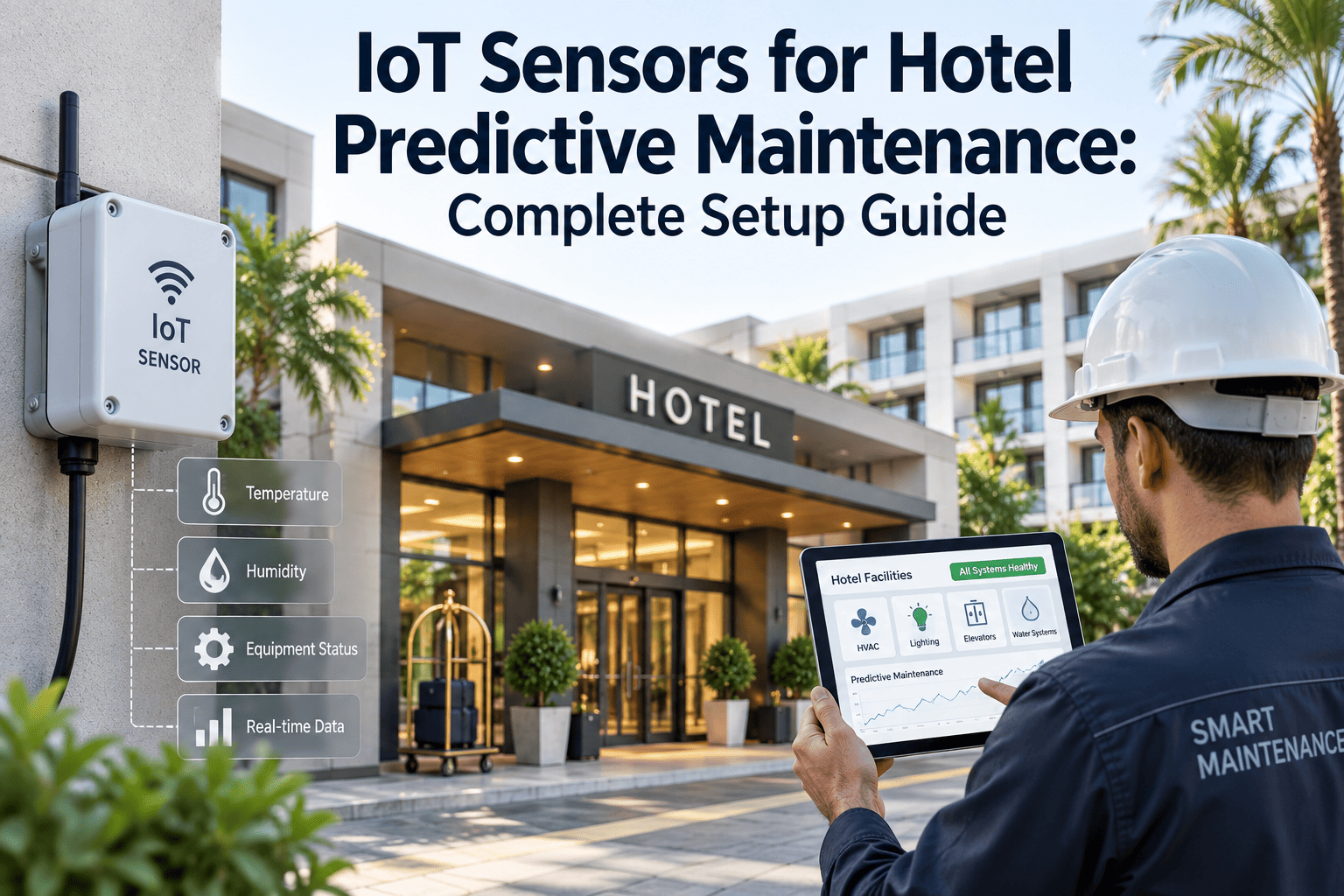
IoT Sensors for Hotel Predictive Maintenance: A Complete Setup Guide
From vibration sensors on chillers to leak detectors under sinks, the right sensor network turns your equipment into its own early warning system, reporting on itself continuously instead of waiting for a technician to notice something is wrong. Here is which sensors deliver the fastest payback and how Oxmaint connects them straight into automated work orders without a data science team in the middle.
The Six IoT Sensor Types Every Hotel Maintenance Team Should Know
Not every sensor delivers equal value. The highest-return deployments target the intersection of guest impact, failure cost, and how easy the sensor is to install and maintain. These six categories cover the majority of high-value monitoring opportunities across a typical hotel property, and most properties find that covering just the first two or three categories on their highest-risk assets already produces a measurable return within the first year.
Choosing the Right Wireless Protocol for Your Property
Sensor hardware only matters if the readings actually reach the platform reliably. Different wireless protocols trade off range, battery life, and data frequency differently, and the right choice usually depends on the size of the property and how far sensors sit from the nearest gateway. Oxmaint's deployment team typically recommends a mixed approach on larger properties, using different protocols for different zones rather than forcing one connectivity standard across an entire building.
Which Hotel Assets Need Which Sensors First
Not every hotel asset warrants every sensor type on day one. The properties that see the fastest return start with the assets that carry the highest failure consequence — the ones where a breakdown means guest impact, revenue risk, or a compliance exposure — and expand sensor coverage outward from there. Treating this as a phased rollout rather than a single all-at-once purchase also gives the engineering team time to build confidence in the alerts before scaling coverage property-wide. The matrix below reflects the priority order most properties settle on after running their own criticality assessment.
| Hotel Asset | Vibration | Temperature | Water / Leak | Current | Priority |
|---|---|---|---|---|---|
| Chiller Plant | Yes | Yes | — | Yes | Critical |
| Air Handling Units | Yes | Yes | — | Yes | Critical |
| Cooling Towers | Yes | Yes | — | — | Critical |
| Hot Water Boilers | — | Yes | Yes | — | High |
| HVAC Pumps | Yes | — | — | Yes | High |
| Lifts and Elevators | Yes | — | — | Yes | High |
| Guest Room PTAC Units | — | Yes | — | — | Medium |
| Under-Sink Plumbing | — | — | Yes | — | High |
Turn Every Sensor Reading Into a Scheduled Repair
Oxmaint connects directly to your property's IoT sensor network, learns each asset's normal behaviour, and automatically generates a work order the moment a reading starts drifting outside it.
From Sensor to Work Order: How the Setup Process Actually Works
Deploying sensors is only half the job. The real value shows up once those readings are connected to a platform that actually learns from them and turns anomalies into action, rather than sitting in a dashboard nobody checks. The steps below are the same ones Oxmaint's deployment team walks through with every property, from the first criticality assessment through to the first automatically generated work order.
What Properties Typically See After Connecting IoT Sensors to Oxmaint
Deployment Mistakes That Quietly Waste an IoT Sensor Budget
Most failed IoT rollouts are not caused by bad sensors. They are caused by a handful of predictable planning mistakes that show up again and again across properties that jumped straight to buying hardware before mapping out where it would actually matter most. Avoiding these mistakes is usually less about spending more money and more about sequencing the rollout correctly from the very first sensor onward.
IoT Sensors for Hotel Maintenance — What Engineering Teams Ask
Which sensor should a property install first if budget is limited? +
Do these sensors require rewiring or cabling through the property? +
How long until the sensors start producing useful predictive alerts? +
Does adding sensors mean more alerts for the engineering team to sort through? +
Can sensor data from multiple properties feed into one dashboard? +
Stop Waiting for Guests to Report What a Sensor Could Have Caught
Oxmaint connects your property's IoT sensor network directly into automated work orders, so vibration, temperature, and leak alerts turn into scheduled repairs before anyone at the front desk hears about it, and before a small issue turns into an expensive one.