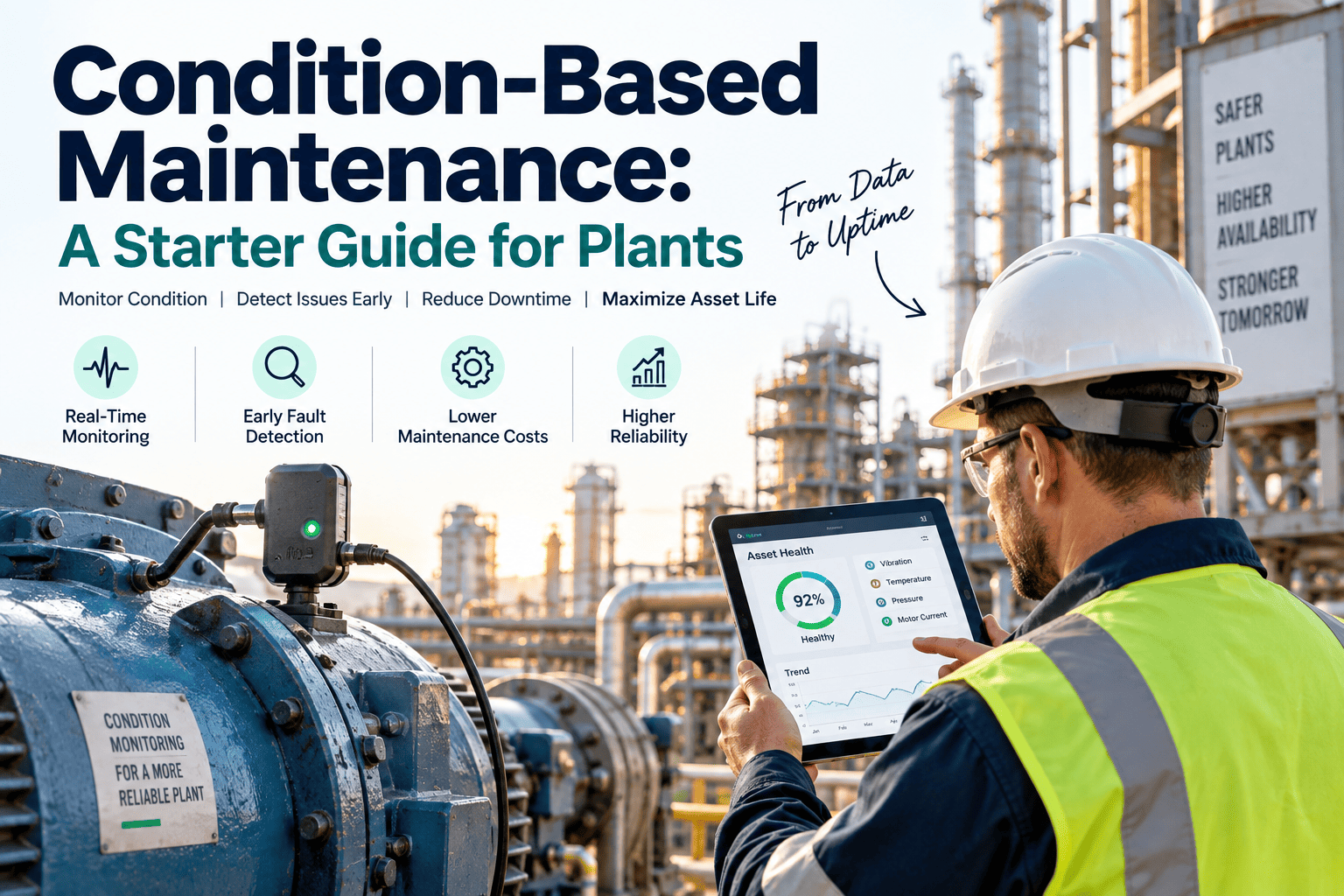
An induced draft fan pulls hot, dust-laden gas through the entire kiln system, and when it trips unexpectedly, the whole line stops with it. This case study looks at how a cement plant moved its ID fan maintenance from a reactive, failure-driven cycle to a condition-based one, using vibration and bearing temperature monitoring tied into a CMMS, and what changed in unplanned trips, bearing life, and repair cost. Sign up to see how the same approach could improve ID fan reliability at your plant.
-61% Unplanned Trips
Reduction in unplanned ID fan trips over the following year
+40% Bearing Life
Increase in average bearing service life after the change
Continuous Sensors
Vibration and bearing temperature tracked around the clock, not monthly
Days Of Notice
Advance warning gained before a bearing fault forced a stop
The Challenge: A Single Fan Trip Stopped The Whole Line
Where Things Stood Before
Bearing checks relied on periodic handheld vibration readings taken once a month, leaving weeks of blind spots between visits. Fan trips usually arrived as a surprise, forcing the kiln to shut down while the team scrambled to diagnose a fault that had likely been developing for days.
The Approach: Continuous Monitoring Tied To A CMMS
1
Fixed Vibration & Temperature Sensors
Sensors were installed on both fan bearings to stream continuous vibration and temperature data instead of periodic snapshots
2
Baseline & Alert Thresholds
Normal vibration and temperature ranges were logged against the fan asset in the CMMS to define a real deviation
3
Automatic Work Order Triggers
A reading drifting past its threshold automatically raised a work order flagged against that specific bearing
4
Bearing Swaps Scheduled Into Planned Stops
A flagged bearing was replaced at the next planned outage instead of forcing an emergency shutdown
Catch A Fan Bearing Fault Before It Trips The Line
Oxmaint ties vibration and temperature trends to your fan asset and raises a work order automatically when a reading drifts, turning a surprise trip into a scheduled repair. Sign up for a free trial to get started, or book a demo to see it in action.
Before And After: What Actually Changed
| Metric |
Before |
After |
| Unplanned fan trips per year |
8 |
3 |
| Average bearing service life |
Roughly 14 months |
Roughly 20 months |
| Vibration monitoring frequency |
Monthly handheld readings |
Continuous, logged automatically |
| Bearing replacement timing |
Reactive, after failure |
Scheduled into planned outages |
Where A CMMS Fits Into ID Fan Reliability
Oxmaint connects vibration and bearing temperature sensors directly to the fan asset record, tracking trends over the bearing's service life so a developing fault becomes a scheduled swap well before it forces an unplanned trip.
Frequently Asked Questions
Q
Why does ID fan reliability matter so much for kiln uptime?
The induced draft fan is what pulls gas through the entire kiln system, so an unplanned trip forces the whole line down with it, making it one of the highest-impact assets to keep reliable.
Q
Why is continuous vibration monitoring better than periodic checks?
A bearing fault can develop and worsen well within the gap between monthly handheld readings, so continuous monitoring catches the drift days or weeks earlier, giving time to plan a swap instead of reacting to a trip.
Q
Can a CMMS raise a work order from vibration sensor data automatically?
Yes, a CMMS can be set to raise a work order automatically once vibration or temperature drifts past a defined threshold against the fan asset, flagging the specific bearing involved.
Stop Letting A Bearing Fault Take Down Your Whole Line
Oxmaint logs vibration and temperature trends against your fan asset and raises a work order the moment something drifts. Sign up for a free trial to see it work on your data, or book a demo to walk through it live.