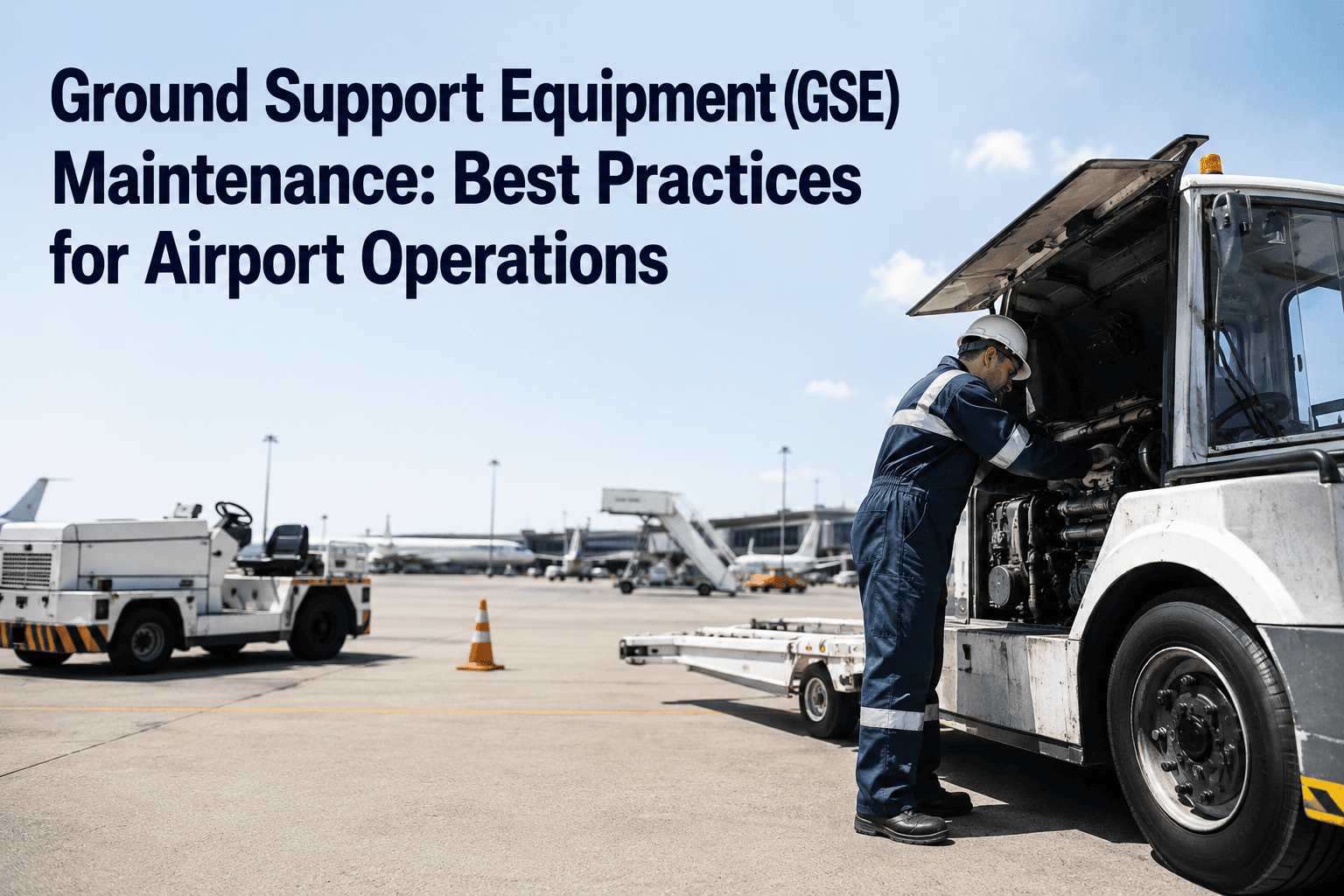
A pushback tractor that won't start, a GPU that trips under load, a belt loader with a slipping conveyor belt — none of these look dramatic on their own, but each one can hold up an aircraft on a tight turnaround. The global ground support equipment market is valued at USD 6.7 billion in 2025 and airlines are pushing turnaround targets below 30 minutes, which means GSE reliability is no longer a maintenance department problem, it's an on-time-performance problem. Start a free trial to see how Oxmaint keeps every tractor, GPU and loader on a preventive schedule instead of a breakdown list.
22%
Reduction in GSE downtime achieved through sensor-based predictive maintenance at advanced hubs
18-22
Separate GSE functions that must be coordinated for a single narrow-body turnaround
22-28%
Improvement in equipment utilization reported by fleets running IoT-based GSE tracking
40%+
Of airports now run predictive maintenance platforms tied to cloud-based fleet monitoring
Why GSE Downtime Hits Harder Than Other Airport Equipment
A terminal escalator failing inconveniences passengers for an afternoon. A pushback tractor failing on stand holds the aircraft, delays the crew, and pushes every following flight on that gate back with it. GSE sits directly in the turnaround critical path, which means the cost of a breakdown is measured in delayed departures, not just repair bills.
The GSE Fleet at a Glance
Pushback Tractors & Tow Tractors
Most turnaround-critical asset on the ramp
Hydraulic hose failures, towbar pin wear and battery degradation are the top causes of no-start events. Daily walkaround checks catch most of these before the tractor is dispatched to a stand.
Ground Power Units (GPUs)
Powers the aircraft while engines are off
Load-related trips, cable insulation wear and generator overheating are the recurring faults. Load testing on a fixed interval, not just visual inspection, is what actually prevents in-service trips.
Belt Loaders & Baggage Handling Equipment
Directly drives baggage turnaround speed
Belt slippage, hydraulic lift failure and roller wear slow every bag on that loader. Lubrication and belt tension checks are quick tasks that carry outsized reliability payoff.
De-icing Units & Specialty Vehicles
Seasonal but mission-critical when needed
Pump seals, boom hydraulics and fluid heaters sit idle for months and then get pushed hard in a short window. Pre-season inspection is the single highest-leverage task for this category.
Every Tractor, GPU and Loader on One Schedule
Oxmaint tracks daily walkarounds, load tests and lubrication cycles for your entire GSE fleet, with alerts before a unit is due, not after it fails on stand. Sign up for a free trial to load your fleet in, or book a demo and we'll walk through it against your ramp operation.
A Five-Step GSE Maintenance Checklist That Actually Prevents Delays
1
Daily pre-shift walkaround, not weekly spot checks
Hydraulic leaks, worn towbar pins and low tire pressure surface fast on high-cycle equipment. A five-minute checklist before every shift catches most of them before dispatch.
2
Set intervals by operating hours, not calendar dates
A tractor working three high-frequency short-haul stands wears out faster than one on a quiet cargo apron. Hour-based intervals match maintenance to actual use instead of the calendar.
3
Load test GPUs on a fixed schedule
A GPU can look fine at idle and still trip under real aircraft load. Scheduled load testing, not visual inspection alone, is what catches generator and cabling faults before they strand an aircraft.
4
Stock the parts that cause the longest holds
Hydraulic hoses, belt loader drive belts and towbar shear pins fail often and hold up equipment for hours if not on hand. These are worth keeping in stock over rarer, cheaper parts.
5
Log every fault at the moment it happens
A fault reported at end of shift from memory is missing detail a maintenance team needs. Faults logged in the moment, from the ramp, give technicians the context to fix it right the first time.
Reactive GSE Maintenance vs. Preventive GSE Maintenance
| Reactive Approach |
What It Costs Ground Ops |
Preventive Fix |
| Tractor fails to start on stand |
Delayed pushback, a delayed aircraft, a delayed gate |
Daily walkaround plus battery and hydraulic checks |
| GPU trips mid-turnaround |
Aircraft loses ground power, crew and cabin systems affected |
Scheduled load testing before it ever reaches the stand |
| Belt loader jams during baggage load |
Manual bag handling, slower load, tighter departure window |
Belt tension and roller lubrication on a fixed hour interval |
| De-icing unit fails on the first cold morning |
Units short on the season's busiest, least forgiving day |
Pre-season inspection of pumps, booms and fluid heaters |
How Oxmaint Supports GSE Teams
Oxmaint gives GSE engineers hour-based preventive schedules, mobile pre-shift checklists, and instant fault logging for pushback tractors, GPUs, belt loaders and every other unit on the ramp. Every fault and every completed task is timestamped and assigned, so fleet supervisors always know which unit is ready before the next turnaround. Book a demo to see it mapped against your own GSE fleet.
Frequently Asked Questions
Q
What is the single biggest cause of GSE-related turnaround delays?
No-start events on pushback tractors and mid-turnaround trips on GPUs cause the most disruption, since both sit directly in the critical path of getting an aircraft off the gate on time.
Q
Why should GSE maintenance intervals be based on operating hours instead of calendar dates?
Two identical tractors can see very different wear depending on how many stands they serve each day. Hour-based intervals match the maintenance schedule to actual usage instead of over-servicing idle units and under-servicing busy ones.
Q
Do seasonal units like de-icers need year-round maintenance attention?
Yes. Pumps, boom hydraulics and fluid heaters can develop faults while sitting idle for months, and those faults surface right when the equipment is needed most. A pre-season inspection is the highest-value check on the calendar for these units.
Q
How does digital fault logging actually reduce GSE downtime?
A fault logged from the ramp the moment it happens carries details a technician needs, like exact symptoms and conditions, that get lost in an end-of-shift memory report. That detail lets maintenance teams diagnose faster and fix it right the first time.
Keep Every Unit on the Ramp Turnaround-Ready
Oxmaint gives GSE engineers hour-based preventive schedules, mobile pre-shift checklists and instant fault logging across the entire fleet. Sign up for a free trial to load your fleet in, or book a demo and we'll walk through it against your ramp operation.