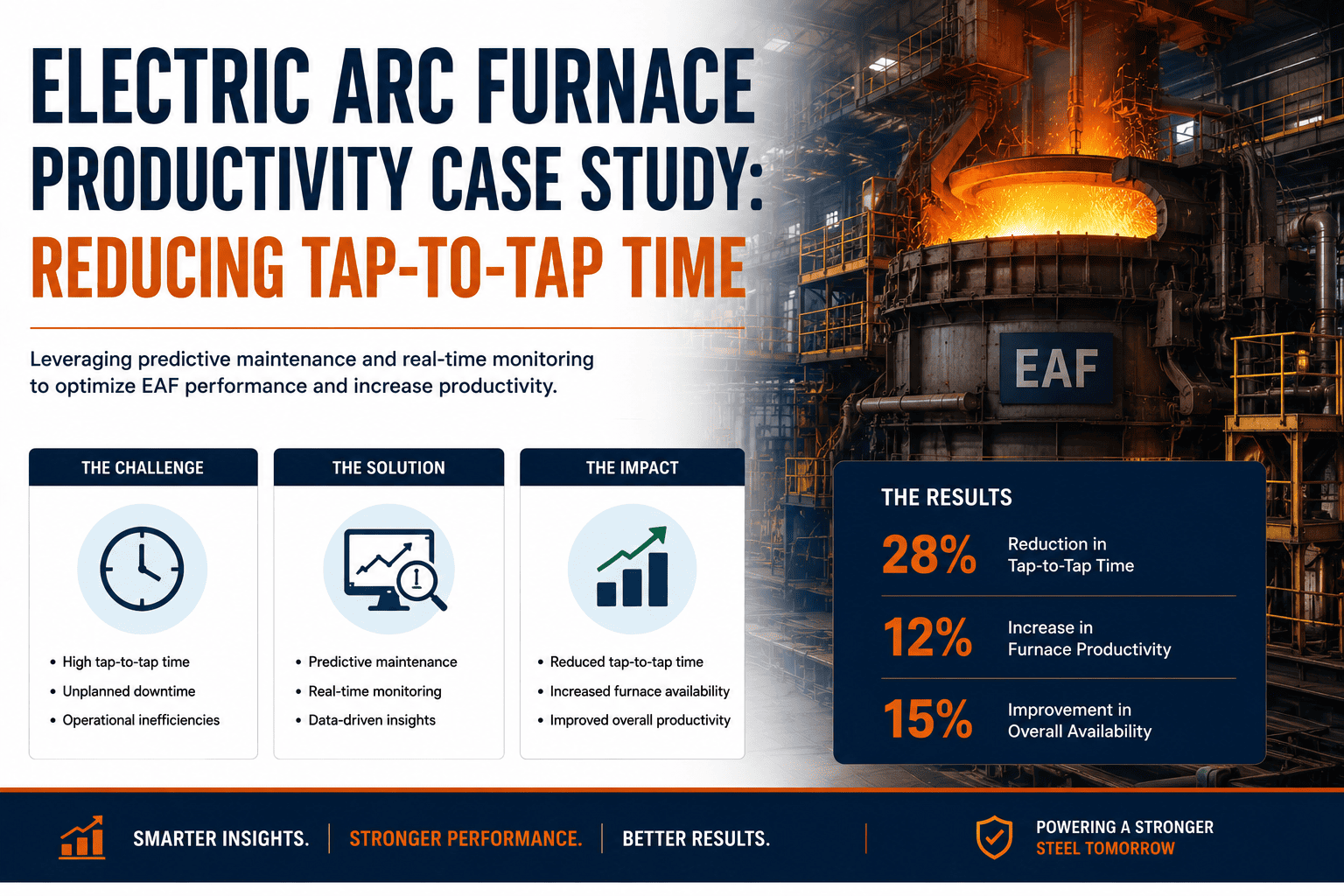
Tap-to-tap time is the number every EAF shop watches, and it rarely creeps up for one dramatic reason. It's usually a few extra minutes here and there, an electrode arm that hesitates, an EBT sleeve that's worn enough to slow the tap, a charging crane that stalls mid-cycle. At one furnace, those small maintenance-driven delays had added up to a slower cycle than the equipment was actually capable of. Fixing the maintenance side, not the process side, cut 14 minutes off every tap-to-tap cycle. Sign up to see where maintenance-related time might be hiding in your own cycle.
-14 Minutes
Cut from average tap-to-tap time after the maintenance changes
More Power-On
A larger share of each cycle spent actually melting instead of waiting
Fewer Delays
Fewer maintenance-related stalls interrupting the charge and tap stages
10 Weeks
Time from starting the reliability program to a stable new cycle time
The Challenge
Nobody was treating the slow cycle as a maintenance problem, it looked like a process problem. Operators were adjusting practices to work around an electrode arm that moved sluggishly and an EBT sleeve that no longer opened cleanly, without realizing both were wear issues that maintenance could actually fix.
Where The Time Was Going
| Cycle Stage |
Before |
After |
| Charging |
16 min |
13 min |
| Melting (Power-On) |
40 min |
37 min |
| Refining & Alloying |
10 min |
9 min |
| Tapping & Turnaround |
16 min |
9 min |
Find Out Which Stage Is Costing You Minutes
Oxmaint tracks electrode arms, EBT sleeves, and charging equipment as individual assets, so a slow stage can be traced back to the exact component causing it. Sign up for a free trial to see it against your own cycle data, or book a demo to walk through your tap-to-tap breakdown.
The Fix
1
Electrode Arm Hydraulic Monitoring
Hydraulic pressure and response time on the electrode arms were tracked to catch sluggish movement early
2
EBT Sleeve Wear Tracking
Sleeve wear was logged against tap count so replacement happened before taps started slowing down
3
Charging Crane Reliability Program
Brake, bucket, and hoist checks were scheduled specifically to eliminate mid-charge stalls
4
Standardized Turnaround Checklist
A fixed sequence between tap and next charge removed the variability that had crept into turnaround time
The Results
The biggest single gain came from turnaround, cut nearly in half once crane stalls and inconsistent handover steps were addressed. None of it required a process change, just treating the equipment causing the delay as a maintenance problem instead of something operators had to work around.
Frequently Asked Questions
Q
What is tap-to-tap time and why does it matter?
Tap-to-tap time is the total cycle from one tap to the next, covering charging, melting, refining, and turnaround, and shaving even a few minutes off it adds up to meaningfully more heats per day.
Q
What maintenance issues typically slow down EAF cycles?
Sluggish electrode arm hydraulics, worn EBT sleeves, and unreliable charging cranes are common culprits, since each one adds delay at a specific stage without ever fully stopping the furnace.
Q
Can a CMMS help reduce tap-to-tap time at other furnaces?
Yes, a CMMS that tracks cycle-critical equipment individually can show which asset is driving delay at which stage, turning a vague slow cycle into a specific, fixable maintenance target.
Shave Minutes Off Every Tap-To-Tap Cycle
Oxmaint tracks electrode arms, EBT sleeves, and charging equipment as individual assets so slow stages get traced to the exact cause. Sign up for a free trial to see it against your own cycle data, or book a demo to walk through your tap-to-tap breakdown.