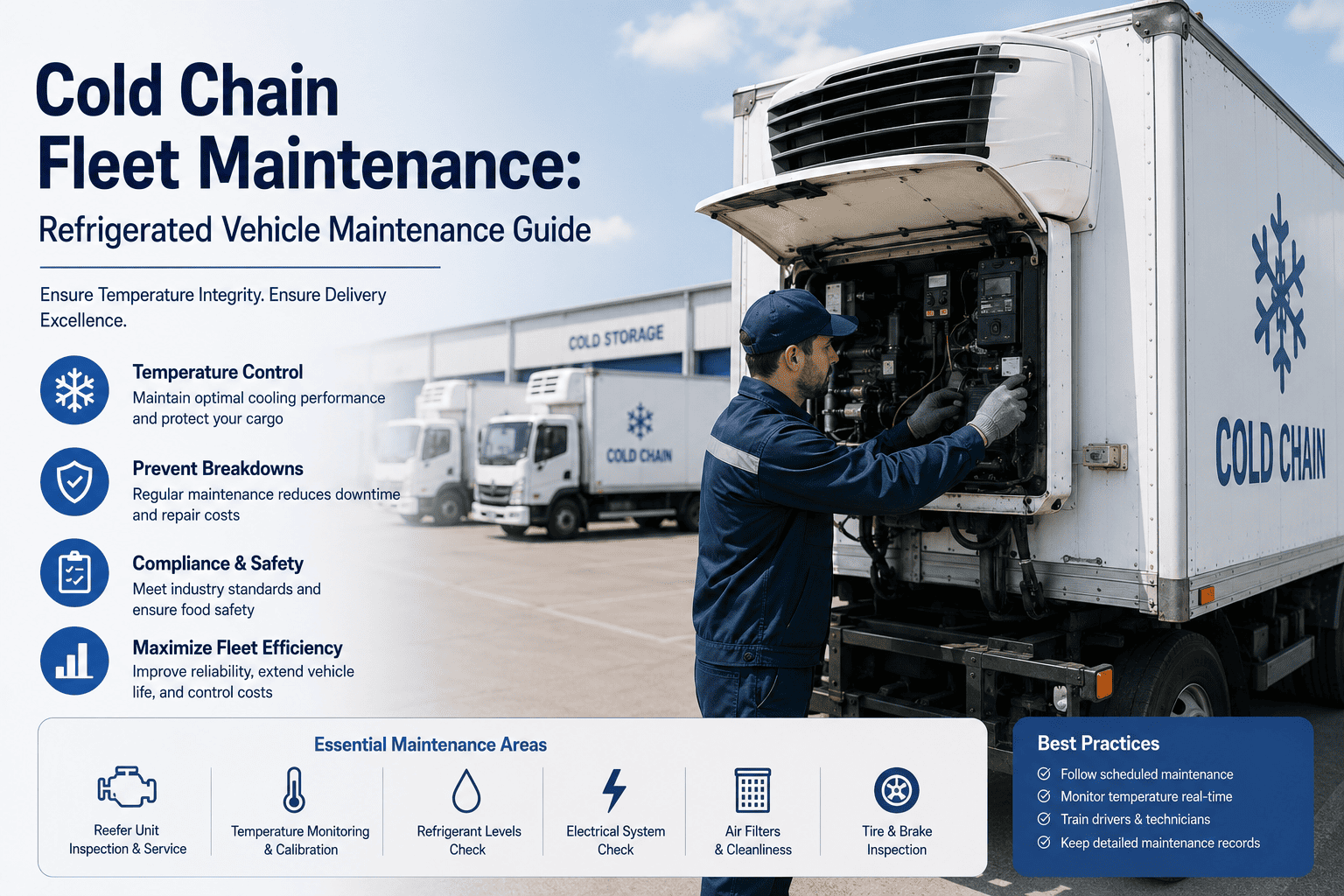
A reefer unit that drifts a few degrees above setpoint during an overnight haul doesn't just fail a temperature log, it can destroy the entire load, trigger a food safety investigation, and void the carrier's cargo insurance for that shipment. Unlike a flat tyre, a refrigeration failure is invisible until the cargo is already lost. Industry data shows 60% of reefer failures trace back to poor seasonal maintenance, and compressor failures alone account for over 40% of breakdown events. Start a free trial to see how Oxmaint keeps every reefer unit and its cold chain record in one place.
60%
Of reefer unit failures are traced back to poor seasonal maintenance practices
40%+
Of all reefer breakdown events are caused by compressor failure alone
63%
Fewer temperature excursions reported by facilities using continuous monitoring over manual checks
3 Years
Recommended replacement interval for standard wet-cell reefer batteries before they strand a load
Why a Reefer Failure Costs More Than the Repair Itself
Once a load crosses out of its safe temperature band for too long, the entire shipment is typically considered compromised regardless of how briefly the breach lasted. Add the spoiled cargo's value to emergency roadside repair costs, at premium labour rates, and to retailer penalty clauses for a rejected delivery, and one failure can exceed the cost of a full year of preventive reefer maintenance.
Where a Reefer Unit Actually Breaks Down
| System |
Common Failure Cause |
Preventive Task |
| Compressor |
Refrigerant leaks and worn seals going unnoticed between checks |
Scheduled refrigerant level and pressure checks every service cycle |
| Condenser & evaporator coils |
Dirt and debris buildup reducing heat exchange efficiency |
Coil cleaning on a fixed interval, more frequent in dusty routes |
| Door seals |
Cracked or worn gaskets letting warm air infiltrate the box |
Visual seal inspection at every pre-trip check |
| Fuel system |
Clogged filters and water contamination in diesel-powered units |
Fuel filter replacement at every PM, fuel system bled seasonally |
| Battery & starter |
Cold weather strain on ageing wet-cell batteries |
Replacement every 3 years, load-tested before winter |
Every Reefer Unit, One Maintenance and Temperature Record
Oxmaint tracks operating hours, PM cycles and temperature alerts for every reefer unit in the fleet, so a compressor or seal issue gets scheduled before it becomes a spoiled load. Sign up for a free trial to see it against your own fleet, or book a demo and we'll walk through your cold chain workflow.
Set Alert Thresholds Before the Regulatory Limit, Not At It
| Load Type |
Regulatory Limit |
Recommended Alert Threshold |
| Refrigerated TCS foods |
FDA danger zone begins above 41°F |
38-39°F, giving a 2-3 degree intervention window |
| Frozen loads |
Absolute maximum defined by product setpoint |
3-5°F above setpoint, catching degradation before a full excursion |
Seasonal Maintenance: What Changes Before Summer and Winter
Before Summer
Coil cleaning to restore heat exchange efficiency in hotter ambient conditions
Refrigerant level and pressure check ahead of peak cooling demand
Compressor inspection, since summer heat load is when weak units fail first
Before Winter
Battery load testing, since cold strains ageing wet-cell batteries hardest
Fuel system bleed and filter change on diesel-powered units
Door seal inspection to stop cold-weather condensation and ice buildup
How Oxmaint Supports Cold Chain Fleets
Oxmaint tracks operating hours and PM thresholds for every reefer unit, generates work orders automatically before service intervals are due, and keeps temperature alert history linked to each vehicle and load. Compliance documentation for FSMA and retailer audits is exportable in seconds instead of reconstructed from paper logs. Book a demo to see it mapped against your own cold chain operation.
Frequently Asked Questions
Q
Why is compressor failure the single biggest reefer risk?
Compressors account for over 40% of reefer breakdown events, and once one fails mid-route there's rarely a way to keep the load within its safe temperature band. That makes refrigerant level and pressure checks the highest-leverage task on the PM schedule.
Q
Why set an alert threshold below the actual regulatory limit?
Setting the alert exactly at the regulatory limit leaves no time to react. A 2 to 3 degree buffer gives dispatch a genuine intervention window to reroute, troubleshoot, or reject the load before a compliance-triggering excursion actually occurs.
Q
Does a brief temperature excursion really compromise the whole load?
In most cold chain and food safety frameworks, yes. Once a load crosses outside its safe band for too long, it's typically treated as compromised regardless of how short the breach was, which is why prevention matters more than reaction time.
Q
What's the fastest way to move a cold chain fleet off paper temperature logs?
Start with continuous digital temperature monitoring linked to GPS, since that alone answers the "where and when" question that a paper log can't. Layer reefer-specific PM scheduling on top once monitoring data is flowing consistently.
Protect the Cold Chain Before It Breaks, Not After
Oxmaint gives logistics and food fleet teams reefer-specific PM scheduling, temperature alert tracking and audit-ready cold chain documentation in one platform. Sign up for a free trial to explore it yourself, or book a demo and we'll walk through it against your own fleet.