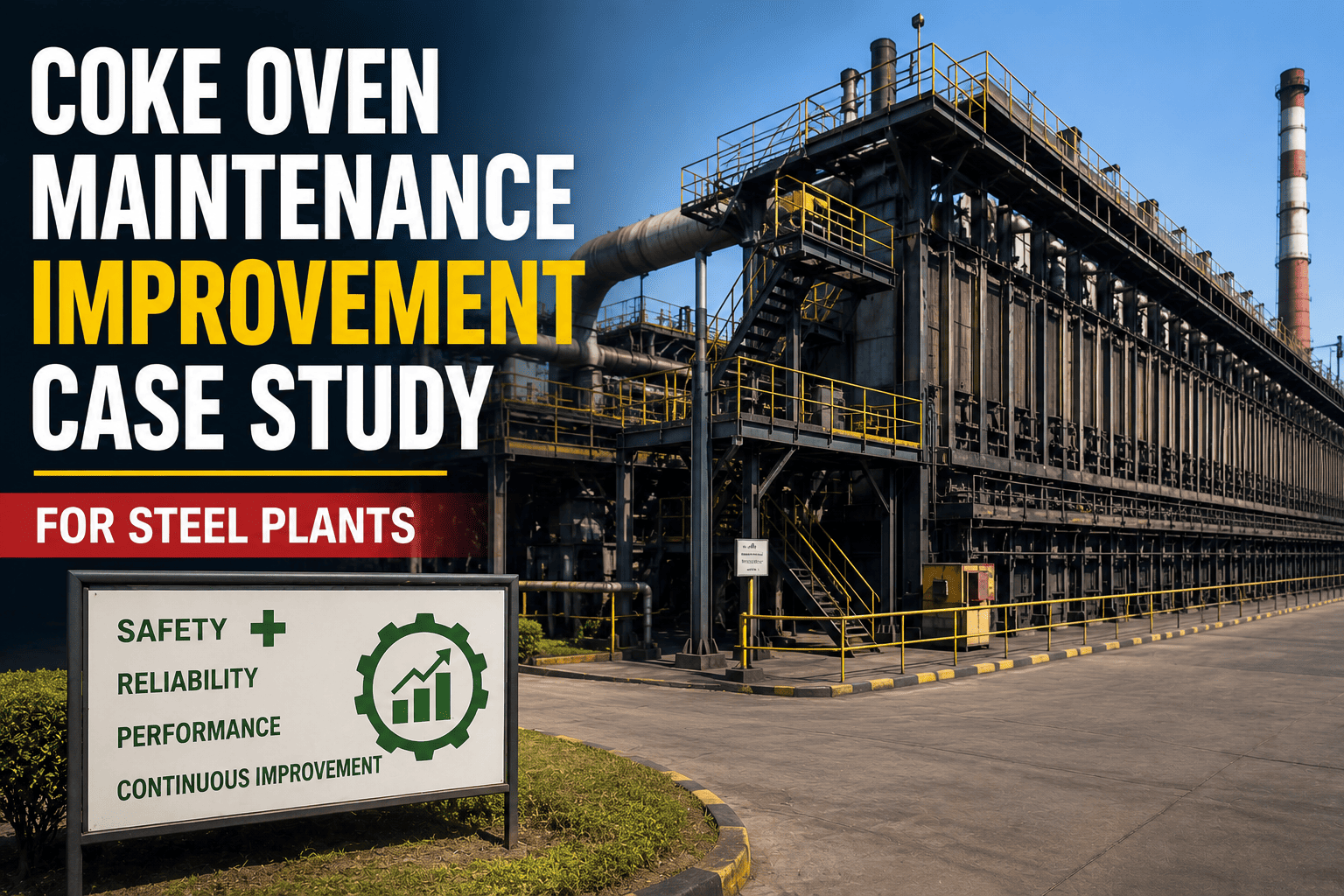
A single leaking coke oven door doesn't just cost gas, it costs compliance fines, safety flags, and eventually a forced reline. One steel plant's coke oven battery was running on paper-based inspection rounds, so leaks were caught late, logged late, and fixed even later. Moving inspections, condition monitoring, and work orders into one CMMS changed the timeline entirely. Sign up to see how the same approach would apply to your battery.
-68% Door Leaks
Drop in recurring coke oven door leakage incidents within one year
94% Inspection Compliance
Scheduled door and jamb inspections completed on time, up from ad-hoc rounds
-40% Unplanned Downtime
Reduction in reactive stops caused by leakage-driven emergency repairs
The Problem
Door seals and jambs on the coke oven battery were only inspected when an operator happened to notice smoke or flame at a joint. By the time a leak was logged on paper and routed to maintenance, the seal had usually degraded further, turning a five-minute adjustment into a full door reseat. Condition data lived in inspectors' notebooks, not in any system maintenance could act on.
How Leakage Dropped Quarter Over Quarter
Before CMMS (Baseline Quarter)100% leak rate
Leaks caught only after visible smoke or flame at the door
Quarter 2, Condition Monitoring Live58% leak rate
Temperature and seal-gap sensors began flagging doors before visible leakage
Quarter 4, Full CMMS Rollout32% leak rate
Scheduled inspections and auto-generated work orders closed the gap early
Catch Coke Oven Leaks Before They Show
Oxmaint turns inspection rounds, condition readings, and door history into scheduled work orders, so leaks get flagged before they're visible. Sign up for a free trial to try it on your battery's inspection routes, or book a demo to walk through your maintenance workflow.
Maintenance Workflow Before And After
| Area |
Before |
After |
| Leak detection |
Visual only, spotted after smoke or flame appeared |
Sensor-flagged seal gaps and temperature drift before visible leakage |
| Inspection scheduling |
Ad-hoc rounds, dependent on individual operators |
Fixed inspection routes with due dates tracked in the CMMS |
| Work order routing |
Verbal handoff from inspector to maintenance crew |
Auto-generated work order the moment a reading crosses threshold |
| Repair scope |
Full door reseat after seal had already degraded |
Minor seal adjustment caught early, before major wear |
The Results
The fix wasn't a new sensor or a new inspector, it was connecting the two so condition data actually triggered action. Once inspections, readings, and work orders lived in the same system, leaks were caught while they were still a minor fix instead of a major repair, and unplanned downtime on the battery dropped along with it.
Frequently Asked Questions
Q
Why is coke oven door leakage hard to catch early?
Seal wear happens gradually and rarely shows up visually until the gap is already significant, so without sensor data or a fixed inspection schedule, most leaks are only caught once smoke or flame is visible.
Q
What role does a CMMS play in predictive coke oven maintenance?
It links inspection routes, sensor readings, and work order history to the specific door or jamb, so a threshold breach turns into a scheduled task automatically instead of depending on someone remembering to report it.
Q
Does fixing leaks earlier actually reduce downtime?
Yes, a minor seal adjustment caught early takes minutes, while a leak left until it's visible usually means a full door reseat and a longer, unplanned stop on the battery.
Stop Finding Leaks After They're Already Visible
Oxmaint schedules your door and jamb inspections, connects condition readings to work orders, and gives your team a full leakage history per door. Sign up for a free trial to try it on your own battery, or book a demo to walk through your inspection routes.