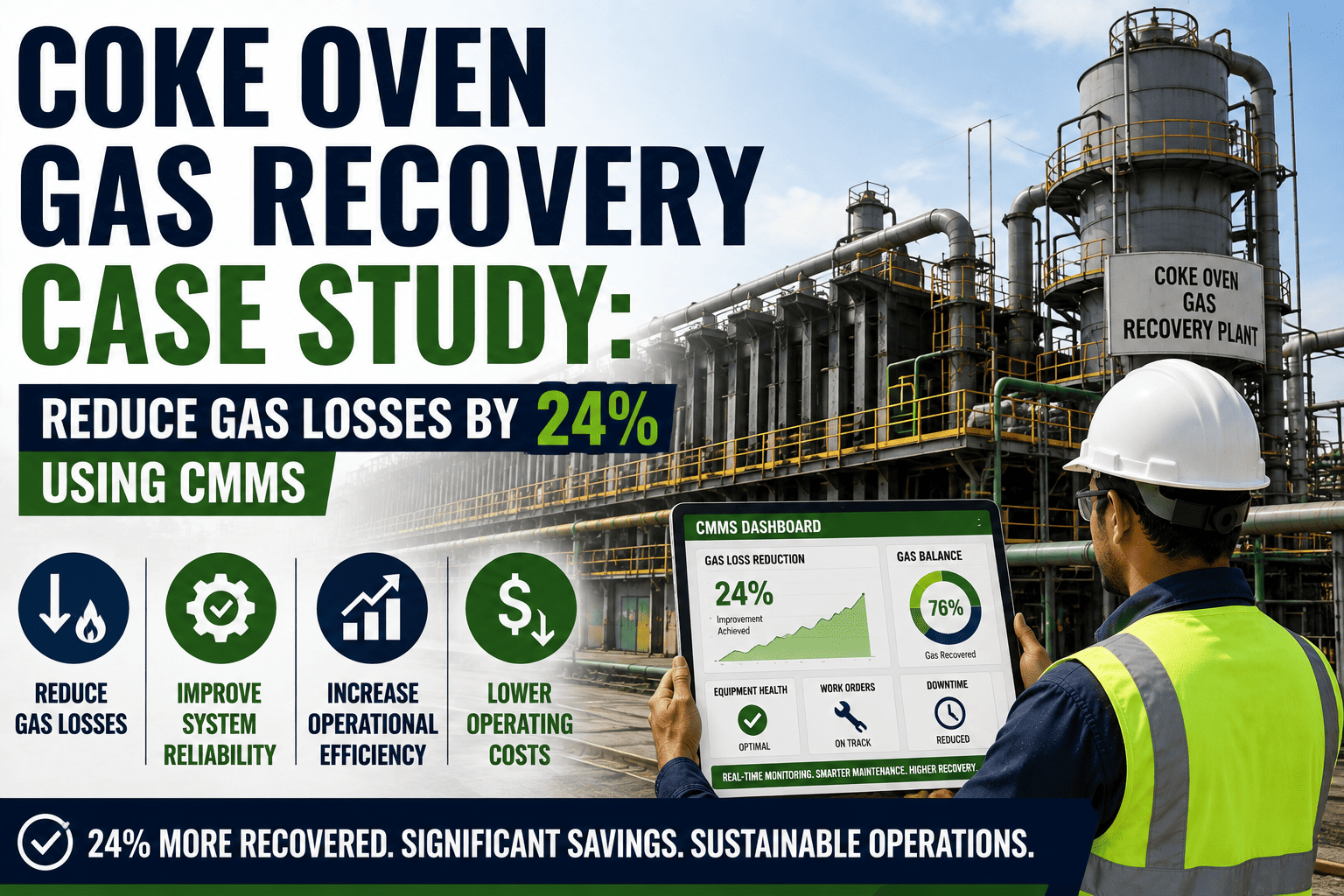
Coke oven gas is too valuable to waste, but it slips away in ways that rarely show up on a single gauge. A leaking collector main, a damper stuck slightly open, a booster running below its set point, and gas that should have been recovered ends up flared or lost to leakage instead. This case study looks at how a steel plant used condition monitoring inside its CMMS to catch gas recovery losses before they became a monthly write-off, and what happened to gas losses, recovery efficiency, and flare events. Sign up to see the same gas recovery maintenance workflow built for your own plant.
The Challenge
Collector mains, dampers, and boosters were maintained on a fixed calendar schedule, with no way to tell whether a specific component was actually drifting out of spec in between. Gas losses were totaled at month end, not traced back to a cause, so leakage, flaring, and booster inefficiency all got lumped into one unexplained number that kept showing up on the recovery report.
Results After Monitoring Gas Recovery Assets Continuously
-24% Gas Losses
Lower monthly gas losses once collector mains, dampers, and boosters were tracked between calendar checks
+19% Recovery
Higher gas recovery efficiency after booster performance drift was flagged and corrected early
-46% Flare Events
Fewer unplanned flaring events once system pressure and damper position were monitored continuously
Gas Recovery Efficiency: Before vs After
Average coke oven gas recovery efficiency, before and after collector main, damper, and booster condition were tracked continuously instead of checked only on the calendar schedule.
Flare Events: A 30-Day Snapshot
Before condition monitoring
After condition monitoring
Each square represents one day. Highlighted squares mark days with an unplanned flare event. Tracking damper position and system pressure between calendar checks turned a near-weekly event into a rare exception.
Stop Losing Recoverable Gas To Unexplained Numbers
Oxmaint tracks collector main, damper, and booster condition continuously, so gas recovery losses get traced to a cause and fixed before the next report. Sign up for a free trial to build your own gas recovery maintenance workflow, or book a demo to walk through this case study in detail.
Gas Recovery Maintenance Before And After
| Area |
Before |
After |
| Collector main and damper checks |
Inspected on a fixed calendar schedule, not by actual condition |
Pressure and damper position tracked continuously in between |
| Gas loss reporting |
Totaled at month end with no clear cause behind the number |
Linked directly to specific leaks, dampers, or booster drift |
| Booster performance |
Checked periodically, drift caught late if at all |
Output tracked against baseline, corrected before losses grow |
| Gas recovery efficiency |
Averaged 79.4%, dipping further after calendar service intervals |
Held steady at 94.5% across the reporting period |
The Results
Gas recovery losses stopped being an unexplained line item on the monthly report. Collector main, damper, and booster condition were visible between calendar checks instead of only during them, so a drifting component showed up as a work order days before it would have shown up as flared gas. The team spent far less time reconciling losses and far more time keeping the recovery system running the way it was designed to.
Frequently Asked Questions
Q
Why do coke oven gas losses often go unexplained until month end?
Collector mains, dampers, and boosters are usually maintained on a fixed calendar schedule rather than by actual condition, so a small leak or a booster running below spec has weeks to add up before anyone can trace the loss back to its source.
Q
What data actually predicts a gas recovery loss before it happens?
System pressure trends, damper position, and booster output against baseline tend to shift before a loss shows up on the recovery report, so tracking those continuously gives enough lead time to fix the source instead of writing off the loss.
Q
Does this reduce flaring specifically, or just overall gas loss?
Both. Flare events are usually a symptom of a pressure imbalance or a stuck damper, so catching those conditions early cuts flaring directly while also reducing the steady leakage that drives the broader gas loss number down.
Recover The Gas You're Already Producing
Oxmaint tracks collector main, damper, and booster condition continuously, turning early gas recovery losses into a work order instead of a monthly write-off. Sign up for a free trial to build your own gas recovery maintenance workflow, or book a demo to walk through the full case study.