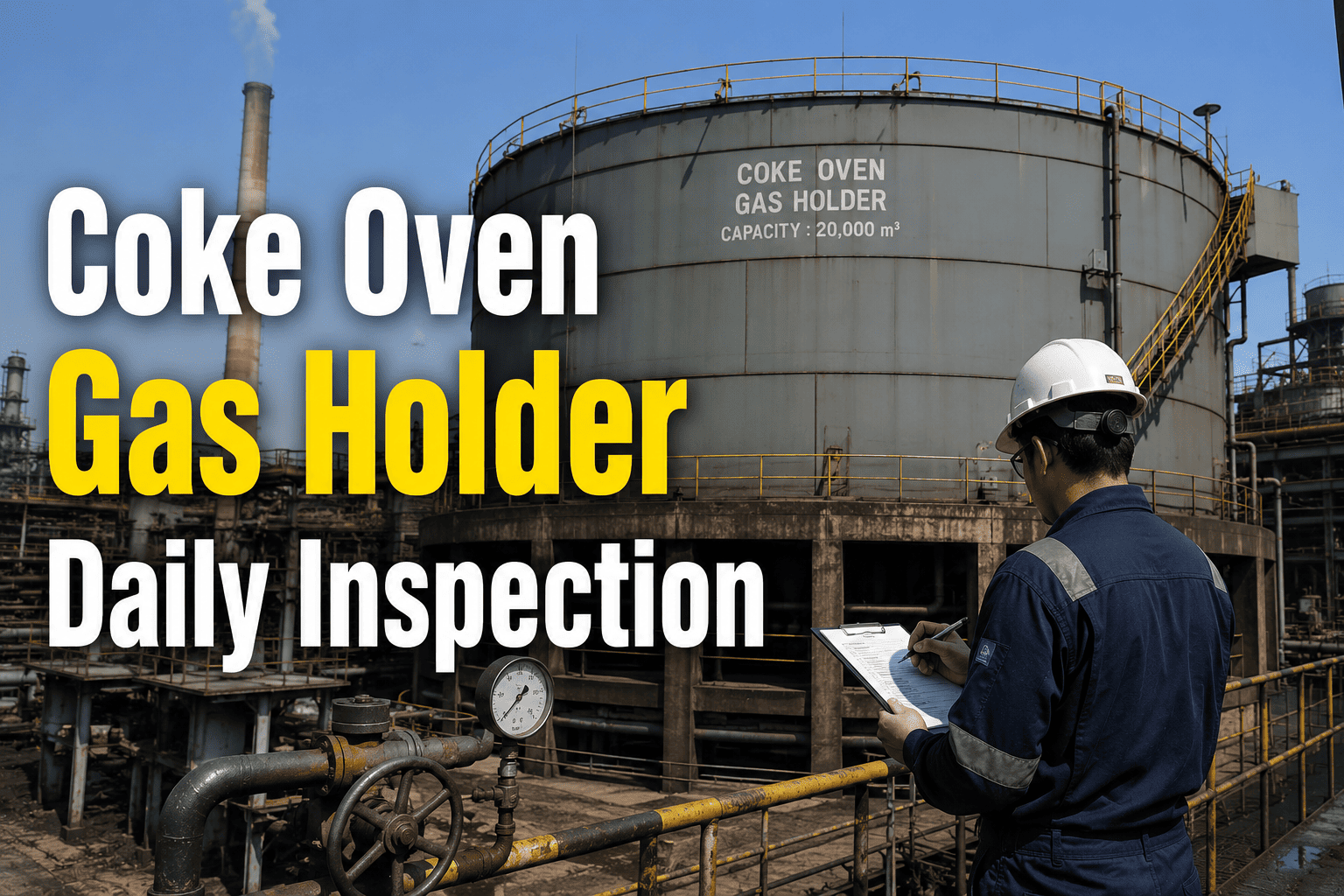
A gas holder bell that drifts even a few millimetres off its normal travel doesn't announce itself with an alarm — it shows up as a pressure swing three hours later, or a water seal running low enough to risk a gas breakthrough. On a coke oven battery, the gas holder is a pressure system and a DSEAR-classified hazard at the same time, which means a missed daily check carries both a PSSR and a safety consequence. Sign up to log every daily gas holder inspection against bell travel, water seal level, and pressure readings in one CMMS record instead of a logbook kept in the control room.
Why It Matters
A coke oven gas holder buffers gas supply between the battery and downstream users, and it does that job silently until something goes wrong. A low water seal, a stuck bell, or an undetected leak doesn't just affect gas supply — it's exactly the kind of failure DSEAR and PSSR checks exist to catch before it becomes a release.
What Gets Checked, And Why
| Component |
Checked For |
Why It Matters |
| Bell |
Smooth rise and fall, guide wheel condition |
A bell that sticks or tilts changes stored volume without warning |
| Water Seal |
Level against minimum, freeze risk in cold weather |
A low seal is the direct path to a gas breakthrough |
| Pressure |
Gauge reading against bell position and gas volume |
A mismatch between pressure and bell height signals a developing fault |
| Leak Points |
Seal edge, shell seams, valve connections |
Coke oven gas is toxic and flammable, so a small leak is a DSEAR concern immediately |
The Three Checks That Can't Be Skipped
Bell Travel
Watched through a full rise-fall cycle for binding, tilt, or uneven guide wheel wear.
Water Seal Level
Checked against minimum operating level daily, and more often in freezing conditions.
Leak Detection
Seal edges, shell seams, and valve connections scanned before the reading is signed off.
Daily Gas Holder Inspection Checklist
Observe bell travel through a full cycle: rise and fall watched for binding, tilt, or unusual noise from the guide structure
Check water seal level against minimum: reading taken at the gauge, not estimated by eye from a distance
Record pressure and cross-check against bell height: a mismatch flagged immediately rather than logged and left for review
Scan seal edges, shell seams, and valve connections for leaks: checked with approved gas detection, not by smell alone
Inspect for corrosion and structural wear: shell, guide framework, and seal tank walls checked for pitting or thinning
Sign off the inspection against the asset's PSSR record: reading, time, and inspector logged so the written scheme of examination stays current
Every Reading Logged Against The PSSR Record
Oxmaint ties every daily gas holder inspection to bell travel, water seal level, and pressure readings against the asset's written scheme of examination, so a drift in any one reading is caught before it becomes a release. Sign up for a free trial to run it on your own site, or book a demo to see it configured for your plant.
Frequently Asked Questions
Q
Why does the water seal level matter as much as pressure?
The water seal is what keeps gas contained beneath the bell. If the level drops below minimum, gas can find a path around the seal regardless of what the pressure gauge reads, which is why the seal is checked as its own item rather than assumed fine from the pressure reading alone.
Q
How does a daily inspection relate to the PSSR written scheme of examination?
The written scheme sets the formal, scheduled examination intervals for the pressure system as a whole. The daily inspection is the operational check that runs between those formal examinations, and its readings feed into the same record so a trend is visible before the next scheduled review.
Q
Why does cold weather change the inspection frequency?
A water seal can freeze at the surface in cold conditions, which reduces its effective sealing depth even if the visible level looks unchanged. Checks are typically increased in freezing weather to catch that reduction before it compromises the seal.
Turn Gas Holder Checks Into A DSEAR And PSSR-Ready Record
Oxmaint keeps every bell, water seal, and pressure reading tied to the asset's inspection history, so a compliance review is a search through records, not a scramble through a control room logbook. Sign up for a free trial to run it on your own site, or book a demo to see it configured for your plant.