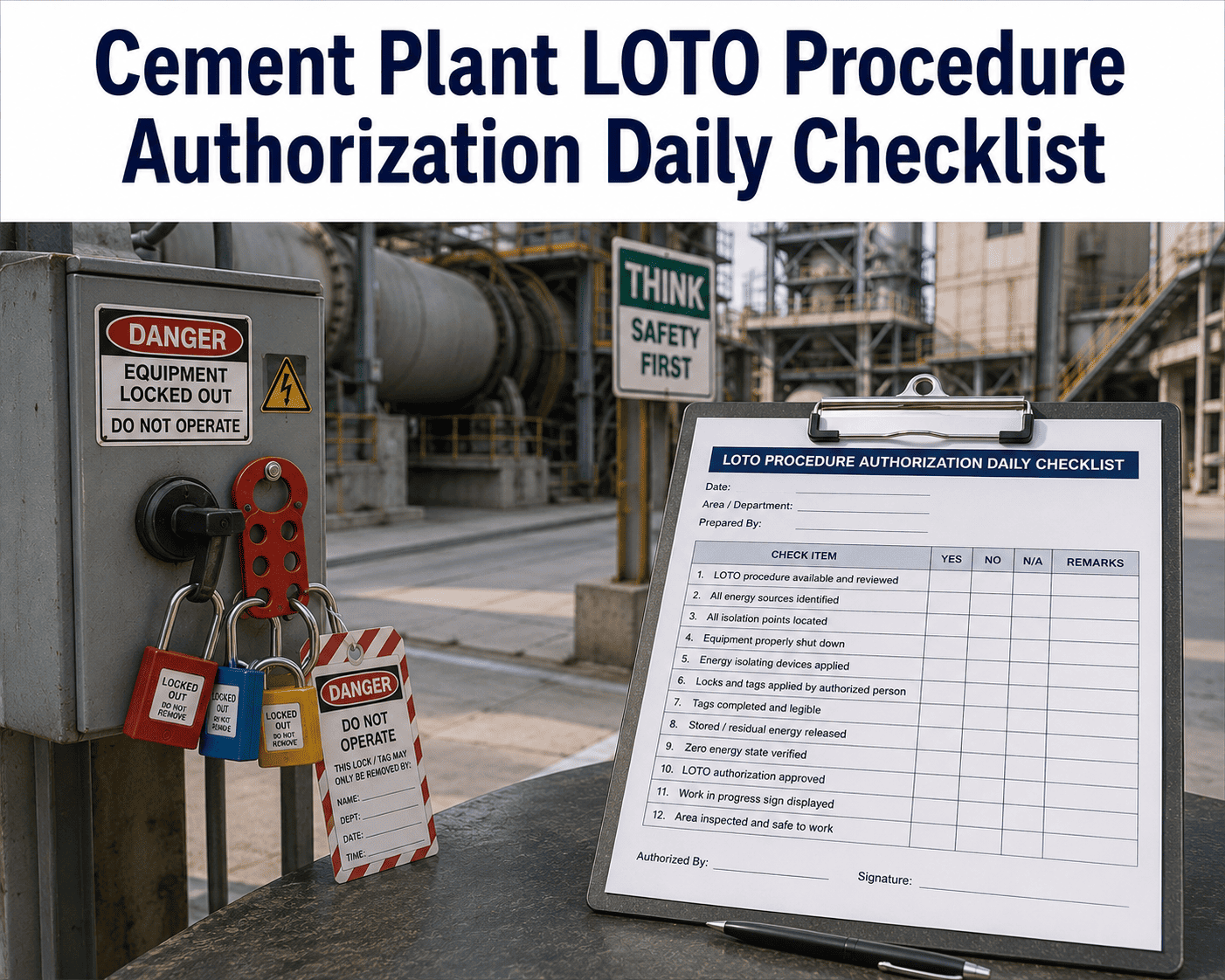
A single kiln shutdown at a cement plant can involve over 200 individual isolation points spread across five levels — breakers, valves, mechanical blocks, and stored-energy sources that all have to be confirmed zero before anyone touches the equipment. Miss one, on a gravity-feed damper or a hydraulic accumulator nobody thought to check, and the consequence isn't a paperwork issue. Sign up to run every LOTO permit against a machine-specific digital checklist and keep an audit-ready record for every isolation.
Why It Matters
Inadequate lockout/tagout accounts for a significant share of serious industrial injuries every year, and a single missed isolation step or an unauthorized re-energization can cause a life-altering injury. Plants running LOTO on paper checklists, verbal authorizations, or memory are one audit, or one missed step, away from a critical failure — a documented, verifiable process is what closes that gap.
Where Paper LOTO Actually Fails
One Point Missed, No One Catches It
A technician isolates 14 of 15 points and misses the one on a different level. Nothing in a paper log flags the gap before work begins.
A Lock Nobody Knows About
A lock is applied but not registered anywhere. If that worker is injured, nobody on shift knows a lock is even on the system.
Stored Energy Forgotten
A "try start" is done but not documented. Thermal energy in a preheater cyclone or pressure in a hydraulic accumulator never gets treated as a real energy source.
The Daily Authorization Checklist
Confirm the written procedure matches the equipment: machine-specific isolation points reviewed before shutdown begins, not a generic template applied on the fly
Notify all affected personnel before isolation: operators, maintenance, and any contractors on site informed the equipment is coming down
Shut down using normal stopping procedure, then isolate every energy source: lock count recorded and matched against the isolation point count in the written procedure
Release or restrain all stored energy: capacitors discharged, springs blocked, elevated components secured, pressure lines relieved
Verify zero energy state before any work starts: attempt a normal start, check pressure gauges read zero, confirm thermal surfaces are at safe working temperature
Obtain second-employee counter-verification: an independent sign-off recorded on the permit before hands-on work is authorized to begin
Every Lock, Every Permit, Traceable To A Worker
Oxmaint registers every lock against a worker's ID and work order, won't advance a permit until every isolation point is verified, and won't let a lock be released until the worker who applied it signs off. Sign up for a free trial to run it on your own kiln or mill shutdown, or book a demo to see it configured for your plant.
Why Stored Energy Is The Step That Gets Skipped
Cutting the power to a motor is the obvious part of a lockout, and it's rarely the part that gets missed. What trips up even experienced technicians is everything that stays energized after the main supply is off — a compressed spring, an elevated component held by gravity, residual pressure in a hydraulic line, or a preheater cyclone still radiating heat well after the kiln has stopped. None of these show up on a simple electrical isolation check, which is exactly why a proper LOTO procedure treats stored and residual energy as its own verification step, not an afterthought to cutting the power.
Permit Closure And Restoration
| Step |
What It Confirms |
Who Signs Off |
| Work area clear |
Tools, debris, and personnel removed before restoration |
Authorized employee |
| Lock and tag removal |
Only the employee who applied the device removes it |
Authorized employee who applied lock |
| Post-restoration test run |
Equipment confirmed returned to normal operational status |
Witnessed by authorized employee |
| Permit closure |
Completion timestamp, sign-off, and work order linked and archived |
Authorized employee, recorded in CMMS |
Frequently Asked Questions
Q
Who is allowed to remove a lockout device once work is complete?
Only the authorized employee who applied that specific lockout device is permitted to remove it. This keeps exclusive control of the isolation with the person who knows exactly what condition the equipment was left in.
Q
Why does zero energy state need to be verified, not just assumed?
Isolating the main energy source doesn't guarantee every hazard is gone, since stored energy in springs, capacitors, elevated components, or pressurized lines can remain even after the primary supply is locked out. Attempting a normal start and checking gauges independently confirms the equipment is actually at zero energy, not just presumed to be.
Q
How long should completed LOTO permit records be kept?
Completed permit records are typically retained for a minimum of several years to satisfy recordkeeping requirements and give the plant a defensible history if a regulator or insurer requests evidence of a specific isolation event.
Turn LOTO From A Liability Into A Verified Process
Oxmaint brings every isolation point, every authorized employee, and every permit into one auditable system — no advancing to the next step until every isolation is confirmed, no lock released until the worker who applied it signs off. Sign up for a free trial to run it on your own kiln or mill shutdown, or book a demo to see it configured for your plant.