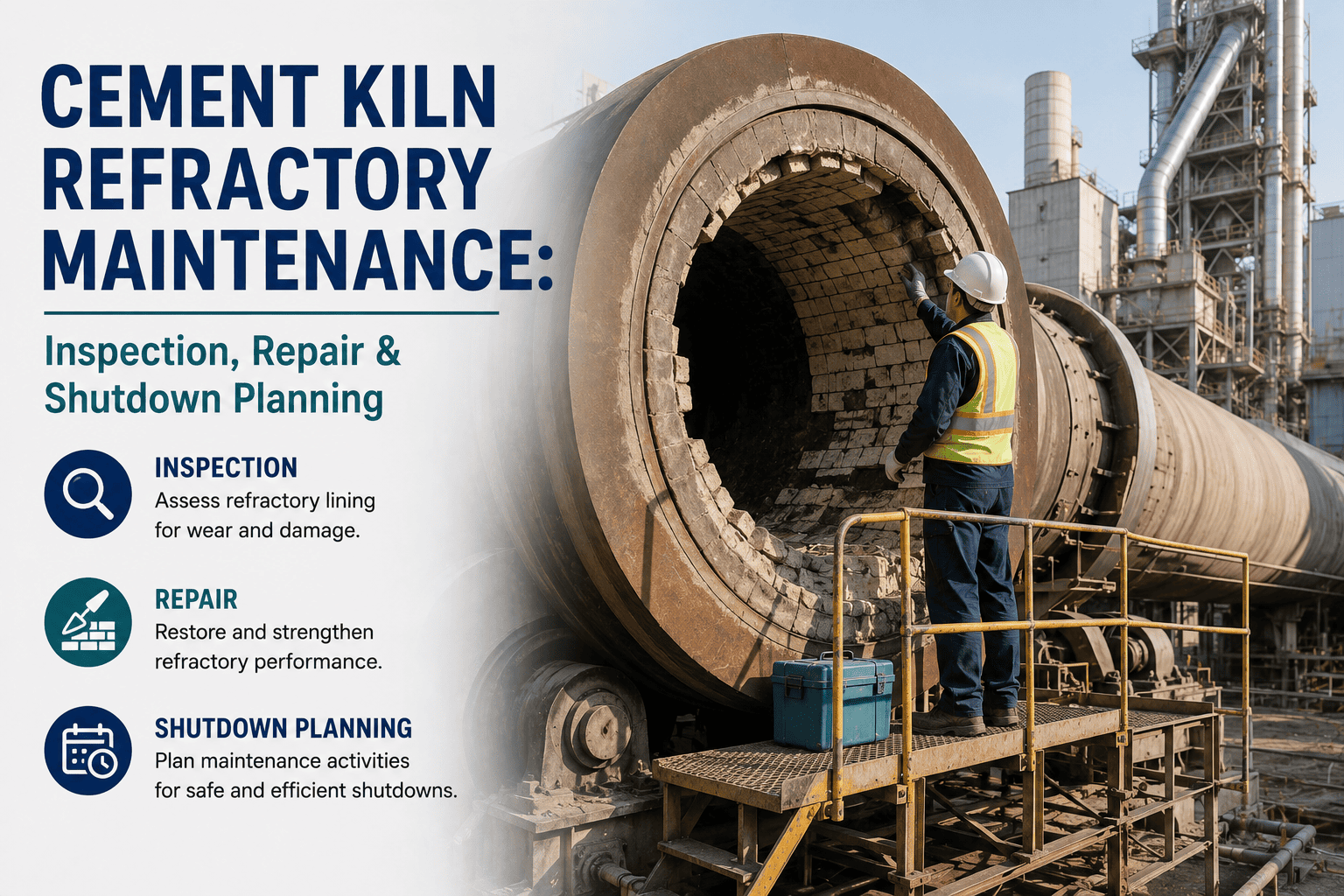
Refractory brick is the only thing standing between a 1,450°C flame and a steel kiln shell worth millions. Get the timing right and a lining runs its full campaign without incident. Get it wrong and a plant is looking at an unplanned failure that costs $800,000 to $2.5 million and shuts the kiln for six to fourteen days. Start a free trial to see how Oxmaint tracks refractory life zone by zone instead of by guesswork.
$800K-$2.5M
Cost of a single unplanned refractory failure once relining, downtime and expedited brick are combined
6-14 Days
Typical forced outage length when a refractory failure isn't caught before it happens
3.2x
Higher cost of an emergency reline compared to the same work done on a planned campaign
18-25%
Usable brick typically discarded early when replacement runs on a fixed calendar instead of measured wear
No Two Zones Wear the Same Way
A rotary kiln isn't lined with one type of brick for one reason. The burning zone faces flame impingement and chemical attack that can wear brick to design limits in twelve to eighteen months. The transition and calcining zones face different thermal and mechanical stress entirely. Manage the whole lining on a single calendar date and you either pull good brick early or leave the burning zone running past a safe threshold — the two most expensive mistakes in refractory planning.
From Inspection to Reline: The Refractory Lifecycle
A refractory program isn't one event at shutdown — it's four connected stages that either feed good data into each other or don't.
01
Running Inspection: Shell Temperature as a Proxy
Watched daily while the kiln is in operation
Shell temperature scanning while the kiln runs is the cheapest early warning available. A hot spot that drifts more than 20°C from baseline usually means coating loss or brick thinning underneath — long before anyone can see the lining directly.
02
Shutdown Inspection: Zone-by-Zone Thickness
The only time anyone actually sees the brick
Every planned stop is the window to walk the full length of the kiln, measure lining thickness meter by meter, and log findings against the same zone markers used last campaign. Without that consistency, wear-rate trending across campaigns is impossible.
03
Repair Decision: Patch, Zone Replace or Full Reline
Where remaining life gets weighed against downtime
The burning zone almost always dictates whether the whole kiln comes down for reline. A localized repair on a lower-stress zone can often wait for the next stop — but only if the data confirms it's actually a lower-stress zone and not just one nobody has measured recently.
04
Campaign Record: Feeding the Next Forecast
The step most plants skip entirely
Brick supplier, chemistry, install crew and resulting campaign length all belong in one record. Without it, a plant can't tell whether last campaign was short because of brick quality, feed chemistry, or operating conditions — and keeps repeating the same mistake.
Track Every Zone, Every Campaign, One Record
Oxmaint logs thickness readings, wear rates and repair history against the same kiln zones every shutdown. Sign up for a free trial to see it on your own kiln structure, or book a demo and we'll map it to your refractory program directly.
Planned Reline vs. Emergency Reline
| Factor |
Emergency Reline |
Planned Reline |
| Material and labour cost |
Roughly 3.2x higher than a scheduled campaign |
Priced and sourced weeks ahead, no expediting premium |
| Shutdown length |
6 to 14 days, sometimes with shell repair added on |
Scoped and scheduled into the annual shutdown window |
| Shell risk |
Brick-through failure can damage the steel shell itself |
Lining replaced above minimum safe thickness |
| Brick utilisation |
Unpredictable — some zones pulled with life left, others too late |
Zones replaced only when measured wear justifies it |
Practices That Extend Campaign Life
Practice 01
Map Wear to Zone, Not to the Kiln as a Whole
Break the kiln into consistent zone markers and track thickness against the same points every campaign, so a genuine trend is visible instead of a single snapshot.
Practice 02
Correlate Wear Rate With Operating Conditions
Fuel mix, feed chemistry and flame position changes often show up as accelerated wear a campaign later. Logging both together is the only way to catch the connection.
Practice 03
Compare Supplier Performance Across Campaigns
Recording brick chemistry and supplier against resulting campaign length turns future procurement into a data decision instead of a preference.
Practice 04
Build the Reline Into the Annual Shutdown Plan
Project remaining life forward against the next planned stop, so procurement, crew and downtime are booked before the lining forces the timeline.
How Oxmaint Supports Refractory Management
Oxmaint records thickness readings, condition scores and repair history against fixed kiln zones, so wear-rate trends carry across campaigns instead of resetting every shutdown. Technicians log findings and photos from a mobile device during the inspection window, and remaining-life forecasts update automatically as new readings come in. Book a demo to see it configured for your kiln's zone structure and shutdown cycle.
Frequently Asked Questions
Q
How long does kiln refractory brick actually last?
It depends heavily on zone. Burning zone brick is commonly designed for twelve to eighteen months of service, while transition and calcining zones can run considerably longer under the same operating conditions.
Q
What's the risk of running refractory past its safe thickness?
Once the lining thins past its minimum safe threshold, heat reaches the steel shell directly, risking shell damage that costs many times more to repair than a timely reline would have.
Q
Can shell temperature scanning replace physical inspection?
No, but it's a strong early warning between shutdowns. A hot spot flags where to look closely at the next physical inspection, when the lining can actually be measured and confirmed.
Q
Where should a plant start if refractory tracking is currently informal?
Start by establishing fixed zone markers and logging thickness against them at the next shutdown. A single consistent baseline is what makes every future reading a real trend instead of an isolated number.
Plan the Next Reline Before the Lining Forces Your Hand
Oxmaint gives reliability teams zone-by-zone refractory tracking, wear-rate trending and campaign history in one record, so replacement timing is a forecast, not a surprise. Sign up for a free trial to explore it yourself, or book a demo and we'll walk through it against your kiln's zone structure.
Zone-Level Thickness Tracking
Wear Rate Trending
Campaign History
Shutdown Planning
Mobile Inspection Logging